
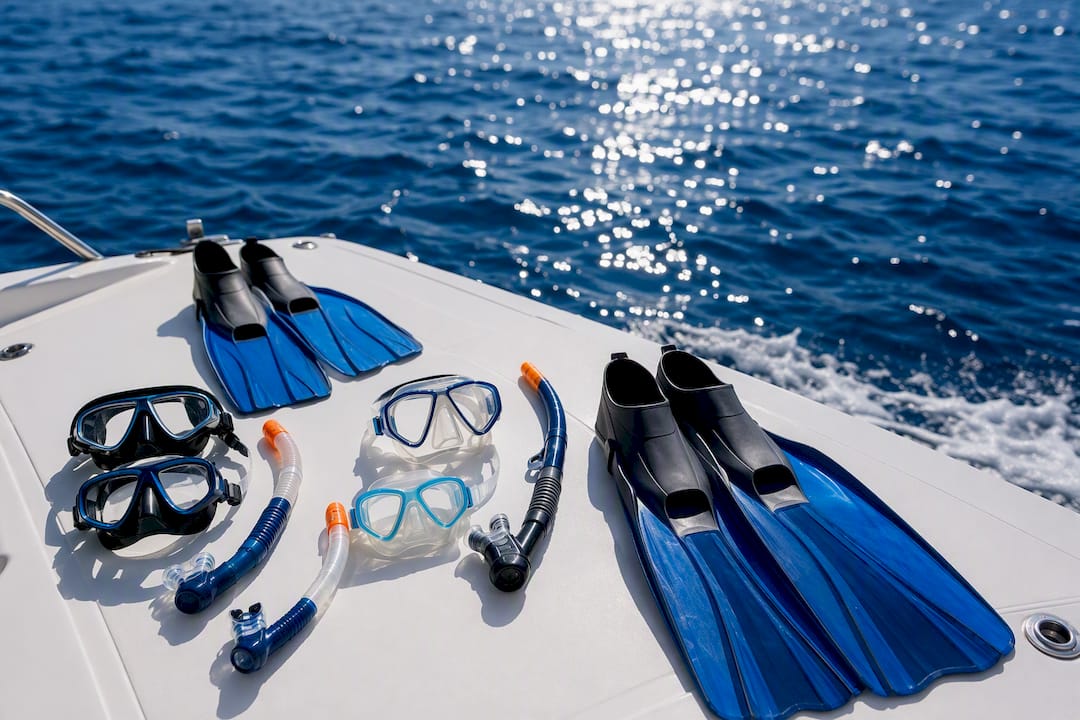
Halkidiki Boat Sailing supplies a maintained snorkeling kit on every private charter aboard Off The Hook, including masks, snorkels, fins, and USCG-approved flotation devices, all included in your cruise price. The single item that changes your day most is a personal mask, since a proper seal prevents the leaking and fogging that ruins an otherwise perfect swim in the waters off Sithonia. Beyond that, a short list covers the rest.
- A personal snorkel mask, if you own one, for a guaranteed fit
- Reef-safe sunscreen like Stream2Sea Sport SPF 30 (lotion, not spray)
- A dry bag such as the Sea to Summit Big River Dry Bag for phones, wallets, and passports
- A rash guard or light cover for extended sun exposure
Key Takeaways
A properly fitted mask, a captain’s mandatory safety briefing, and a few personal items like reef-safe sunscreen and a dry bag determine most of your comfort and safety on a private snorkeling day.
| Point | Details |
|---|---|
| Charter supplies the essentials | Masks, snorkels, fins, and USCG-approved flotation devices are included in your Off The Hook cruise price. |
| Bring your own mask if possible | A personal mask avoids the leaking and fogging common with shared rental gear. |
| Pack lotion, not spray | Apply reef-safe sunscreen like Stream2Sea Sport SPF 30 about 15 to 20 minutes before boarding. |
| Test gear on deck first | Check mask suction and fin fit while the boat is still anchored, not once you’re in the water. |
| Halkidiki Boat Sailing sets the pace | Off The Hook’s crew sizes gear, runs a safety briefing on every trip, and adjusts session length to your group. |
Table of Contents
- What Snorkeling Gear Halkidiki Boat Sailing Supplies
- What to Pack for the Best Snorkeling Experience
- How Do You Get a Proper Mask Fit?
- What Are the Safety Rules for Snorkeling Off a Private Boat?
- How Does Gear and Boarding Work on Off The Hook?
- How Long Does Snorkeling Last on a Private Cruise?
- How Do You Adjust Fins for a Comfortable Fit?
- How Do You Prevent Mask Leaks and Ear Pain While Snorkeling?
- What Should You Eat and Drink Before a Snorkeling Day?
- Ready to Book Your Snorkeling Day With Off The Hook?
- Sources
- FAQ
What Snorkeling Gear Halkidiki Boat Sailing Supplies
Every private cruise on Off The Hook carries a full snorkeling kit sized for your whole group. Guests find adult and child masks, snorkels fitted with purge valves for easier water clearing, and fins across a range of sizes. Safety gear includes USCG-approved life jackets, inflatable snorkel vests for less confident swimmers, a whistle for each guest entering the water, and a rescue float or surface marker the crew deploys near the swim zone.
Crew members handle routine maintenance between trips and rinse everything in freshwater before it goes back into storage. The gear is part of your cruise cost, not an add-on, so there’s nothing extra to reserve or pay for once you’re aboard.
Masks and snorkels come in a handful of standard sizes, so fit can vary slightly from guest to guest. Fins, on the other hand, get sized individually on deck before anyone enters the water, since a loose fin is more likely to slip off than a loose mask is to leak.
Pro Tip: If you have a smaller face or wear glasses, ask the crew for the low-volume mask option before departure. They keep a couple on hand specifically for guests who need it.
What to Pack for the Best Snorkeling Experience
The crew-supplied kit covers your basics, but a few personal items make a real difference in comfort. Bringing your own mask is the most reliable way to avoid the leaking and fogging issues common with rental gear, since a mask molded to your own face seals more consistently than a shared one.
- Personal mask (if you have one you trust)
- Reef-safe sunscreen, such as Stream2Sea Sport SPF 30
- Rash guard or UV shirt for sun protection without reapplying lotion
- Dry bag, like the Sea to Summit Big River Dry Bag or an Earth Pak Waterproof Dry Bag, for phones and documents
- PackTowl quick-dry towel, which packs smaller and dries faster than a cotton beach towel
- Water shoes or reef shoes for rocky entry points
- Floating waterproof phone case and a small blister or first-aid kit
Apply lotion-only sunscreen well before boarding so it has time to absorb. Spray sunscreens leave a slippery film on deck surfaces and can stain upholstery, which is why most private crews ask guests to skip them entirely. Consolidate your valuables into one dry bag before you step aboard, and bring a refillable water bottle if you’d rather not rely on what’s provided.
How Do You Get a Proper Mask Fit?
A leaking mask is almost always a fit problem, not a defect, and the fix takes thirty seconds on deck before you ever touch the water.
- Do the suction test. Place the mask on your face without the strap, inhale gently through your nose, and let go. A properly fitted mask will suction against your skin and stay put with no hands holding it. If it slides off, try a different size or shape.
- Position the strap correctly. Set it high on the crown of your head, above the ears, rather than low at the back of your skull. Light, even pressure seals better than a strap cranked down tight, which tends to warp the skirt and create gaps at the edges.
- Pre-treat the lens. Use a defog solution or a diluted drop of baby shampoo before entry so fogging doesn’t cloud your view mid swim.
- Know how to clear it. If your mask floods, tilt your head back, press the top of the frame against your forehead, and exhale steadily through your nose until the water clears. Clear a flooded snorkel the same way, with a forceful exhale, or simply lift your head above the surface and breathe normally.
Pro Tip: Test your mask seal and adjust your fin straps while the boat is still anchored and the deck is steady. Fighting with gear once you’re bobbing in open water is far harder than it looks from shore.
What Are the Safety Rules for Snorkeling Off a Private Boat?
Every trip on Off The Hook opens with a mandatory safety briefing from the captain. You’ll learn where the life jackets and flotation devices are stored, how the swim ladder works, what the emergency recall signal sounds like, and where to wait for the crew’s go-ahead before entering the water.
- Stay within 10 to 20 feet of your snorkel buddy at all times, and check in with each other regularly, since beginners tend to overestimate their own endurance once they’re in open water.
- Use brightly colored gear or a snorkel with a colored tip so you’re easy to spot from the boat.
- Signal the crew right away if you feel tired, cold, or unsteady. Off The Hook’s crew would rather bring you back early than watch you push through fatigue.
- Never touch, stand on, or grab coral, and avoid chasing fish or other marine life around Kassandra and Sithonia’s reef patches.
- Reef-safe sunscreen protects the same habitat you came to see, which is one more reason to skip the spray can.
How Does Gear and Boarding Work on Off The Hook?
Water entry and reboarding follow a simple rhythm once the captain gives the signal. Wait for that cue before jumping in, use the swim ladder or the crew’s recommended entry point, and hand your fins up to a crew member if asked rather than climbing the ladder wearing them.
- Dry zones hold your dry bags, phones, and anything electronic, typically inside the forward cabin or a secure locker.
- Wet zones near the swim platform hold mesh bags for used masks, snorkels, and fins between sessions.
- After the swim, rinse everything at the freshwater station on board, roll your dry bag’s top down at least three times before buckling it, and hang wet gear in the shade rather than direct sun, which breaks down silicone over time.
Pro Tip: Store your mask flat or in a hard case rather than tossing it into a bag loose. A crushed skirt is the most common cause of a mask that suddenly stops sealing.
How Long Does Snorkeling Last on a Private Cruise?
Most snorkel stops on a private Halkidiki cruise run 20 to 40 minutes at a time, with regular breaks back at the boat to rest, hydrate, and regroup before the next round.
- Open-water snorkeling burns more energy than pool swimming, since currents and waves add resistance you don’t feel in a pool.
- Keep your kicking gentle and steady rather than fast, and lean on a flotation vest if you’d rather conserve energy than tread water between breaks.
- If you feel breathless, chilled, or worn out, float on your back, signal the crew, and head back to the boat. The reef around Neos Marmaras and Paliouri isn’t going anywhere, and there’s always time for another round after a rest.
How Do You Adjust Fins for a Comfortable Fit?
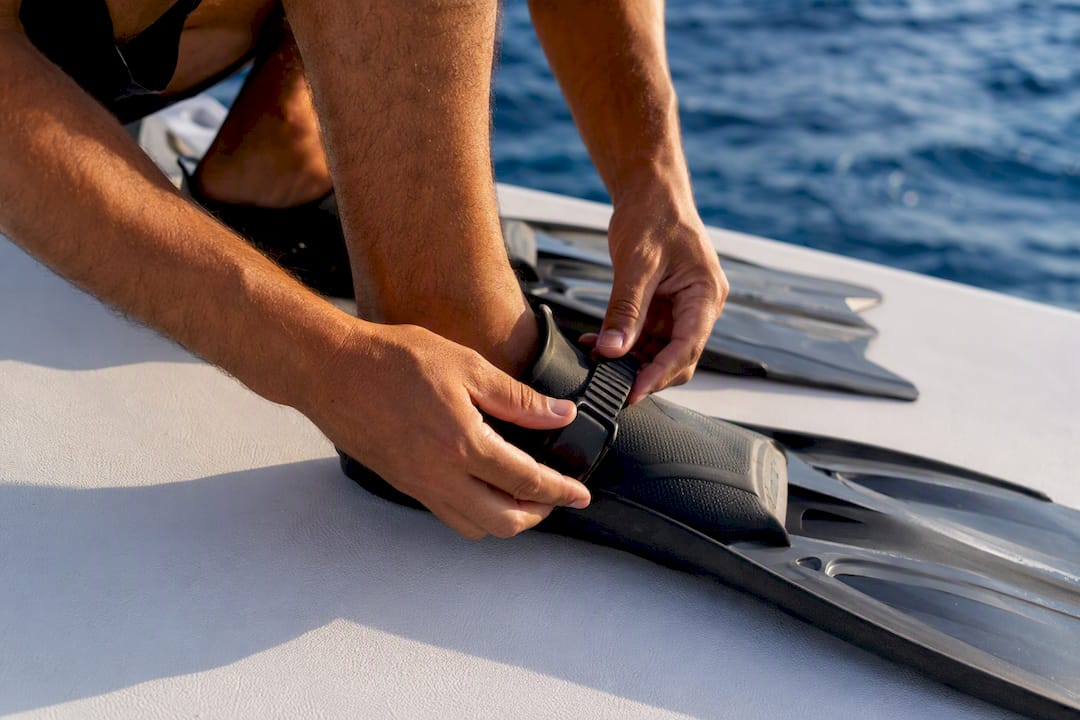
Fins that fit poorly cause more snorkeling frustration than almost any other piece of gear, mostly because guests skip adjusting them before entering the water. Full-foot fins should fit snugly like a shoe, with no gap at the heel and no pinching across the top of your foot. Open-heel fins, which the crew will size for you on deck, use an adjustable strap that should sit securely across your heel without digging into your Achilles tendon.
Once you’re in the water, kick from your hips rather than bending your knees sharply. Long, slow strokes push more water and tire you out far less than short, choppy kicks. If your calves cramp early on, your fins are likely too stiff or too small. Flag it to the crew, since Off The Hook carries a range of sizes specifically to avoid this.
A fin that keeps slipping off is almost always a strap problem, not a sizing problem. Tighten the heel strap just enough that it stays snug when you point your toes, but loose enough that you can slide two fingers underneath it comfortably. If you find yourself curling your toes to keep a fin on, ask for a different size before you get in the water rather than fighting it for your whole session.
How Do You Prevent Mask Leaks and Ear Pain While Snorkeling?
Two problems account for most snorkeling discomfort: a leaking mask and ear pressure. Both have simple fixes once you know them.
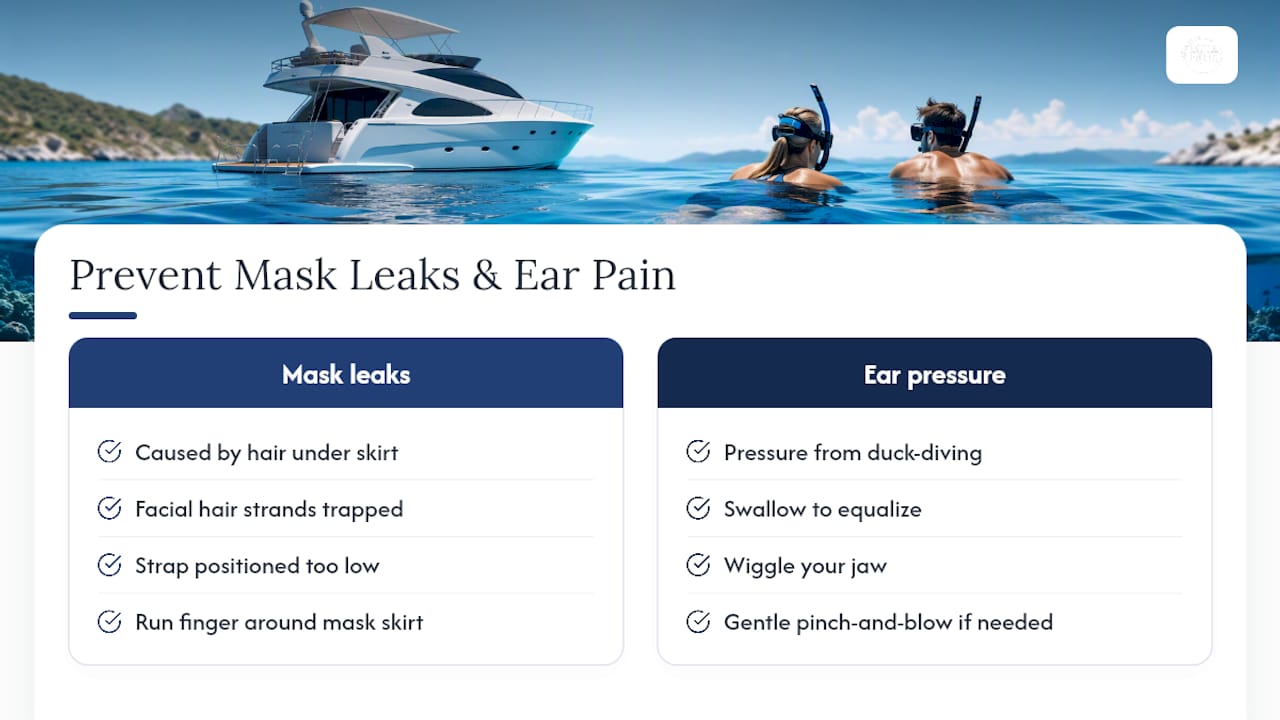
For ear equalization, snorkeling rarely takes you deep enough to need the forceful pinch-and-blow technique divers use, but pressure can still build if you duck-dive toward a reef. Swallow, wiggle your jaw, or do a gentle version of that same pinch-and-blow to relieve any fullness before it turns into pain. Never push through sharp ear pain. Surface, rest, and try again later.
Mask leaks almost always trace back to hair, facial hair, or hair strands caught under the skirt, or a strap positioned too low on the head rather than high on the crown. Before you enter the water, run a finger around the edge of the mask skirt to make sure nothing is trapped underneath. If your mask fogs constantly despite pre-treating the lens, it may simply be an old or worn seal. Ask the crew for a different one. They carry spares for exactly this reason.
What Should You Eat and Drink Before a Snorkeling Day?
Sun, saltwater, and swimming pull more fluid from your body than a typical beach day, so hydration matters more on a boat than most guests expect. Start drinking water well before you board rather than waiting until you feel thirsty, since thirst is already a sign you’re behind.
Skip heavy meals right before snorkeling. A full stomach paired with wave motion is a fast route to feeling queasy, especially if you’re new to boats. A light breakfast with some carbohydrates and protein, like yogurt with fruit or eggs on toast, holds you over better than a greasy meal. Pack a few portable snacks such as nuts, crackers, or dried fruit for the breaks between snorkel sessions, when your energy naturally dips.
Alcohol is worth saving for the sunset leg of your trip rather than before swimming. It accelerates dehydration and dulls your judgment in the water, which matters more than it sounds like it should when you’re managing fins, a mask, and open water at the same time. Bring a refillable water bottle if you have one, and top it off whenever you’re back on deck between swims.
A Note From the Crew Aboard Off The Hook
We size your mask, snorkel, and fins on deck before you ever touch the water, and we run the full safety briefing on every single trip without exception. One of us is always watching the water while guests swim. If you have a medical condition, aren’t a strong swimmer, or would simply feel better with extra flotation, tell us before we leave the dock. We’d rather know upfront than guess.
Ready to Book Your Snorkeling Day With Off The Hook?
Skip the gear rental counter and the crowded public dive boats. A private cruise on Off The Hook comes fully crewed, with snorkeling gear, a captain’s safety briefing, and a pace set entirely around your group rather than a packed schedule of strangers. That means no waiting your turn for a mask that fits and no rushing off a reef because forty other guests are also on the clock. Whether you’re planning a half-day swim stop near Kassandra or a full week exploring Sithonia’s hidden coves, the crew adjusts the itinerary and the gear to match who’s actually on board, including non-swimmers who’d rather float nearby than snorkel at all. Browse private crewed sailing options and send a quick note about your group’s swimming ability so the crew can prep the right gear before you even arrive at the dock.
Sources
A few sources back the fit and packing advice above: the mask fitting guide for the suction test, charter packing guidance for checklist items, and the dry bag sealing technique. Product examples mentioned include the Sea to Summit Big River Dry Bag, Stream2Sea Sport SPF 30, and a PackTowl quick-dry towel.
- Snorkel mask fitting guide
- How to choose the right snorkeling gear for your vacation
- How to use your mask, snorkel and fins
FAQ
Does Halkidiki Boat Sailing Provide Snorkeling Gear?
Yes. Every private cruise on Off The Hook includes masks, snorkels, fins, and flotation devices in the cruise price, with crew sizing fins on deck before entry.
Should I Bring My Own Snorkel Mask?
Bringing your own mask is the most reliable way to guarantee a leak-free, fog-free fit, since it’s molded to your own face rather than shared among guests.
How Do I Know If My Mask Fits Correctly?
Place the mask on your face without the strap, inhale gently through your nose, and release. If it suctions and stays without help, the fit is correct.
How Long Do Snorkeling Stops Last on a Private Cruise?
Most snorkel sessions run 20 to 40 minutes, followed by a break back on the boat to rest and hydrate before the next round.
What Sunscreen Should I Use on a Private Boat?
Use a reef-safe lotion, such as Stream2Sea Sport SPF 30, applied 15 to 20 minutes before boarding. Spray sunscreens create a slippery film on deck and can stain upholstery.