
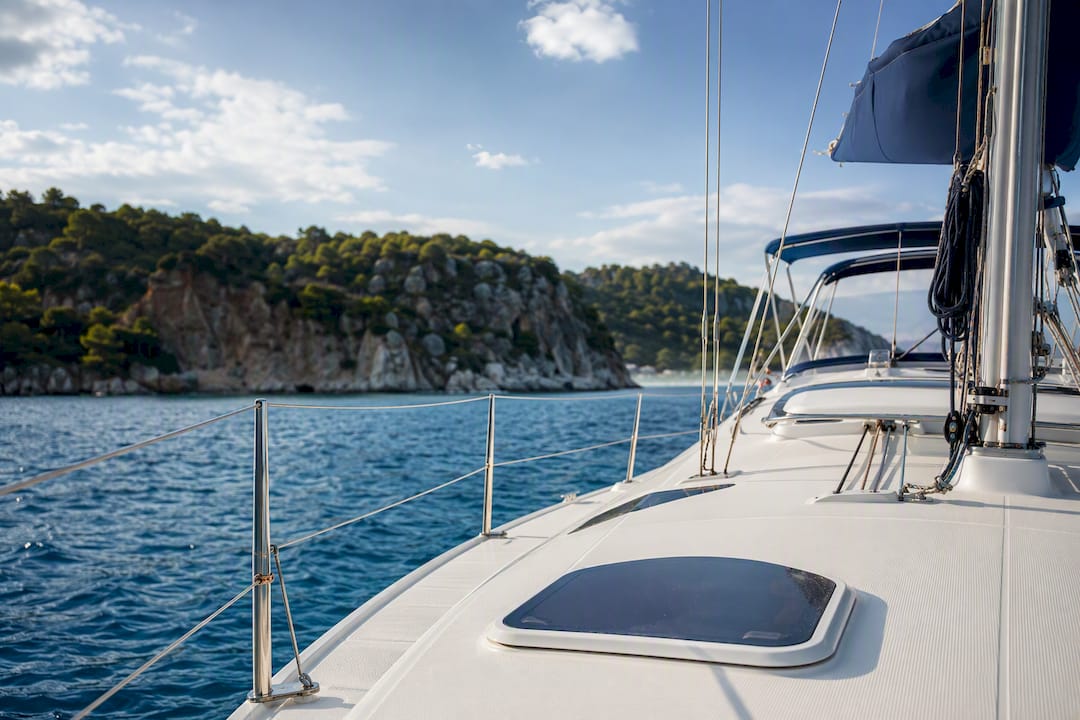
Yes, in most cases. Whether you can bring food on a boat tour depends entirely on the operator, and the split falls into two clear camps. Most private day charters and small group boats welcome guests who bring their own snacks and drinks, often with a cooler already on deck waiting for you. Curated and luxury cruises, on the other hand, frequently build crew-provided refreshments into the price, meaning outside food may not even be necessary.
Here’s how to act on that right now:
- Packing your own food? Stick to low-mess, non-perishable items and bring a cooler with ice.
- Prefer zero logistics? Book an all-inclusive charter, like Halkidiki Boat Sailing’s Off The Hook, where snacks and refreshments are already handled.
Either path works. The mistake is assuming one applies everywhere. Always confirm the policy before you show up at the dock with a full picnic basket, because a “no BYO” surprise on departure morning ruins a day faster than anything else on this list.
Key Takeaways
Whether you can bring food on a boat tour depends on the operator’s model, and confirming that policy before departure prevents nearly every food-related problem guests run into.
| Point | Details |
|---|---|
| Confirm the policy first | Ask directly whether BYO is allowed, since private charters and luxury cruises differ widely. |
| Pack low-mess, chilled food | Finger foods, hard cheeses, and pre-portioned snacks travel better than greasy or saucy dishes. |
| Use a cooler with ice, kept shaded | Pre-chilling food and limiting cooler openings keeps items safe for hours longer. |
| Leave no trace on board | Pack out all trash, avoid glass, and follow the skipper’s rules near protected coves. |
| Choose all-inclusive for zero logistics | Halkidiki Boat Sailing’s Off The Hook bundles refreshments and snacks into every crewed charter. |
Table of Contents
- What Do Boat Tour Operators Actually Allow?
- What Foods Actually Work Well on a Boat?
- How Do You Keep Food Safe on the Water?
- What Etiquette Rules Apply When Bringing Food Aboard?
- What Should You Confirm Before You Book?
- Why Choose an All-Inclusive Charter Like Off the Hook?
- Reservation-to-Departure Perspective
- Ready for a Boat Day Without the Packing List?
- Sources
- FAQ
What Do Boat Tour Operators Actually Allow?
Policies on boats vary more than most first-time guests expect, and the range runs from fully open to fairly strict. Understanding where an operator sits on that spectrum tells you exactly how to prepare.
Small private charters and floating bar-style boats tend to be the most permissive. Some operators, like the BYO-friendly Cruisin’ Tikis Colonial Beach cruises, explicitly advertise that guests can bring their own drinks and snacks, and they often supply a cooler on board specifically for that purpose. This is the model most day-trippers picture when they think “picnic on a boat.”
At the other end, culinary voyages and full-service cruises typically build multi-course, chef-prepared meals into the experience itself, which means outside food usually isn’t part of the plan and sometimes isn’t allowed at all.
Between those two extremes sit a handful of near-universal restrictions worth knowing before you pack:
- Glass is almost never welcome. Most boats ban glass bottles and containers outright, since a shattered bottle on a moving deck is a genuine hazard.
- Alcohol comes with age and quantity rules. Some operators cap how much you can bring, and local laws still apply even once you’re on the water.
- Smoking policies vary by boat and by country, so ask directly rather than assuming.
- Trash handling is the operator’s call. Some boats expect you to pack out everything; others provide bins.
Before booking, ask whether there’s a corkage or cleanup fee tied to bringing your own food and drink, whether the crew will store your cooler, and what happens to your trash at the end of the trip. A two-minute email now saves an awkward conversation at the dock.
What Foods Actually Work Well on a Boat?
Not every picnic food survives a few hours of sun, salt spray, and gentle rocking. The best boat food shares three traits: it’s easy to eat one-handed, it doesn’t spoil fast, and it won’t leave a mess if the boat hits a wave at the wrong moment.
What travels well:
- Finger sandwiches or wraps, sliced and individually wrapped
- Hard cheeses and cured meats, which hold up far better in heat than soft cheeses
- Grapes, apple slices, and other fruit portioned into sealable bags
- Energy bars, nuts, and dried fruit for grazing between swim stops
- Pre-cut vegetables with dip, packed in leak-proof containers
What to leave at home:
- Greasy fried foods, which turn unpleasant fast in direct sun
- Strong-smelling seafood dishes, which are a hard no in a small, enclosed cabin
- Soups, stews, or anything saucy that sloshes with the boat’s motion
- Glass jars or bottles, for the safety reasons already covered above
Packaging matters as much as the food itself. Resealable containers and pre-portioned servings mean less handling, fewer spills, and no shared utensils passed hand to hand. An insulated cooler with labeled bags keeps hot items away from cold ones. For drinks, spill-proof bottles or cans beat anything with a straw or an open top the second the water gets choppy. Bring more napkins than you think you’ll need, plus hand sanitizer, since sink access on a small boat is limited or nonexistent.
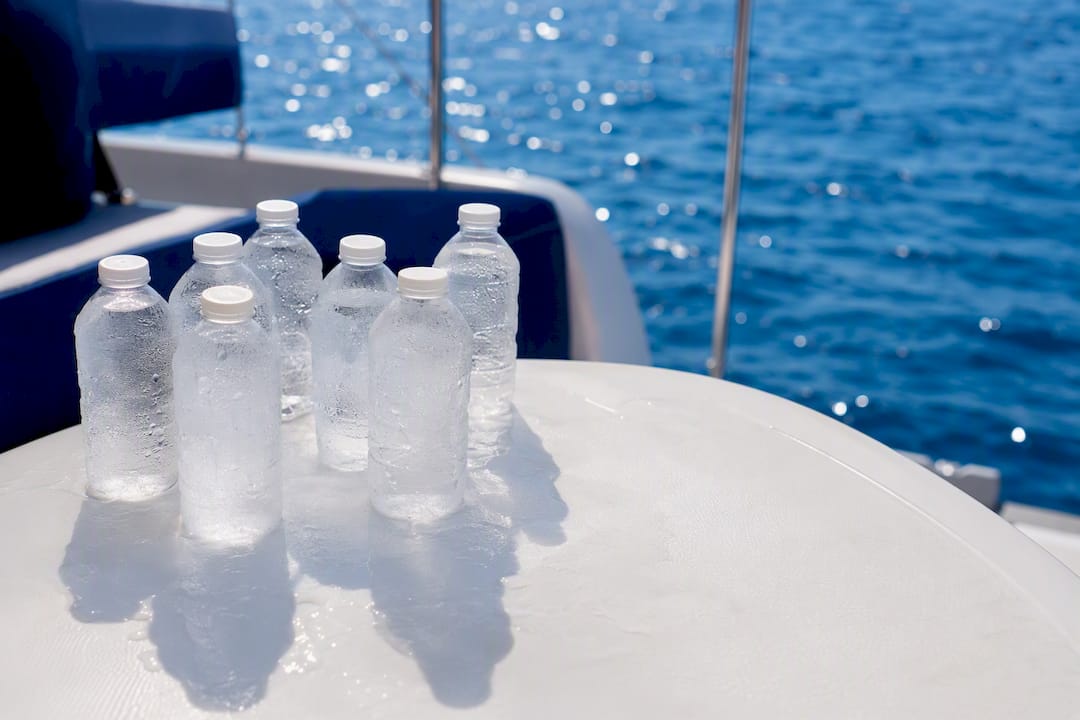
Pro Tip: Freeze a few water bottles the night before and use them as ice packs. They keep your cooler cold for hours and double as drinking water once they thaw, so you’re not wasting cooler space on ice that just melts into a puddle.
If your group leans toward a full spread rather than snacks, planning routes near hidden coves in Halkidiki with excellent regional dining options can make packed food feel like part of the adventure rather than an afterthought.
How Do You Keep Food Safe on the Water?
Heat, motion, and limited refrigeration make boats one of the trickier environments for keeping food safe to eat. A pre-chilled cooler packed with ice or ice packs is the single most effective tool you have, and keeping that cooler in the shade rather than direct sun buys you real time before anything warms up.
A short safety checklist worth following:
- Pre-chill everything the night before, including drinks
- Keep the cooler closed as much as possible; every open lid lets cold air escape
- Store raw or high-risk items (meat, dairy, seafood) at the bottom, closest to the ice
- Pack hand sanitizer, disinfectant wipes, and extra trash bags separately from the food
- Discard anything that’s been sitting unrefrigerated for more than two hours in warm weather, and closer to one hour if temperatures climb past 90°F
If refrigeration isn’t available onboard, plan conservatively. Assume warmer conditions than you expect, especially on a sun-drenched afternoon in the Aegean, and err on the side of tossing questionable leftovers rather than risking them.
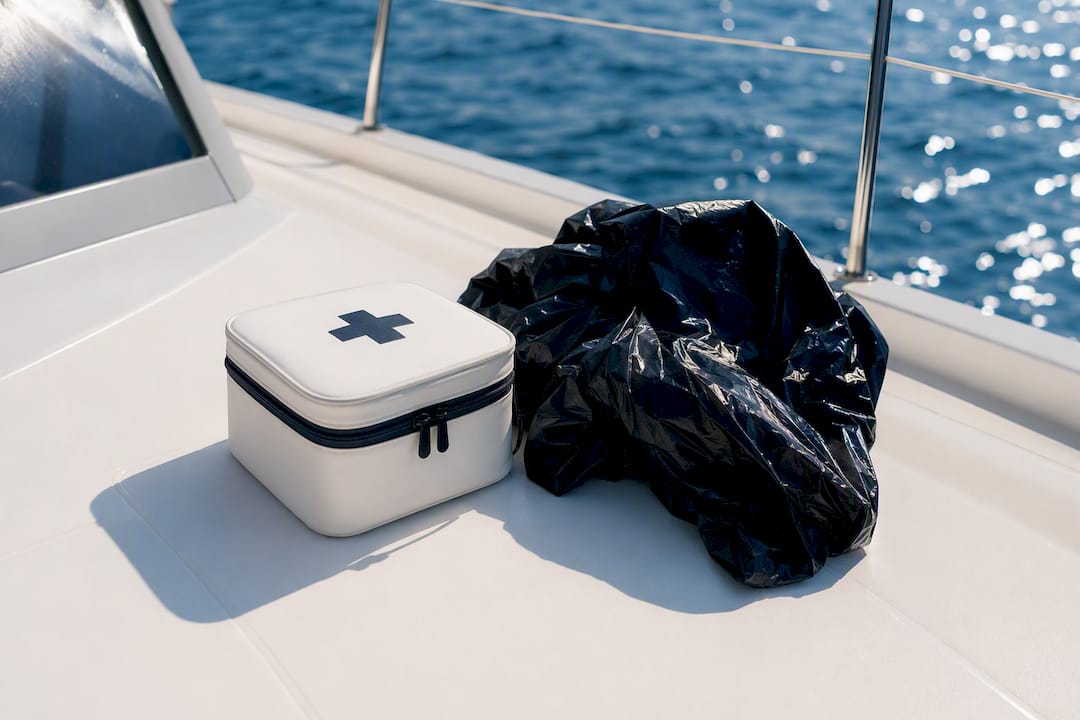
Seasickness is the other variable nobody plans for. If someone on board starts feeling unwell, move food and drink away from them immediately, and have a dedicated trash bag ready rather than scrambling for one. A small first-aid kit with motion sickness remedies is worth packing alongside your cooler, not as an afterthought.
What Etiquette Rules Apply When Bringing Food Aboard?
Good boat etiquette around food comes down to one principle: leave the boat, and the water around it, exactly as you found them. That means packing out every scrap of trash, using sealed bags to prevent wrappers and napkins from blowing overboard, and bringing recyclables back to shore when the boat itself doesn’t sort them.
Follow your skipper’s instructions on where and when eating happens, particularly around anchoring, wildlife, and any protected coves you might pass through. Feeding fish or seabirds might feel harmless, but it disrupts local ecosystems and is often discouraged or outright banned in marine protected areas, which cover several stretches of coastline around Sithonia.
A few small additions to your bag go a long way:
- Extra trash bags, beyond what you think you’ll need
- Wet wipes for hands and surfaces
- Reusable containers instead of single-use packaging, which cuts down on what you’re carrying out at the end
Pro Tip: Bring one designated “trash bag” separate from your food bag from the start. Mixing clean food storage with used wrappers mid-trip is how coolers end up smelling by hour three.
What Should You Confirm Before You Book?
The single best way to avoid a food-related surprise on a boat tour is to ask the right questions before you pay a deposit. Send these in writing, even if it’s just a quick email or booking-form note:
- Is bringing your own food and drink allowed on this trip?
- Are glass containers permitted, or is it plastic and cans only?
- Does the boat provide a cooler, ice, or any refrigeration?
- Is there a corkage fee or cleanup charge for BYO guests?
- What’s the trash policy, and does the crew handle disposal?
- Are plates, cutlery, or cups provided, or should guests bring their own?
- Can the operator accommodate allergies or specific dietary needs?
Get the answers to these in writing wherever possible, along with details on any extra fees, and the cancellation or reschedule terms tied to catering arrangements. If your group is large, has mixed dietary needs, or you’re planning a celebration rather than a casual day out, that’s usually the signal to stop managing logistics yourself and book an all-inclusive private charter instead. Fewer moving parts means fewer things that can go wrong on the day.
Why Choose an All-Inclusive Charter Like Off the Hook?
Some guests would rather skip the packing list entirely, and that’s exactly the gap Halkidiki Boat Sailing was built to close. Rather than juggling a fleet of interchangeable boats, the company runs one signature sailing yacht, Off The Hook, giving every trip the feel of a private, boutique outing rather than a crowded group tour.
Every cruise, whether it’s a sunset sail, a full-day escape, or a multi-day charter around Sithonia, comes fully crewed and genuinely all-inclusive. That means:
- A professional local skipper handling navigation, safety, and yes, food logistics
- Fuel, refreshments, and snacks bundled into one straightforward price
- Snorkeling gear included, so there’s nothing extra to rent or pack
Because refreshments come standard, catering requests or menu tweaks can simply be mentioned when booking, no separate negotiation required. For guests weighing whether to spend the morning shopping for a cooler full of picnic supplies or just showing up and stepping aboard, this is the version of a boat day with nothing left to plan.
Reservation-to-Departure Perspective
Most advice on this topic treats “bring your own food” as the default, and BYO packing tips as the whole story. That misses the more useful question: for a lot of guests, especially families or couples celebrating something specific, the cooler and the packing list are the least enjoyable part of the day.
The conventional wisdom undersells how much friction disappears when catering isn’t your problem. A private charter that already includes snacks and refreshments removes the two things that actually cause boat-day stress: food spoiling in the heat, and figuring out what a whole group will agree to eat. Guests who do want to bring their own food still deserve a clear checklist, which is why the packing and safety guidance above matters. But if you’re on the fence, the honest answer is that the all-inclusive route solves a problem most people don’t realize they’re carrying until it’s gone.
Prioritize confirming the policy first, packing second, and only then deciding whether BYO is worth the effort for your specific trip.
Ready for a Boat Day Without the Packing List?
If the cooler-and-checklist approach sounds like more effort than your day off deserves, Halkidiki Boat Sailing offers the simpler route: book Off The Hook and skip the grocery run entirely. Refreshments, snacks, fuel, and a professional skipper are already bundled into every cruise, so there’s no corkage fee to ask about and no cooler to haul down to the dock. That’s the real difference between DIY provisioning and a weekly private cruise where catering is already sorted before you step aboard.
Whether you’re planning a sunset celebration out of Neos Marmaras or a full week exploring the coves around Sithonia, mention any dietary needs or menu preferences when you book, and the crew handles the rest. Check available dates for the sunset private cruise or reach out about a group charter to get started.
Sources
- Hurtigruten — dining & food information
- Discover Boating — How to plan the perfect boat picnic
- Cruisin’ Tikis — Colonial Beach Tiki Bar Cruises (BYOB example)
FAQ
Can I Bring Food on a Boat Tour?
In most cases yes, especially on private day charters, but some curated or luxury cruises include meals and may restrict outside food, so always confirm with the operator first.
What Food Should I Bring for a Boat Day?
Pack finger foods, hard cheeses, cured meats, and pre-cut fruit or vegetables in sealed, individually portioned containers, and skip anything greasy, saucy, or strong-smelling.
What Should I Bring on a Boat Tour Besides Food?
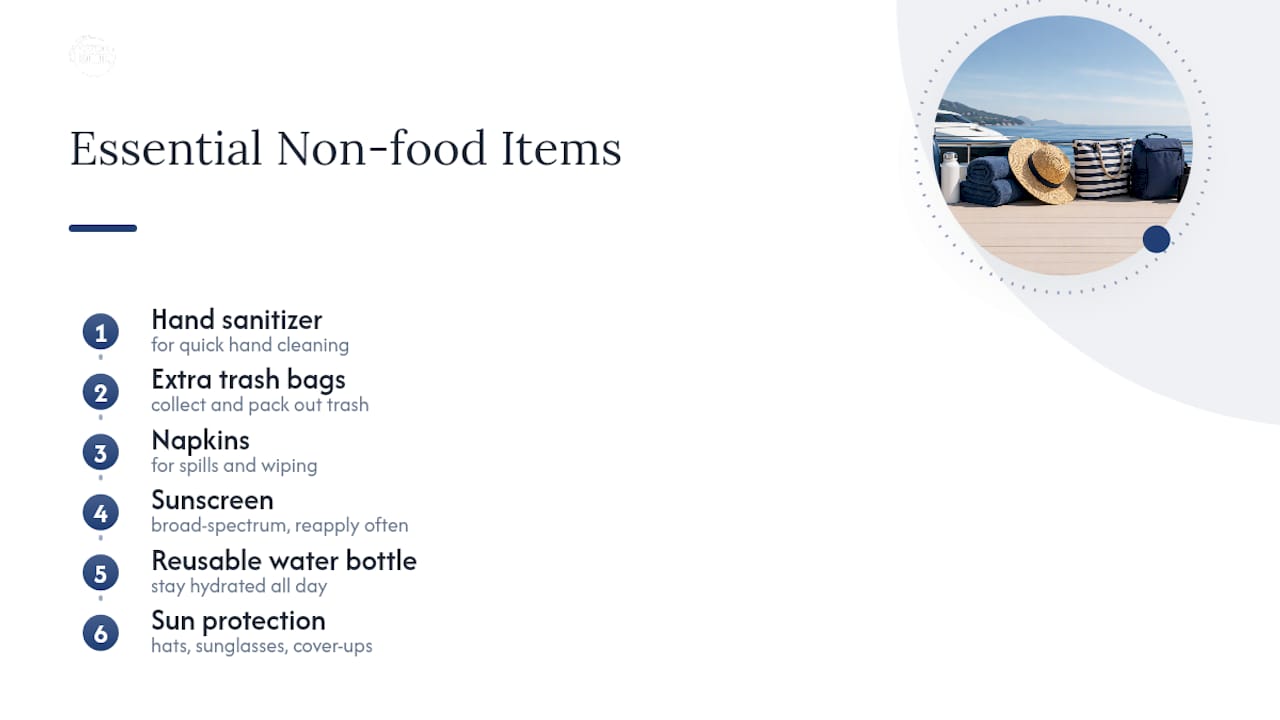
Beyond your cooler, bring hand sanitizer, extra trash bags, napkins, sunscreen, and a reusable water bottle, along with sun protection for hours on open water.
What Should I Bring as a Guest on a Boat?
As a guest, bring your own labeled cooler bag if BYO is allowed, confirm any dietary needs with the host or operator in advance, and ask about trash and cleanup expectations before boarding. If you’d rather skip the planning altogether, an all-inclusive charter like Halkidiki Boat Sailing’s Off The Hook covers refreshments and snacks for you.