

Sun protection sailing comes down to one workable system: shade first, UPF clothing second, sunscreen third, with a few behavior tweaks layered on top. Skip any layer and the other two carry more weight than they should. Water can reflect up to 80% of UV rays back at you, which is why a day sail off Neos Marmaras or a slow drift near Kelyfos Island burns skin that a beach day never would.
Before you cast off, do this:
- Pack broad-spectrum mineral sunscreen with a high SPF, along with UPF-rated long-sleeve clothing and a wide-brim hat.
- Grab wrap-style polarized sunglasses and a packable shade cloth for the cockpit.
- Follow WHO’s broad-spectrum guidance) and apply sunscreen before you leave the dock, not after you’re already squinting into the glare.
Key Takeaways
Layered protection, shade, UPF clothing, and correctly applied broad-spectrum sunscreen, outperforms any single sun-safety measure on the water.
| Point | Details |
|---|---|
| Water reflection multiplies exposure | Water can reflect up to 80% of UV rays, so midday sailing burns faster than land-based activity. |
| Clothing beats sunscreen alone | UPF 50+ garments block a very high percentage of UV and don’t wear off like lotion does. |
| Apply early, reapply often | Put sunscreen on 20 minutes before sailing and reapply every two hours or after swimming. |
| Shade has limits | Biminis and hardtops reduce UV exposure but do not block reflected or scattered light entirely. |
| Halkidiki Boat Sailing offers shaded cruises | Crewed private cruises aboard Off The Hook build shade and timing into the sailing route around Sithonia. |
Table of Contents
- What Is the Best Sun Protection Strategy for Sailing?
- Which Clothing and Hats Actually Protect You on Deck?
- What Sunscreen Should Sailors Use and How Often Should They Reapply?
- How Do You Protect Your Eyes and Lips While Sailing?
- Do Biminis and Hardtops Really Block UV on a Boat?
- What Belongs in a Day-Sail Sun Kit?
- What Changes for Sun Protection Around Halkidiki and Sithonia?
- Sources
- FAQ
What Is the Best Sun Protection Strategy for Sailing?
Dermatologists have long recommended “slip, slop, slap, seek, slide” for general sun safety. On a boat, that routine needs adjusting because the deck is a harsher environment than a beach towel ever was.
Slip on UPF clothing before you leave the marina. Slop on sunscreen twenty minutes ahead of time so it bonds to skin instead of sliding off in sweat. Slap on a hat with real brim coverage, not a baseball cap. Seek shade under the bimini whenever you’re not actively trimming or steering. Slide on wraparound sunglasses that block light from the sides, not just the front.
Layering matters more on water because reflection stacks on top of direct exposure. That 80% reflection off water means midday sailing near Kassandra or Paliouri delivers a UV dose closer to a snowfield than a lawn, especially between 11 a.m. and 3 p.m.
A few sailor-specific habits make a real difference:
- Apply sunscreen inside the cabin or below deck while you’re still dry, since a rocking boat and wet hands make even application nearly impossible underway.
- Skip sunscreen right above the eyebrows if you’re expecting spray or heavy sweat. It migrates into your eyes at the worst moment.
- Rotate helm duty on longer passages so no one person absorbs hours of unbroken sun exposure.
Pro Tip: Reapply sunscreen in the shade after you’ve cooled down from a swim or a hot stretch at the helm. Sunscreen bonds poorly to hot, damp skin, so a few minutes out of direct sun before reapplying makes the second coat actually stick.
Which Clothing and Hats Actually Protect You on Deck?
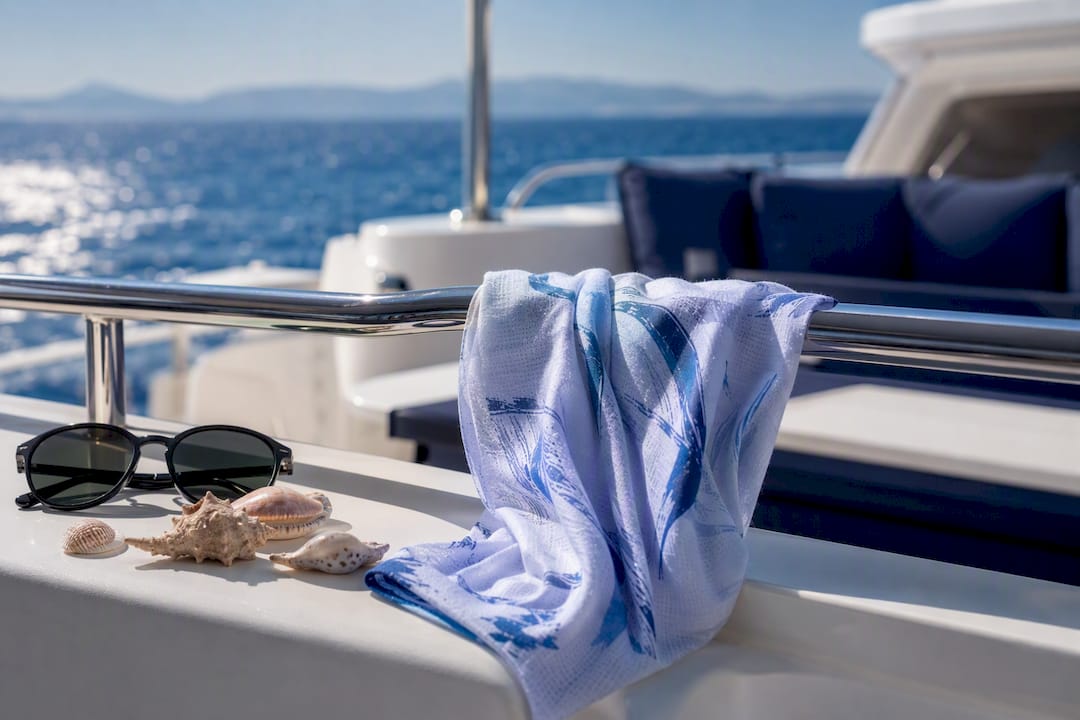
UPF ratings tell you how much UV a fabric blocks. Mechanical protection like this is generally the most reliable option available, since a properly rated garment doesn’t wear off, wash out, or get missed in a rushed application.
What to look for when buying:
- Tightly woven synthetics (polyester, nylon blends) block more UV than loose cotton weaves.
- Darker colors and thicker weaves generally protect better, though many technical fabrics are engineered to stay protective when soaked.
- Prioritize venting and quick-dry fabric to improve comfort on hot afternoons.
Full-coverage rash guards and long-sleeve technical shirts trade a little heat comfort for a lot of protection. Lightweight vented options are cooler but leave more skin exposed at the cuffs and collar. For headwear, a wide-brim hat beats a cap because it shields your ears and the back of your neck, not just your forehead. If you prefer a cap, pair it with a neck flap or a buff. Skip mesh trucker hats and thin visors. Sun passes right through the mesh and a visor does nothing for your scalp or ears.
Pro Tip: A neck gaiter doubles as sun shield and wind block, and it takes up almost no space in a duffel bag.
What Sunscreen Should Sailors Use and How Often Should They Reapply?
Broad-spectrum, water-resistant sunscreen in the SPF 30 to 50 range is the practical baseline, and Practical Sailor’s marine-focused testing points to SPF 40 or higher as a sensible target for sailors specifically. Going higher than that matters less than most people assume. The gap between SPF 50 and SPF 100 is marginal; the real difference comes from applying enough product and reapplying on schedule.
Mineral filters (zinc oxide, titanium dioxide) tend to hold up better in continuous sun than some chemical filters, which can break down faster with prolonged UV exposure. Non-nano zinc oxide formulas are also a common recommendation among sailors concerned about reef and marine impact. Broad-spectrum coverage matters regardless of filter type, since UVA drives long-term skin damage while UVB causes the burn you feel that afternoon.
Apply sunscreen about 20 minutes before you’re in direct sun, use roughly a shot glass worth of lotion for full-body coverage, and reapply every two hours or immediately after swimming or heavy sweating. Lotion gives the most even coverage; sticks work well for the nose, ears, and lips where you want a thick, targeted layer. Sprays are harder to apply evenly on a moving deck, and wind can carry the mist away from your skin entirely.
Pro Tip: Keep sunscreen off your forehead above the brow line where sweat and spray push it into your eyes. Let your hat and sunglasses do that job instead.
How Do You Protect Your Eyes and Lips While Sailing?
Polarized lenses cut glare off the water dramatically, which matters more on a boat than almost anywhere else, though they can make some digital screens and chartplotters harder to read. Wrap-style frames block stray light sneaking in from the sides.
A wide brim covering your forehead, nose, and ears reduces how much sunscreen you need on your face at all. For lips, use an SPF 30+ balm and reapply roughly as often as you would sunscreen, since lips have no melanin protection and burn quickly.
- Choose polarized lenses for general sailing; switch to non-polarized only if you’re constantly reading an LCD instrument display.
- Attach a floating strap to your sunglasses. Losing a good pair over the side near Nikiti is a common and avoidable mistake.
Pro Tip: Reapply lip balm every time you drink water. It’s an easy habit trigger that keeps you from forgetting.
Do Biminis and Hardtops Really Block UV on a Boat?
Fixed hardtops block the most UV and hold up best in wind, but they’re heavier and less common on smaller sailboats. Biminis offer solid coverage and fold down when you need clear sightlines for sail trim. Dodgers protect the companionway and helm area but leave the cockpit exposed. Temporary awnings and shade cloths are the most flexible option for anchoring or swimming stops but need proper tension to survive a gust.
A few setup basics matter:
- Choose light-colored, UV-rated fabric, since dark canvas absorbs heat and radiates it back at you.
- Rig removable side screens for early morning or late afternoon sun, when the angle slips under a standard bimini.
- Keep a packable shade panel aboard for tenders and swim stops where no fixed shade exists.
- Lower or reef shade structures in high wind, and always secure loose hardware before you need both hands on the helm.
Shade meaningfully cuts your dose, but reflected and scattered light still reach skin even under cover, so shade works best paired with clothing and sunscreen, not instead of them.
What Belongs in a Day-Sail Sun Kit?
Pack this before every outing, not just the big ones:
- SPF 50 mineral sunscreen (tube for the body, stick for nose and ears)
- UPF 50+ long-sleeve shirt and a wide-brim hat
- Wrap polarized sunglasses with a floating strap
- Neck gaiter or buff
- SPF lip balm
- Water bottle and a small after-sun gel or aloe
- Spare shade cloth
- Adhesive tape (useful for securing loose sunscreen sticks or minor skin patches)
Store sunscreen in a shaded locker rather than a hot cockpit bin. Heat degrades the formula faster than the expiration date suggests. If you’re sailing with kids or anyone with sensitive skin, pack a second sunscreen supply and reapply on a shorter interval than you would for yourself.
What Changes for Sun Protection Around Halkidiki and Sithonia?
Mediterranean sun hits harder than most sailors expect, and the shallow, glassy water around Sithonia amplifies it further through reflection. A full day sailing between Neos Marmaras and Kelyfos Island in July calls for UPF 50+ clothing and extra midday shade, not just a heavier sunscreen application.
- Add a lightweight side screen or lower spray hood near the helm for the low, glaring sun common in late afternoons around Kassandra and Paliouri.
- Treat late-day sailing with the same caution as midday; low-angle sun reflecting off calm water can be just as harsh.
- Check current Halkidiki sailing conditions before planning exposure-heavy legs of a route.
Halkidiki Boat Sailing runs shaded, crewed private cruises aboard Off The Hook, and captain George Dimitriadis builds sun-safety awareness into how the boat is rigged and how routes are timed around peak UV hours.
A Lesson From a Day Aboard
I once skipped a midday reapplication because the wind felt cool enough to forget I was burning. By the time we anchored near Kelyfos, my nose was raw. Now I keep a stick SPF clipped to my gaiter, always within reach.
The takeaway: keep sunscreen physically attached to something you’re already wearing, so reapplying takes no extra decision at all.
A Shaded Way to Enjoy Sithonia’s Water
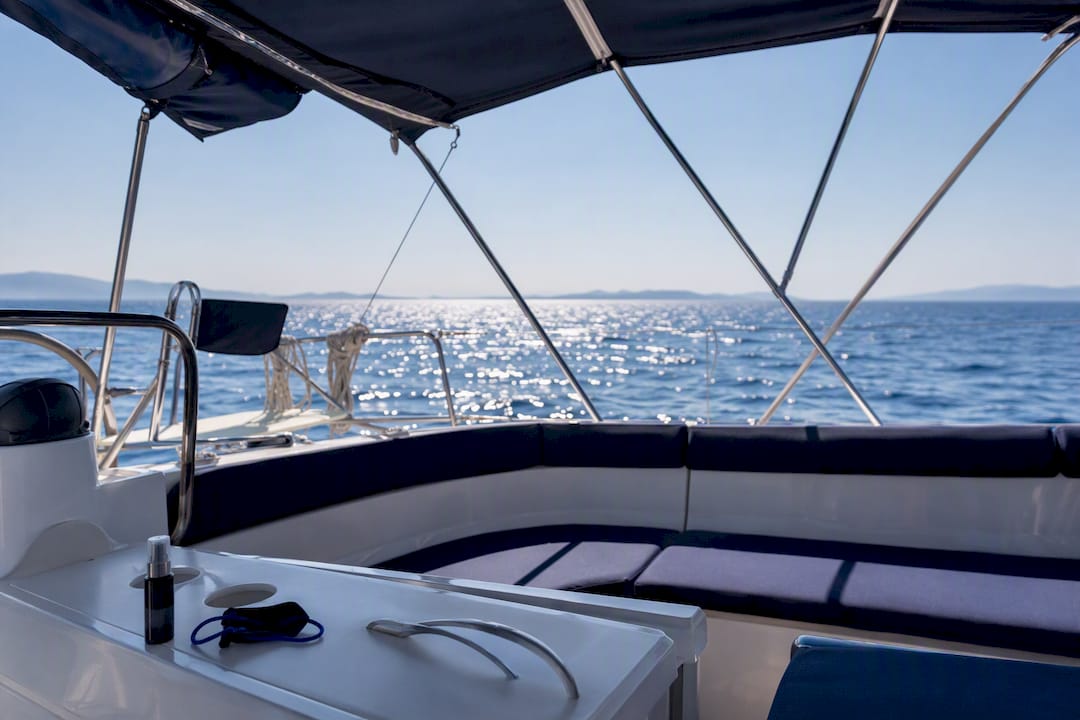
If packing and monitoring your own sun kit sounds like more logistics than you want on vacation, a crewed private cruise removes most of that burden. Aboard Off The Hook, guests sail under a rigged bimini with shaded seating, and the crew handles route timing around the harshest midday hours near Kassandra and Nikiti. Snacks, refreshments, and snorkeling gear are included, so the only thing you’re responsible for is applying your own sunscreen and reapplying it on schedule.
For a longer escape with more built-in shade breaks and swim stops in sheltered coves, the weekly private cruise aboard Off The Hook covers a full week of Sithonia’s coastline at a pace that avoids rushing guests through peak sun hours. Check available dates and book directly through Halkidiki Boat Sailing.
Sources
- Factors that affect UV radiation levels — Cancer Council
- What’s the Best Sunscreen? — Practical Sailor
This article is general information, not a substitute for advice from a qualified doctor. Consult a qualified healthcare professional about your own circumstances before acting on anything here.
FAQ
What Is the Best Sunscreen for Sailing?
A broad-spectrum, water-resistant mineral sunscreen with SPF 40 or higher is the practical choice for sailors, since correct application matters more than chasing an extremely high SPF number.
Do UV Sleeves and UPF Sun Sleeves Actually Work?
Yes. UPF-rated sleeves and long-sleeve technical shirts block UV mechanically, and unlike sunscreen, they don’t wear off during a long day on deck.
What Is the Best UV Protectant for Boats?
For the boat itself, a UV-rated bimini or hardtop combined with light-colored, UV-resistant fabric gives the most reliable shade, though reflected light still reaches skin underneath it.
What Is the Best Sunscreen for Boating?
Mineral sunscreen with zinc oxide or titanium dioxide holds up well in continuous sun exposure and is a common recommendation for extended time on the water.
How Often Should I Reapply Sunscreen While Sailing?
Reapply every two hours, or immediately after swimming, heavy sweating, or toweling off, and reapply in shade once you’ve cooled down for better adhesion.