
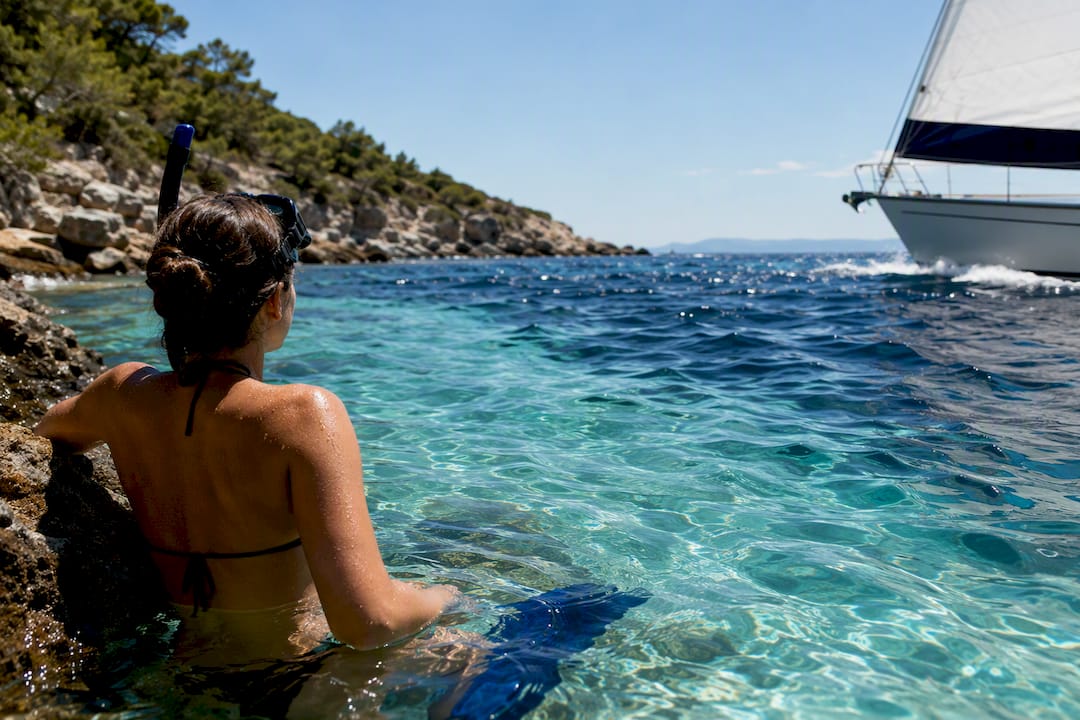
Snorkeling safety in Halkidiki comes down to five habits: never enter the water alone, check wind before you commit, choose a sheltered Sithonia cove over an exposed bay, tow a bright visibility buoy, and wear water shoes on rocky entries. Skip snorkeling once wind hits 4 or higher on the Beaufort scale, since chop kills both visibility and your energy fast. Favor Vourvourou, Kavourotrypes, and Karydi for clear water and gentle entries; hold off on open Kassandra bays when the surface looks textured or hazy.
TL;DR:
- Snorkelers should avoid entering the water if wind conditions reach Beaufort 4 or higher, especially on exposed Kassandra bays with textured or hazy surfaces.
- Using a well-fitting mask, practicing snorkel clearing, and towing a surface buoy significantly improve safety and visibility during the dive.
- Always snorkel with a buddy within arm’s length, follow simple hand signals, and stay facing outward to spot approaching boats promptly.
- Choosing sheltered coves like Vourvourou, Kavourotrypes, or Karydi increases chances of calm water and clearer underwater visibility of 8 to 15 meters.
- Opting for a guided tour with an experienced skipper prevents accidents by having local conditions and hazards managed professionally.
Table of Contents
- What to Check Before You Get in the Water: Wind, Swell, and Timing
- Local Hazards and First Aid: Sea Urchins, Jellyfish, and Breath-Holding
- Where and When to Snorkel Around Sithonia
- Gear That Actually Improves Your Safety
- Buddy Rules and Staying Visible to Boats
- What Local Skippers Actually Check Before Snorkel Stops
- Your Quick Before, During, and After Checklist
- Staying Hydrated and Sun-Safe in the Water
- Enjoying Marine Life Without Harming It
- Are You Fit Enough to Snorkel Safely?
- An Editor’s Take: What Actually Keeps People Safe Out Here
- A Simpler Way to Snorkel Safely: Let a Skipper Handle the Risk Calls
- Sources
- FAQ
What to Check Before You Get in the Water: Wind, Swell, and Timing
Halkidiki’s biggest snorkeling risk isn’t marine life. It’s misjudging the wind. The peninsula sits exposed to the Meltemi, a seasonal northerly that can turn a glassy morning into a choppy, sediment-clouded mess by early afternoon.
A quick visual check tells you most of what you need to know: whitecaps, foam streaks on the surface, or a flag standing rigid on the beach all signal wind you should respect. The working rule among local skippers is simple. Once conditions reach roughly Beaufort 4 (about 13 to 18 mph, with small waves and frequent whitecaps), snorkeling gets postponed or moved to a sheltered coast. OceanSafety Hawaii recommends checking ocean conditions before entering and favoring morning hours, when winds are typically calmer and light hasn’t yet stirred up glare on the surface.
Timing matters as much as location. Morning sessions and the shoulder months of June and September consistently deliver calmer water and better visibility than the midday hours of peak August.
- Check the forecast the night before and again at sunrise.
- Pick the side of the Sithonia peninsula sheltered from the day’s wind direction.
- If conditions look borderline, choose a different cove rather than pushing through it.
Pro Tip: If you can see a faint haze or shimmer on the water from shore, visibility underwater is already dropping. Reschedule for the next calm morning instead of hoping it clears.
Local Hazards and First Aid: Sea Urchins, Jellyfish, and Breath-Holding
Three hazards account for most snorkeling injuries around Halkidiki, and none of them require a medical kit to manage well.
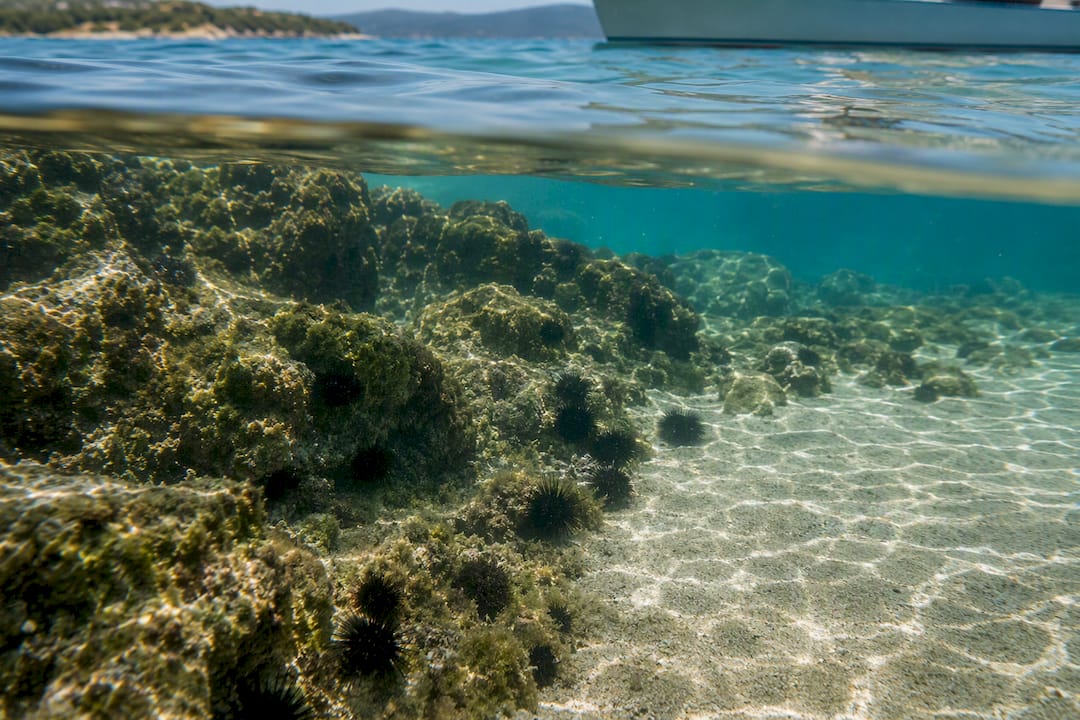
Sea urchins cluster on dark, algae-covered rock, especially near shaded ledges. Avoid stepping or grabbing near these patches, and enter over sand whenever you can. If a spine breaks the skin, don’t dig at it. Soak the area in vinegar or hot water if available, remove any surface fragments with tweezers, and see a doctor if the spine is deep, if pain spreads, or if the site swells or looks infected within a day or two.
Jellyfish stings are usually mild in this region, but they still call for the right response: rinse with seawater (never fresh water, which can trigger more venom release), remove any visible tentacles with a gloved hand or card edge, and seek urgent care if someone develops difficulty breathing, chest tightness, or widespread hives.
Breath-holding carries the least visible but most serious risk. DAN warns that drowning is the most significant danger snorkelers face, and specifically advises against hyperventilating before a breath-hold dive, because rapid breathing masks the body’s low-oxygen warning signs and can trigger a blackout underwater with no warning at all. Confusion, gasping, or a diver who surfaces and goes limp are signs that require immediate help and evacuation from the water.
Where and When to Snorkel Around Sithonia
Sithonia’s rocky coves outperform Kassandra’s sandy bays for one simple reason: rock supports the reef life that makes snorkeling worth doing, and Sithonia’s east coast in particular holds visibility of 8 to 15 meters under normal conditions. Kassandra’s beaches are pleasant for swimming but tend to be shallower and murkier, with less to see.
- Kavourotrypes rewards snorkelers with clear water framed by pale rock formations, best entered from the small sandy patches between the rocks rather than the ledges themselves.
- Vourvourou offers calmer, more sheltered water thanks to its scattered islets, making it forgiving for beginners and families.
- Karydi, near Vourvourou, pairs a long sandy beach with a gentle slope, so you can ease into deeper water gradually instead of jumping off rock.
If you’re snorkeling from a tour boat rather than the shore, a good skipper selects stops with safe exit points and briefs everyone on local hazards before anyone gets in. Confirm that plan before you commit to a stop, especially in less familiar coves near Nikiti or Paliouri.
Gear That Actually Improves Your Safety
A snorkel that leaks or a mask that fogs constantly does more than annoy you. It makes you surface more often, breathe harder, and lose track of your buddy. Fit matters more than brand.
- Mask: press it to your face without the strap and inhale gently through your nose. If it seals without you holding it, it fits.
- Snorkel: practice clearing it with a sharp exhale before you’re relying on it in open water.
- Fins and water shoes: short fins give you control near rock without kicking up sediment; water shoes protect against urchins on rocky entries.
- Rash vest or light flotation vest: cuts fatigue on longer swims and adds visibility in the water.
- Surface buoy or flag: tow one whenever boats are operating nearby. It’s the single cheapest way to make sure a passing vessel sees you in time.
Bringing your own mask is worth the suitcase space, since a properly fitted mask reduces the leaks and fogging that cause most beginners to panic underwater. Reef-safe sunscreen also protects the Posidonia seagrass meadows that anchor Halkidiki’s marine ecosystem, and a boat that anchors carefully instead of dragging chain across seagrass beds does more for the coastline than any amount of sunscreen choice. If you’re renting gear locally, reject anything with a cracked silicone skirt, a missing purge valve, or a snorkel mouthpiece that doesn’t sit comfortably. Our own snorkeling gear guide breaks down fit and function stop-by-stop if you want more detail before you pack.
Pro Tip: Spit inside a dry mask and rub it around the lens before your first dip. It’s an old diver’s trick that cuts fogging better than most anti-fog sprays.
Buddy Rules and Staying Visible to Boats
Snorkeling alone is the single easiest mistake to eliminate, and DAN’s guidance is blunt about it: never go in without someone watching.
- Keep your buddy within a body length or two, close enough to notice if they stop moving.
- Agree on simple hand signals before entering: thumbs up for “okay,” a flat hand pushed down for “something’s wrong.”
- If one of you dives down to look at something, the other stays on the surface watching. Never both go under at once.
- Position yourselves parallel to any anchored boat, not directly behind it, and surface facing outward so you can see approaching traffic.
On a chartered stop, this job usually falls to the crew: expect a short briefing, a lookout watching from the boat, and a guided path back aboard once you’re done.
What Local Skippers Actually Check Before Snorkel Stops
Halkidiki skippers who run snorkel stops regularly follow a routine that’s almost identical to commercial diving protocols, even on casual day trips. Operational guidance for snorkel operators emphasizes clear supervisor roles, a lookout watching the water at all times, and readiness for emergency response, including oxygen or AED access where practical.
Before boarding any crewed snorkel trip around Sithonia, it’s fair to ask:
- What’s the entry and exit point at this stop, and is there a backup if conditions shift?
- What’s the plan if wind picks up while we’re in the water?
- Is someone staying on deck as a lookout the entire time?
- Is there a first-aid kit and a plan for stings or spine injuries onboard?
On some crewed boat tours, every stop is chosen with these questions answered: snorkeling gear is included, a professional skipper picks the site based on that day’s wind and swell, and someone stays aboard watching the water while guests are in. That’s less improvising, more actual snorkeling. Our guide on what to expect on a private boat tour covers the briefing process in more detail.
Your Quick Before, During, and After Checklist
Screenshot this before you head to the water.
- Before: Check wind and forecast. Confirm mask seal and buoy. Apply reef-safe sunscreen. Put on water shoes. Confirm your buddy.
- During: Stay within sight of your buddy. Keep breath-holds short. Signal early if tired. Float on your back to rest instead of pushing through fatigue.
- After an incident: Exit calmly, don’t thrash. Call for help immediately. Rinse stings with seawater. Remove visible urchin spines only if they’re shallow and accessible. Seek medical care for any breathing trouble, confusion, or chest pain.
DAN’s data consistently points to drowning as the leading risk in snorkeling incidents, which is exactly why the buddy step above isn’t optional. Most snorkeling emergencies are manageable when caught early. Almost none are manageable when nobody notices for several minutes.
Staying Hydrated and Sun-Safe in the Water
Snorkeling hides dehydration better than almost any other beach activity, because the water keeps you cool even as the sun works on your skin for hours. You don’t feel thirsty the way you would lying on sand, so it’s easy to go three or four hours without a sip.
Drink water before you get in, not after you’re already thirsty. Bring a bottle onto the boat or beach and set a habit of drinking during every break between swims, especially in July and August, when Halkidiki’s midday heat regularly climbs past 86°F.
Sun protection needs a layered approach. A rash vest or light long-sleeve swim shirt covers your back and shoulders, the areas that take the worst of the UV exposure while you’re floating face down. Reef-safe, mineral-based sunscreen (look for zinc oxide or titanium dioxide as the active ingredient) protects your exposed skin, your face, and the backs of your legs, without the chemical filters that damage coral and seagrass. Reapply after any extended swim, since even “water-resistant” sunscreen degrades faster than the label suggests.
A wide-brim hat and sunglasses help on the boat between snorkel stops, and a light cover-up during breaks prevents the kind of cumulative sun exposure that turns a great day into a painful evening. Our layered sun protection guide walks through a system that works for full-day trips specifically.
Enjoying Marine Life Without Harming It
Halkidiki’s underwater life rewards a hands-off approach far more than a hands-on one. Fish, sea stars, and the occasional octopus tend to stay put and visible when snorkelers keep a respectful distance and move slowly, but they scatter fast at sudden movement or touch.
Never touch or stand on coral formations or rocky reef structures. What looks like bare rock often supports algae and small organisms that take years to establish and seconds to damage under a careless foot. The same goes for Posidonia seagrass meadows, which anchor sediment and support juvenile fish populations across Sithonia’s coves. A boat anchored carelessly in seagrass does more lasting harm than a hundred careful snorkelers.
Feeding fish might seem harmless, and even friendly, but it changes their behavior and diet in ways that hurt the ecosystem long after you’ve gone home. If you want a closer look at something, approach slowly from the side rather than straight on, and give any octopus, moray eel, or larger fish plenty of room to retreat if it wants to. Jellyfish deserve the same distance: admire from a few feet away rather than trying to nudge or move one.
Snorkeling responsibly isn’t about avoiding the water. It’s about moving through it the way a careful guest moves through someone else’s home.
Are You Fit Enough to Snorkel Safely?
Snorkeling looks passive from shore, but it asks more of your body than most people expect, especially over a full afternoon of swimming between coves.
Basic swimming competence is the baseline. You should be comfortable treading water and swimming a reasonable distance without panicking if you get slightly tired. If you’re recovering from a respiratory infection, dealing with uncontrolled asthma, or have a history of fainting or seizures, talk to a doctor before planning a snorkeling trip, since breath-holding and cold-water immersion can both trigger complications in those conditions.
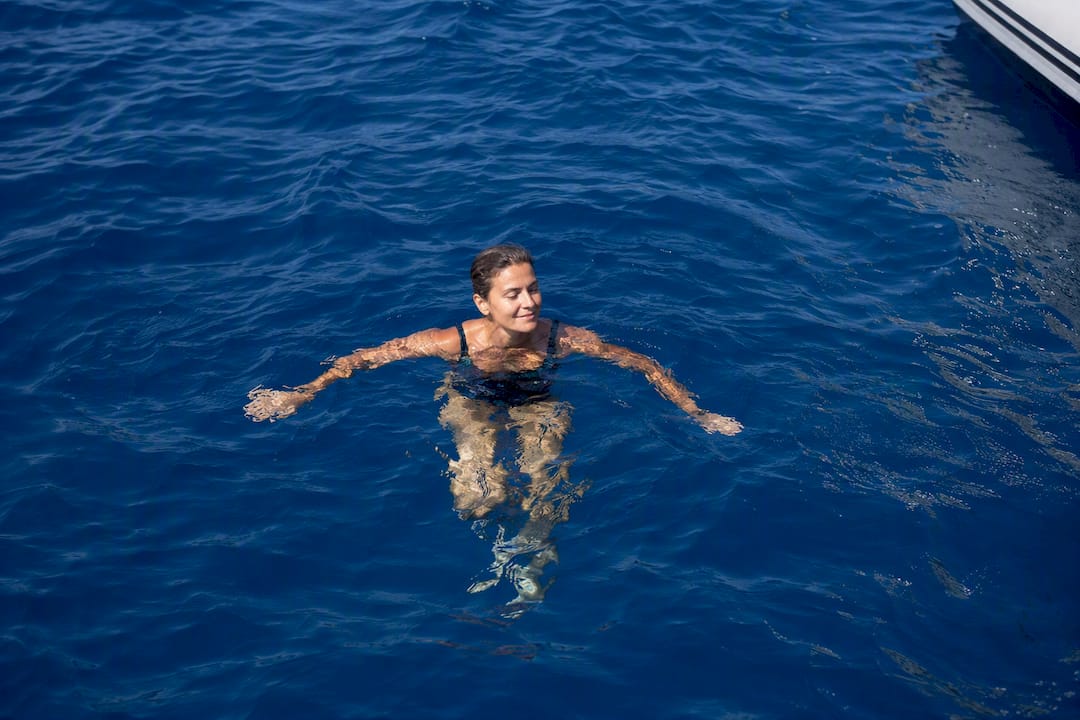
Ear and sinus issues deserve attention too. Snorkeling with a blocked nose or an active ear infection makes equalizing painful and increases the risk of injury to the eardrum, even in the shallow depths typical of Sithonia’s coves.
Fatigue sneaks up faster in the water than on land, particularly for older adults or anyone unused to ocean swimming. Build in rest breaks, and don’t treat the first snorkel of a trip as the moment to swim your longest distance. Ease into it, especially if you haven’t been in open water in a while, and let your comfort level with the current cove decide how far you go, not your itinerary.
An Editor’s Take: What Actually Keeps People Safe Out Here
Most snorkeling advice online reads like it was written for a swimming pool. Halkidiki isn’t a pool. Wind shifts fast, coves vary wildly in shelter, and the difference between a great swim and a scary one usually comes down to choices made before anyone touches the water: which cove, what wind, whose eyes are watching. The skippers who run these coves daily aren’t following rules for the sake of it. They’re avoiding problems they’ve already seen once and never want to see again.
— George
A Simpler Way to Snorkel Safely: Let a Skipper Handle the Risk Calls
Every safety step in this guide, checking wind, picking a sheltered cove, watching for boat traffic, gets easier when someone with local experience makes those calls for you. That’s the practical case for a crewed sail over a solo shore trip: on a crewed boat, the skipper reads the day’s conditions, picks the cove that matches them, and stays aboard as a lookout while you’re in the water, with snorkeling gear already provided.
You’re not guessing whether Vourvourou or Kavourotrypes is calmer today, and you’re not managing a rental mask that leaks. You show up, get briefed, and snorkel somewhere sheltered and clear. If you want that experience for a full day out of Sithonia, the Full Day Private Cruise runs 7 hours from 600 EUR and covers exactly this kind of supervised stop. For something shorter, the Sunset Private Cruise fits a calmer, shadowed evening swim into a 4-hour trip from 400 EUR. Check dates and book directly through either page.
Sources
This guide draws on DAN’s safety guidance on snorkeling and breath-hold risk, OceanSafety Hawaii’s snorkeling safety recommendations, WorkSafe Queensland’s operational snorkel safety guide, and local Sithonia spot guides from ChalkidikiHub and Beaches for Kings.
- DAN – Water-related injuries: snorkeling and scuba diving
- OceanSafety Hawaii – Snorkeling safety
- WorkSafe Queensland – Snorkel safety guide
- Snorkeling in Sithonia – Halkidiki | ChalkidikiHub
FAQ
Which Greek island or region is best for snorkeling?
Sithonia, on the Halkidiki peninsula, is one of the strongest regions in Greece for clear-water snorkeling, with coves like Kavourotrypes and Karydi offering 8 to 15 meters of visibility under normal conditions. Its rocky coastline holds far more marine life than the sandier beaches typical of Kassandra.
What should I avoid when snorkeling in Halkidiki?
Avoid entering over dark, algae-covered rock, since that’s where sea urchins cluster, and avoid snorkeling once wind reaches roughly Beaufort 4 or higher. Never snorkel alone, and skip hyperventilating before a breath-hold dive, since DAN warns this masks low-oxygen warning signs.
What is the 120 rule in diving?
There is no standard ‘120 rule’ guideline for snorkeling. Such specific dive-planning formulas apply to scuba diving, not to surface breath-hold snorkeling.
Can snorkeling cause pulmonary edema?
Immersion pulmonary edema is a rare but documented risk during strenuous swimming or breath-hold activity in cold water, and it produces symptoms like sudden breathlessness, coughing, or chest tightness. Anyone showing these signs during or after snorkeling needs immediate medical evaluation, since the condition can escalate quickly.
Does Halkidiki Boat Sailing include snorkeling gear on its cruises?
Yes. Every trip aboard Off The Hook includes snorkeling gear along with a professional skipper who selects sites based on the day’s conditions. Current pricing for the Full Day Private Cruise and Sunset Private Cruise is listed directly on Halkidiki Boat Sailing’s site.