

Sailing with seniors works far more often than it fails, and age alone rarely decides the outcome. What decides it is physical and balance fitness, the trip style you choose (crewed and docked versus self-skippered with mooring), and how well you prepare for medical needs before you leave the dock. If any of that feels shaky, the easiest starting point is a crewed, docked catamaran day trip or sunset sail, where the crew handles everything and you simply enjoy the water.
TL;DR:
- Shorter, guided trips like sunset cruises or day sails are the safest and most suitable introduction for seniors with moderate mobility.
- Crewed private charters are the easiest, lowest-effort option, with crew handling navigation and docking, ideal for seniors preferring relaxation.
- Ensuring medical readiness, choosing boats with senior-friendly features, and practicing balance exercises significantly reduce risks for older sailors.
- Catamarans are typically preferred for stability and ease of water entry, while docking at marinas minimizes transfer-related fall risks.
- Starting with a brief, low-commitment sail helps seniors assess their comfort level before engaging in longer or more active sailing experiences.
Table of Contents
- Who Sailing With Seniors Actually Suits
- Types of Senior-Friendly Sailing Trips
- How Can Seniors Learn or Refresh Sailing Skills?
- Safety and Health Preparation for Older Sailors
- Which Boat Features Matter Most for Seniors?
- Packing and On-Board Habits That Make Sailing Easier
- What Should You Ask Before Booking a Senior Sailing Trip?
- Why the Single-Boat Approach Works So Well for Senior Guests
- Book a Sailing Trip Built for a Slower, Steadier Pace
- Sources
- FAQ
Who Sailing With Seniors Actually Suits
The best candidates for a sailing holiday are people with moderate mobility who genuinely like being outdoors, don’t mind a slower pace, and enjoy the social rhythm of a small group on a boat. You don’t need racing fitness. You need the ability to walk on a gently moving surface, hold a rail, and sit comfortably for a few hours at a stretch. People who love beaches but find crowded public shorelines exhausting often find a private sail far more relaxing, because there’s no walking across hot sand or hauling gear.
Borderline cases exist, and it’s worth naming them honestly. Severe balance disorders, advanced arthritis in the legs, or uncontrolled cardiac or respiratory conditions can make even a calm sail risky without medical clearance and extra planning. In those cases, a shorter dockside cruise with minimal transfers, or a land-based coastal itinerary instead, is usually the wiser call. Long-term cruisers who keep sailing into their 70s and 80s consistently point to the same thing: honest self-assessment of fitness and balance matters more than any birthday on the calendar.
Before booking, run through this quick self-check:
- Can you climb a short ladder or step down into a dinghy without assistance?
- Do you manage medications independently, or would you need help tracking a schedule?
- Is your vision or hearing sharp enough to follow crew instructions in wind or engine noise?
- Can you stay stable on a moving deck for short periods without needing to sit constantly?
Answering “not really” to one or two of these doesn’t rule sailing out. It just tells you which trip type and which accommodations to ask for.
Types of Senior-Friendly Sailing Trips
Trip format matters more than trip length when you’re matching a sailing holiday to your energy level. Four formats cover almost everyone:
- Crewed private charters. The crew handles lines, navigation, and docking, so guests focus on scenery, conversation, and the occasional swim. This is the lowest-effort format available and the one most senior travelers gravitate toward first.
- Senior-group sail weeks. Multiple travelers share a boat and a loosely planned itinerary with regular shore visits. Activity is moderate, and the social pace suits people who want company without a rigid schedule.
- Lessons and competent-crew courses. Structured, incremental instruction for those who want to actually learn to sail rather than just ride along. Sessions build skill gradually, so nobody is thrown into helming a boat in gusty conditions on day one.
- Day sails and sunset cruises. Short, low-commitment outings that let you test how your body handles a few hours on the water before committing to anything longer.
For a first-timer unsure how their balance or energy will hold up, a short crewed outing is the smart trial run. Anyone comparing a sailing holiday to other relaxed water excursions, such as a scenic evening cruise like a holiday harbor tour, will notice the same principle applies everywhere: shorter, guided, low-effort formats are the gentlest entry point into life on the water.
How Can Seniors Learn or Refresh Sailing Skills?
Learning to sail later in life doesn’t require starting from zero confidence, and it doesn’t require a steep learning curve either. Several realistic pathways exist, each suited to a different comfort level:
- Community sailing clubs often run low-cost introductory sessions on calm, sheltered water, with instructors used to working with older adults.
- Certification courses through organizations such as US Sailing, the American Sailing Association (ASA), or the UK’s Royal Yachting Association (RYA) teach structured basics: knots, right of way, sail trim, and safety procedures.
- Charter-with-instructor trips put you on a real boat with a professional aboard, so you learn in the exact conditions you’ll actually sail in later.
- Crewing opportunities on club or charter boats let you build hands-on hours without needing to own or skipper a vessel yourself.
A realistic progression looks like this: try a single day sail, then a crewing week if you enjoyed it, then a short formal course to fill in the gaps, and only then consider a skippered charter where you take a more active role. Most people reach basic competence, comfortably handling an anchor, using a marine radio, and taking a turn at the helm, within a handful of structured sessions rather than months.
Pro Tip: Set one small, specific goal per outing, like “learn to read wind direction from the water” instead of “get better at sailing.” Vague goals stall; specific ones get practiced.
Safety and Health Preparation for Older Sailors
Falls are the single biggest preventable risk on any boat, and they’re not unique to sailing. Falls remain a leading cause of injury among older adults on land, which makes a gently rocking deck worth respecting rather than fearing. The good news is that most of the risk is manageable with preparation, not avoidance.
Start with medical readiness. Carry a written list of prescriptions and existing conditions, and make sure it’s stored somewhere the crew can find it quickly in an emergency, not buried in a suitcase. Boating safety guidance for older adults recommends this alongside a clear check-in schedule and backup communication, such as a personal locator beacon or reliable phone signal plan, in case plans change mid-trip.
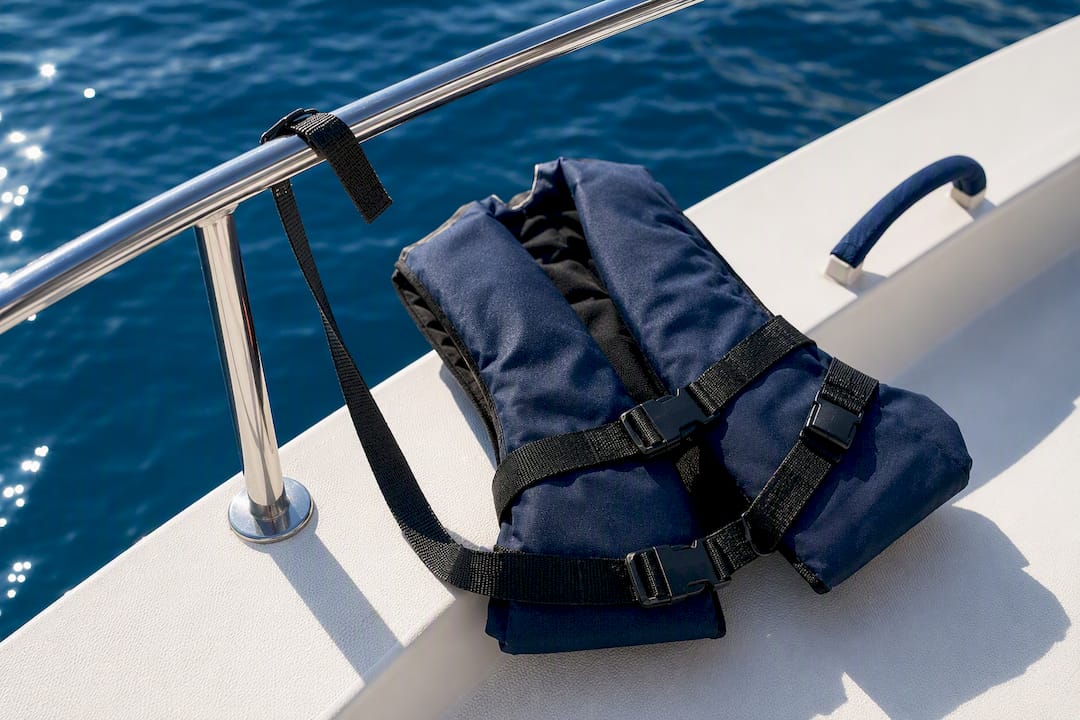
On deck, lifejackets should stay on outside the cabin whenever conditions call for them, even on a calm day. It costs nothing and removes one entire category of worry.
Balance and strength don’t need a gym membership to improve. Short resistance and balance routines done a few times a week, such as single-leg stands near a countertop or light resistance band work, measurably improve stability and reduce fall risk over a matter of weeks, not months.
A few more habits matter more than people expect:
- Favor shorter passages and earlier arrivals into anchorages, avoiding the fatigue that builds on long afternoon crossings.
- Choose conservative weather windows over ambitious ones. There will always be another calm day.
- Pack spares: a second pair of glasses, spare hearing aid batteries, and any critical medication duplicated across two bags.
- Ask the operator directly what their safety and emergency protocol looks like before you book, not after you’re aboard.
Pro Tip: Practice your balance routine standing on one leg with your eyes closed for ten seconds at home before you sail. If that feels shaky on solid ground, ask for a dockside-only itinerary rather than one involving open anchorages.
Which Boat Features Matter Most for Seniors?
Not every sailboat is built the same way, and for older guests, the differences aren’t cosmetic. They change how tired, how steady, and how safe you feel by the end of the day.
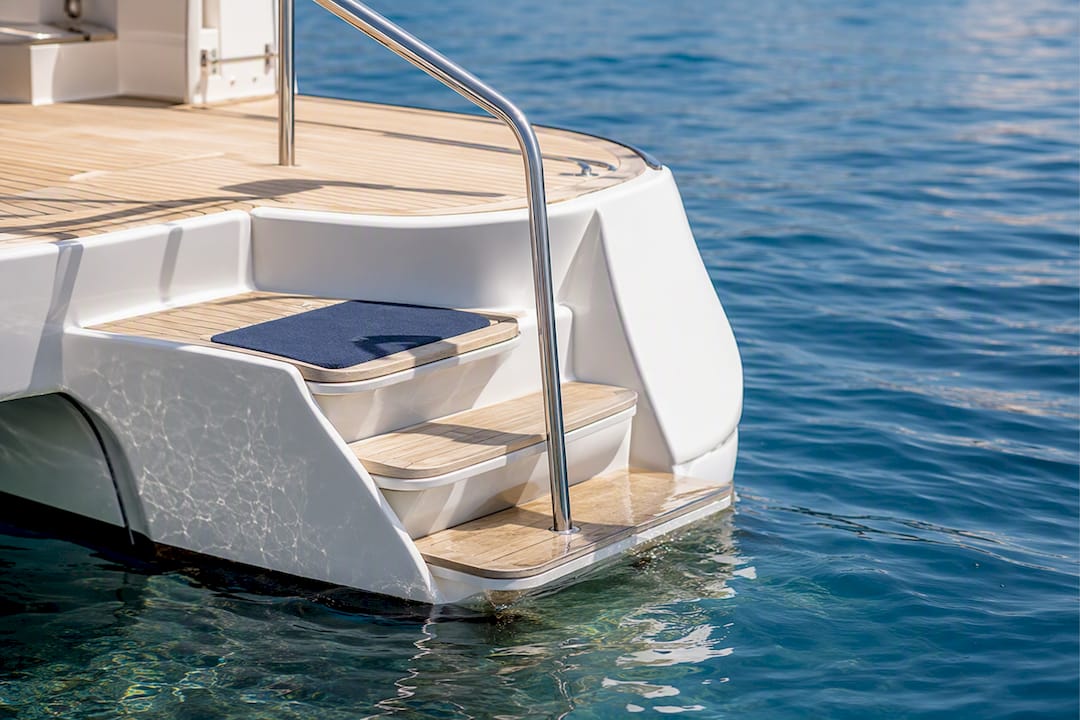
Catamarans tend to be the preferred hull type for a reason: wide, flat decks and minimal heel mean you’re not constantly bracing against a tilted surface. Many also feature sugar-scoop steps at the stern, low platforms that make climbing in and out of the water dramatically easier than hauling yourself over a high gunwale.
Docking overnight versus anchoring on a mooring is another decision worth asking about directly. Docking eliminates the repeated dinghy transfers that mooring requires, and each transfer is a small but real fall risk. A route that favors marinas and sheltered berths over open moorings removes that risk almost entirely.
When comparing operators, ask specifically about:
- An electric windlass, which removes the physical strain of hand-hauling an anchor chain.
- Non-slip deck surfaces and grab rails positioned along common walking paths, not just near the helm.
- Cabin layout, particularly whether the head (bathroom) is easy to reach without navigating steep steps.
- Written crew assistance policy for boarding, disembarking, and moving around the boat.
Packing and On-Board Habits That Make Sailing Easier
What you pack and how you move on deck matter almost as much as the boat itself. Soft-sided luggage stows far more easily in tight cabin spaces than hard-shell suitcases, and it won’t slide dangerously if the boat rocks.
- Pack layered sun protection (a wide-brim hat, UPF clothing, and reef-safe sunscreen) since shade is limited on open water.
- Bring water shoes with grip and a quick-dry towel, both far more practical than flip-flops on a wet deck.
- Store medications in a labeled, easily accessible bag, and keep a duplicate copy of prescriptions in your shoreside luggage in case the onboard copy is misplaced.
- Move around the boat using three points of contact whenever possible, one hand always on a rail, especially near steps or the swim platform.
For transfers into a dinghy or onto a dock, don’t be shy about asking crew for a hand. It’s a routine request, not a special accommodation, and any competent operator expects it. Check ahead whether your itinerary favors docking over mooring, since that single detail determines how often you’ll need to make that transfer at all.
What Should You Ask Before Booking a Senior Sailing Trip?
A short conversation before you pay a deposit prevents most bad surprises. Ask directly about docking policy: will the boat tie up at a marina most nights, or rely on open moorings that require dinghy rides? Ask about crew ratios and credentials, especially whether someone aboard has first-aid or medical training. Ask what the emergency and evacuation plan looks like if someone becomes unwell mid-trip, and how communication works in areas with weak phone signal.
Get clear on what “all-inclusive” actually covers. It should mean meals, transfers, snorkeling gear, and a skipper or host, not a vague promise with add-on fees waiting at the end. Confirm the specifics in writing, whether by email or booking confirmation, before you travel.
Watch for these red flags:
- The operator brushes off mobility questions instead of answering them specifically.
- Nobody can explain what happens if weather turns or someone needs medical help.
- There’s no clear assistance protocol for boarding or moving around the boat.
- Docking and mooring plans are vague or described only as “we’ll figure it out.”
A quick checklist like this one for senior sailboat accessibility is worth running through with any operator, regardless of where you’re sailing.
Why the Single-Boat Approach Works So Well for Senior Guests
Running one signature boat instead of a scattered fleet changes what a crew can promise a senior guest. When the same vessel, the same crew habits, and the same dock routines repeat every trip, accessibility stops being a guess and becomes a known quantity: the same step height, the same grab rails, the same predictable boarding sequence.
That consistency matters more in sheltered Halkidiki Sithonia waters than people expect. Routes around Neos Marmaras, Nikiti, Paliouri, and Kassandra offer calm anchorages and short hops between coves, which suits a conservative, senior-friendly itinerary far better than an ambitious open-water crossing. A curated route through these waters means shorter passages, earlier arrivals, and fewer surprises, exactly the operational habits that let people keep sailing well into their later years.
— George
Book a Sailing Trip Built for a Slower, Steadier Pace
Halkidiki Boat Sailing runs one dedicated sailing boat, Off The Hook, which offers a fully crewed, all-inclusive setup: a professional skipper, fuel, refreshments, snacks, and snorkeling gear, with no logistics left for you to manage. That consistency is exactly what the planning checklist above asks for: predictable docking, familiar crew routines, and clear assistance during transfers.
If you’re testing the waters, start with the Sunset Private Cruise (4 hours) as a low-commitment option to see how a few hours aboard feels. Ready for more, the Full Day Private Cruise (7 hours) covers a full day exploring the area. For a relaxed, multi-day escape with no repacking or hotel switches, the Weekly Private Cruise option covers a full week aboard. Refer to the company’s official site for current pricing and details. Before booking any of them, ask the same questions this guide laid out: docking policy, crew assistance, and medical preparedness.
Sources
For further reading on the topics covered here, Harvard Health’s strength training guidance covers balance and resistance exercises, the CDC’s falls data explains injury risk among older adults, and The Boat Galley’s cruising account offers a firsthand view of sailing well into your 70s and beyond.
- Sailing in Your 70s: What It Takes to Go Cruising as You Age – The Boat Galley
- Strength training builds more than muscles – Harvard Health
- Important facts about falls – CDC
- Never stop sailing! Practical ways to make it easier as you age – Practical Boat Owner
- Boating and elderly individuals – Discover Boating
FAQ
Is 70 Too Old to Learn to Sail?
No. Plenty of people take up sailing or continue cruising well past 70, and long-term cruisers into their 70s and 80s point to fitness, balance, and honest self-assessment as the real deciding factors, not age itself. A structured course or a charter-with-instructor trip is a gentle way to start or refresh skills at any age.
Can an 80-Year-Old Go on a Sailing Trip?
Yes, provided mobility and any medical conditions are managed with the right preparation, such as carrying written prescriptions and a medical summary on board. A crewed, docked catamaran day or sunset trip is typically the easiest and lowest-risk format for this age group.
What Is the Best Type of Boat for Older Sailors?
Catamarans are generally the most senior-friendly choice because their wide, flat decks and minimal heel make walking around far more stable than on a traditional monohull. Sugar-scoop steps at the stern also make getting in and out of the water noticeably easier.
How Do I Get Into Sailing as an Older Adult?
Start with a short day sail or a crewed sunset trip to see how you feel on the water, then progress to a crewing week or a short certification course if you enjoy it. Halkidiki Boat Sailing’s Sunset Private Cruise is a practical, low-pressure way to try it for the first time.
What Should I Pack for a Senior-Friendly Sailing Trip?
Pack soft-sided luggage, layered sun protection, grippy water shoes, and a labeled bag of medications with a duplicate prescription list stored separately. Quick-dry towels and reef-safe sunscreen round out the essentials for comfortable days on deck.