

You can snorkel confidently on your first trip by using properly fitted gear, practicing calm, slow mouth-breathing in shallow water, and following a short practice routine before heading anywhere near a reef. That’s the whole formula. Most beginner panic comes from one of two things: a mask that leaks, or breathing that gets fast and shallow the moment the face goes underwater.
Do this:
- Test your mask fit and breathe slowly through the snorkel while still standing in shallow water.
- Snorkel with a buddy, guide, or in sight of a lifeguard, and use a flotation vest if you’re not a strong swimmer.
Don’t do this:
- Don’t skip the pool or shallow-water practice and go straight to open water.
- Don’t fight a foggy mask or a small leak. Stop, fix it, and reset before continuing.
Handled together, gear fit and breathing rhythm remove most of what makes a first snorkel feel scary. Everything else in this guide builds on those two habits.
Key Takeaways
Confident first-time snorkeling comes down to a well-fitted mask, slow deep breathing, and short practice sessions before open water.
| Point | Details |
|---|---|
| Fit gear before you go | Press-test your mask and try fins in a pool or shallow water before committing to open water. |
| Breathe slow, not fast | Deep, slow mouth-breathing prevents the panic that fast, shallow breathing tends to trigger. |
| Practice clearing drills | Rehearse snorkel and mask clearing until the reflex is automatic, not something you figure out live. |
| Respect currents and reef | Swim into a current first, avoid touching coral, and use reef-safe sunscreen. |
| Guided trips add support | Halkidiki Boat Sailing pairs beginners with a briefed crew, on-board gear, and a sheltered cove near Sithonia. |
Table of Contents
- Essential Beginner Snorkeling Gear and How It Should Fit
- How Do You Breathe Through a Snorkel Without Panicking?
- What’s the Right Body Position and Kick for Snorkeling?
- Snorkeling Safety Basics for Beginners
- A Short Practice Plan Before Your First Reef Snorkel
- Where Should Beginners Snorkel First?
- Common Beginner Mistakes and Quick Fixes
- What to Bring for Your First Snorkel
- What a Local Skipper Wants Beginners to Know
- Ready to Snorkel With Support Instead of Guesswork?
- Sources
- FAQ
Essential Beginner Snorkeling Gear and How It Should Fit
Three items matter: mask, snorkel, and fins. Everything else is a bonus. According to Silent World’s beginner guide, a simple kit of these three pieces is genuinely all you need to start, and cheap disposable sets from a beach kiosk are the fastest route to a wasted afternoon.
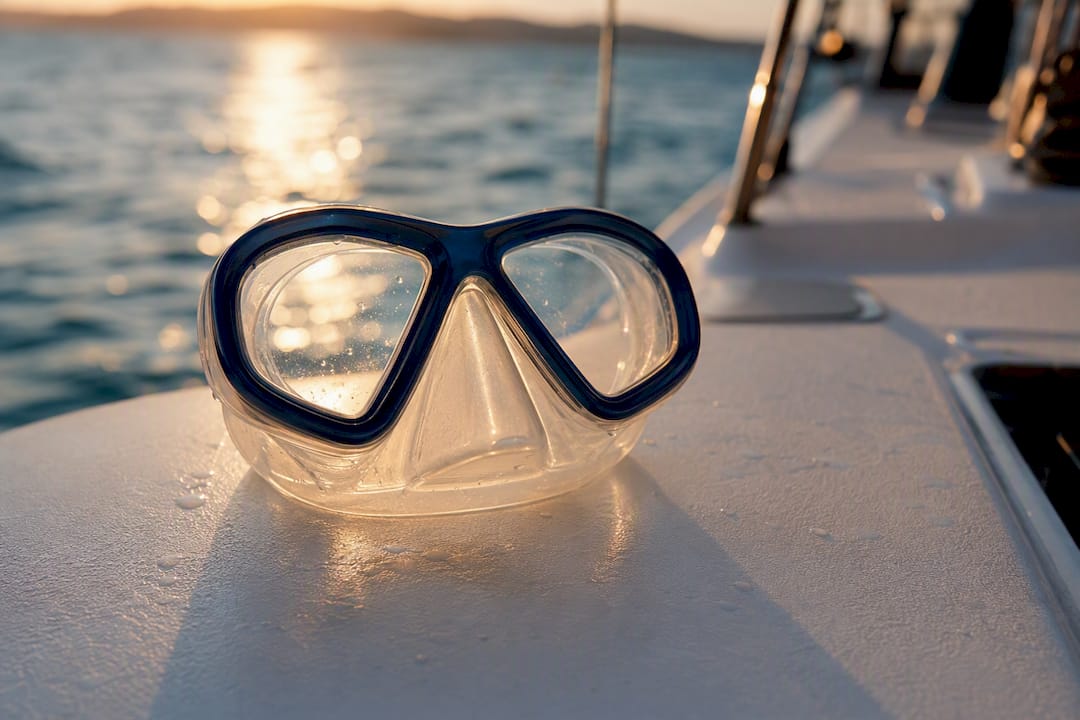
Mask: Press it to your face without the strap, inhale gently through your nose, and let go. If it stays sealed on its own for a few seconds, the fit works. A mask that needs the strap cranked tight to seal will leak the moment you move. For fog, a drop of baby shampoo or a dedicated defog gel rubbed on the inside lens and rinsed beats spit in almost every case.
Snorkel: A classic J-tube is fine in calm water, but dry-top and semi-dry snorkels use a valve or splash guard to keep water out when a wave rolls over the top. Silent World recommends these dry or semi-dry designs specifically for nervous or less experienced snorkelers, since they cut down on the surprise mouthful of seawater that triggers panic.
Fins: Full-foot fins are lighter and simpler for warm-water beginners; open-heel fins with booties suit rocky entries. Softer, shorter fins take less leg strength than long free-diving blades, which matters when you’re still building the habit.
- Rent or try gear in a pool before buying anything.
- Add a snorkel vest if you’re a non-swimmer or just want extra buoyancy. Flotation aids let non-swimmers snorkel the surface safely in calm, supervised water, especially since seawater’s higher salt content already gives you more natural buoyancy than a lake or pool.
Pro Tip: Bring a spare mask strap. It’s the single cheapest fix for the most common gear failure on a boat, and almost nobody packs one.
How Do You Breathe Through a Snorkel Without Panicking?
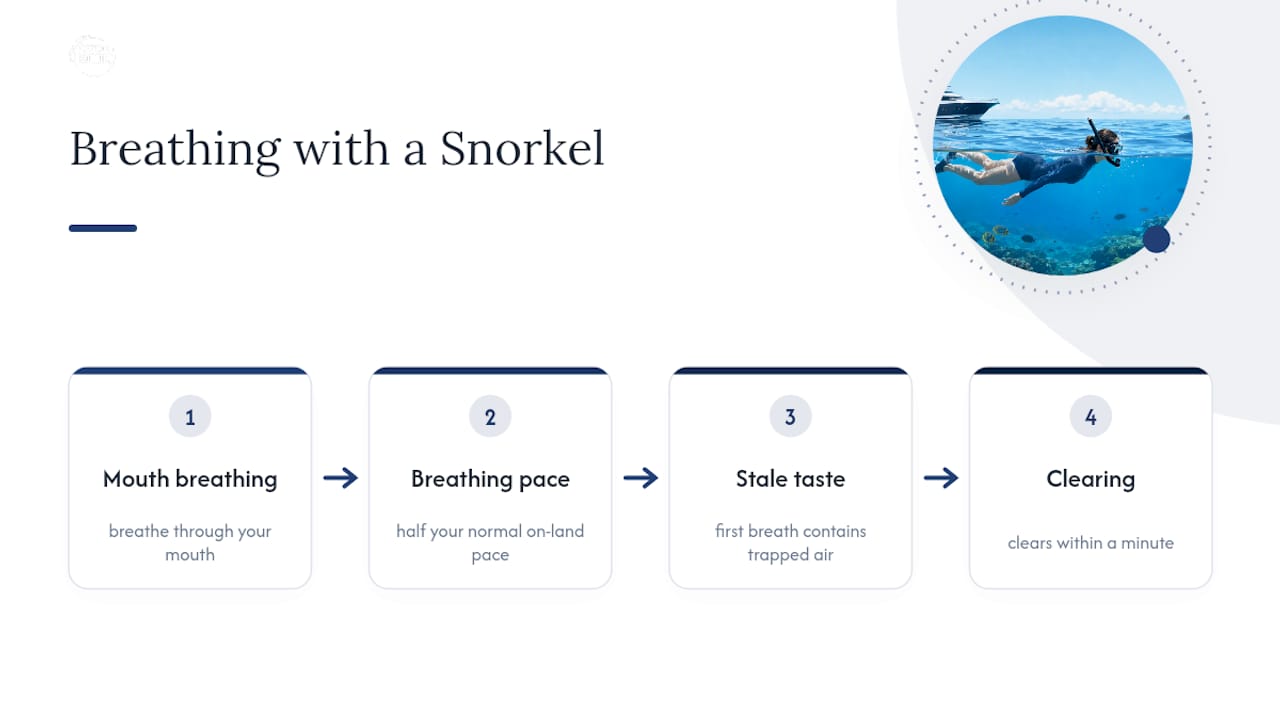
Breathe slowly and deeply through your mouth, roughly twice as slow as your normal breathing rate on land. That stale-tasting first breath through the tube is normal. It’s leftover exhaled air sitting in the tube, often called dead space, and it clears within a minute or two of steady breathing. Beginners who don’t know this often mistake it for a problem and start breathing faster, which is exactly backward.
Clearing your snorkel (blast-clear method):
- Take a small breath before your face goes back under if water has entered the tube.
- As you surface or once ready, exhale sharply and forcefully through the tube to blast the water out the top.
- Follow with one slow, exploratory breath to confirm the tube is clear before returning to a normal rhythm.
Dry-top snorkels skip most of this since their valve keeps water out in the first place, per Wikihow’s snorkeling guide.
Clearing a flooded mask:
- At the surface: tilt your head back, lift the bottom edge of the mask slightly, and let water drain out.
- Underwater: press the top of the mask frame against your forehead and exhale through your nose to push water out the bottom seal.
- If a leak keeps returning, surface, reseat the mask, and check for hair or a strap twist under the seal.
Pro Tip: Practice both clearing drills in a pool until they feel automatic. A skill you’ve done ten times on purpose won’t rattle you the one time it happens by accident.
What’s the Right Body Position and Kick for Snorkeling?
Float horizontally, face angled down at roughly 45 degrees, arms relaxed at your sides or lightly out front. Fighting to stay vertical burns energy fast and pulls your mask out of position.
Kick from the hips, not the knees. A slow, wide flutter kick pushed by your hips and thighs moves you farther per stroke than a fast, knee-driven kick, and it’s the same principle Kona Snorkel Trips points to for conserving energy on longer swims. Keep your fins fully submerged. Splashing at the surface both wastes effort and scares off the fish you came to see.
- Keep your face at that steady 45 degree angle rather than lifting it to look around; roll your whole body slightly instead.
- If you duck-dive a few feet down, pinch your nose through the mask and gently equalize, exactly as you would descending in a plane.
- Entering from a boat, follow your crew’s exact instructions for the ladder or platform.
- Entering from shore in fins, walk backward into the water so you don’t trip over the blades, a habit crews at Halkidiki Boat Sailing reinforce with every group before they go in.
Snorkeling Safety Basics for Beginners
The rules that actually prevent trouble are short and unglamorous.
- Never snorkel alone. Stay with a buddy or guided group, and stay within sight of a lifeguard or your boat.
- Wear a flotation vest if you have any doubt about your swimming, and agree on a hand signal for “I need help” before you get in.
- Identify current direction before entering. If there’s a noticeable pull, start swimming into it and let it carry you back, rather than fighting it on your tired return leg.
- Keep distance from coral and marine life. Never touch, stand on, or grab reef structure, both for your safety and the reef’s.
- Use reef-safe sunscreen, since standard sunscreen chemicals contribute to coral damage, a point Sandals’ guide for beginners also flags as a core beginner habit.
- Watch for boat traffic and use a dive flag, brightly colored buoy, or your tour’s marker so passing boats see you.
Pro Tip: If you feel your breathing speed up or your chest tighten, stop kicking, float, and breathe slowly for thirty seconds before doing anything else. Panic feeds on movement; stillness starves it.
A Short Practice Plan Before Your First Reef Snorkel
Give yourself one pool session and one sheltered-bay session before attempting a real reef. It’s a small investment that pays off the moment conditions get slightly choppy.
- Pool, 20 to 30 minutes: Put on your full gear-mask, snorkel, fins-and float face-down for five to ten minutes just breathing. Then run three or four snorkel-clearing drills. Finish with two or three short fin-kick laps to feel the rhythm.
- Sheltered bay, session one: Start with a face-in float near shore, standing depth. Do a five to ten minute circuit staying close to the sand.
- Sheltered bay, session two: Extend to a fifteen to twenty minute guided circuit, ideally with someone experienced nearby.
WatersportsPortal’s starter guide backs this exact pool-to-bay progression as the fastest, safest path to open-water comfort. Stop and reset if you feel real fatigue, dizziness, or a mask leak that won’t hold. Those are your body’s signal to end the session, not push through it.
Pro Tip: Treat the pool session like a rehearsal, not a formality. The muscle memory you build there is what keeps you calm when the water isn’t perfectly flat.
Where Should Beginners Snorkel First?
Look for a sheltered bay, lagoon, or reef flat with calm water, minimal current, and ideally a lifeguard or established tour operator nearby. Morning sessions almost always beat afternoons: wind tends to pick up as the day goes on, and morning light gives you clearer water for spotting fish and terrain. Skip any spot right after heavy rain, since runoff stirs up silt and cuts visibility to almost nothing.

Before you go, check wind speed, tide timing, and whether the area sees regular boat traffic.
Pro Tip: Along Halkidiki Sithonia, a shore-access cove near Neos Marmaras or Nikiti gives you calm, protected water for your first attempt, while a short guided boat trip out of the same area can drop you into a quieter, less-crowded hidden cove that a shore walk simply can’t reach.
Common Beginner Mistakes and Quick Fixes
Most first-timers hit one of these problems, and every one of them has a fast fix.
- Mask keeps leaking: Surface, reseat it, check for a hair strand or twisted strap under the seal, and retighten evenly on both sides, not just one.
- Jaw aches from biting the mouthpiece: Loosen your grip. You only need to hold it lightly with your lips and a soft bite, not clamp down.
- Fins feel too stiff or slip off: Overly stiff fins exhaust your legs fast; loose fins waste energy fighting to keep them on. If you’re renting, swap sizes on the spot rather than pushing through discomfort.
- Straying too far from shore or boat: Set a personal distance limit before you get in, and treat it as a hard line, not a suggestion.
What to Bring for Your First Snorkel
Pack light, but don’t skip the basics.
- Well-fitted mask and snorkel (own or rented)
- Comfortable fins sized for your feet
- Rash guard or thin wetsuit for sun and jellyfish protection
- Reef-safe sunscreen, water, a towel, and a sun hat
Optional but worth adding: a snorkel vest, a spare mask strap, a small repair kit, and water booties for rocky shore entries. For a fuller rundown of what else belongs in your bag on a boat day, Halkidiki Boat Sailing’s packing checklist covers the rest.
What a Local Skipper Wants Beginners to Know
Most first-timers ask me the same two questions before they get in the water: “What if my mask floods?” and “What if I panic?” My honest advice on board “Off The Hook” is always the same. Breathe slower than feels natural, and trust the vest if you’re wearing one. We run a short dockside briefing and gear check with every group before anyone goes in, and it’s usually the nervous swimmers who end up loving it most by the end of the day.
Ready to Snorkel With Support Instead of Guesswork?
A pool session teaches you the mechanics, but a guided trip on the water solves the two things beginners worry about most: not knowing where to go, and not having help nearby if something feels off. Aboard “Off The Hook,” every snorkel stop comes with a professional crew, on-board vests and gear, and a short briefing before anyone gets in the water, so you’re never working it out alone. Our skippers also pick the calmest, most sheltered cove for the day’s conditions around Sithonia, whether that’s a quiet corner near Kassandra or Paliouri, rather than leaving you to gamble on a spot from a map.
That combination matters most for non-swimmers, nervous first-timers, and families with kids who’ve never had a mask on their face before. If that sounds like your group, take a look at what a full day private cruise includes, or check what to expect on a private boat tour before you book.
Sources
- How to Snorkel – Wikihow
- How to Snorkel: The Complete Beginner’s Guide | Silent World
- Snorkeling for Beginners: A Complete Starter Guide | WatersportsPortal
- How Do You Snorkel? A Beginner’s Guide | Kona Snorkel Trips
FAQ
Is Snorkeling Easy for Beginners?
Yes. It requires no certification and only a basic mask, snorkel, and fin setup, according to Airkayaks’ beginner overview, and most people build real comfort within one pool session and one shallow-water practice.
How Do You Breathe With a Snorkel as a Beginner?
Breathe slowly and deeply through your mouth at roughly half your normal on-land pace. The stale taste in your first breath is trapped air in the tube, and it clears within a minute of steady breathing.
How Do I Avoid Panicking While Snorkeling?
Slow your breathing and stop kicking the moment you feel tense. Practicing snorkel and mask clearing drills in a pool beforehand also removes most of the surprise that triggers panic in open water.
Can Non-Swimmers Snorkel?
Yes, with a flotation aid like a snorkel vest, non-swimmers can snorkel the surface in calm, supervised conditions, and a guided trip with crew support, like those run by Halkidiki Boat Sailing, makes this considerably more comfortable for a first attempt.