
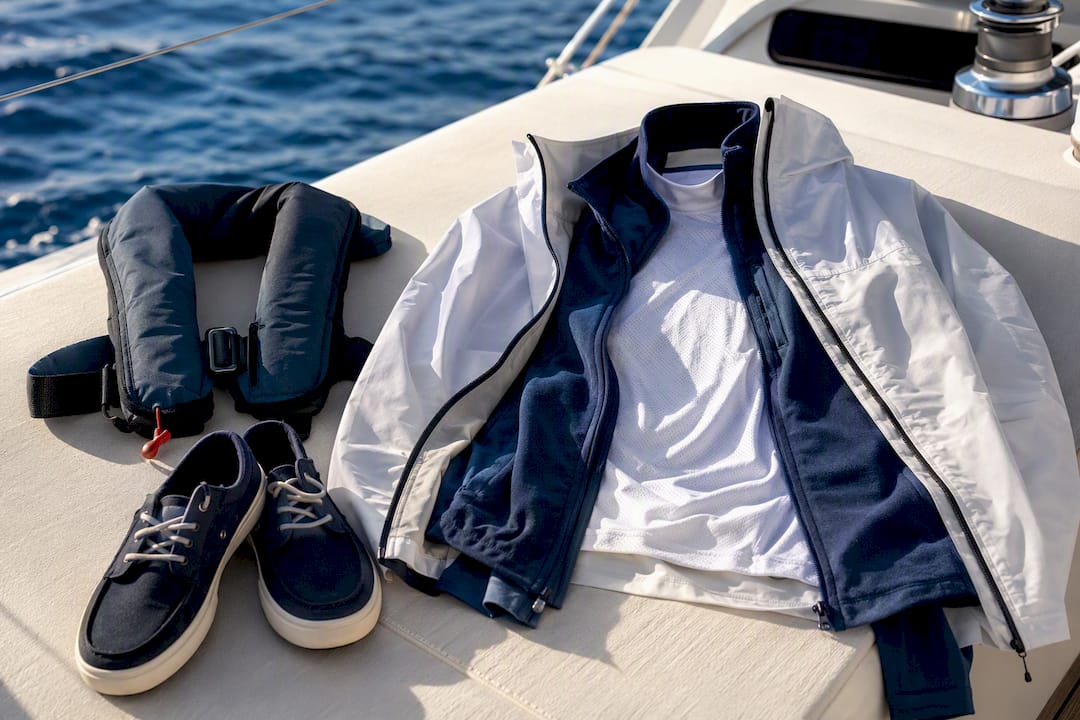
Wear a three-layer system, non-marking deck shoes, and a correctly fitted lifejacket or buoyancy aid, and you’re set for nearly any day sail. Layer a moisture-wicking base under an insulating midlayer, top it with a windproof or waterproof shell, and skip anything cotton. Add sun protection, and you’re ready to board.
Here’s your fast-pack checklist for a private charter or day cruise:
- Quick-dry base layer (synthetic or merino, not cotton)
- Lightweight fleece or insulating midlayer
- Packable windbreaker or waterproof shell
- Non-marking, flat-soled deck shoes
- Hat with a chin strap, polarized sunglasses, reef-safe sunscreen
- Small dry bag for your phone, wallet, and towel
Pro Tip: Pack for the water, not the forecast on land. Air temperature over open water often runs 5 to 7 degrees Celsius cooler than onshore, so that warm coastal afternoon can feel genuinely chilly once you clear the harbor.
Key Takeaways
A three-layer clothing system, non-marking deck shoes, and a properly fitted lifejacket cover nearly every sailing scenario, with adjustments made for boat type and season.
| Point | Details |
|---|---|
| Layer, don’t bulk | Combine a moisture-wicking base, insulating midlayer, and windproof or waterproof shell for adaptability. |
| Skip cotton entirely | Choose synthetic or merino fabrics that dry fast and keep you warm even when damp. |
| Match footwear to conditions | Use flat, non-marking, grippy deck shoes; add insulated boots for offshore or cold trips. |
| Fit safety gear over clothing | Keep midlayers slim enough that a lifejacket or buoyancy aid sits correctly against your chest. |
| Halkidiki charters supply the basics | Halkidiki Boat Sailing provides lifejackets, snorkeling gear, and refreshments, so guests pack only clothing and sun protection. |
Table of Contents
- The Five Rules That Make Any Sailing Outfit Work
- What Should You Wear on a Dinghy vs a Yacht vs Offshore?
- What Should You Pack for Each Season on the Water?
- How Do You Choose the Right Sailing Shoe?
- What Fabrics Should You Choose for Each Layer?
- Which Accessories Actually Matter on Deck?
- What Should a Waterproof Jacket and Pants Actually Do?
- What Belongs on Your Pre-Departure Packing List?
- What Should You Never Wear on a Boat?
- What Should You Pack for a Sailing Trip in Halkidiki?
- A Skipper’s Quick Reminder Before You Board
- Ready to Put This Checklist to Use in Halkidiki?
- Where to Find More Sailing Clothing Guidance
- Sources
- FAQ
The Five Rules That Make Any Sailing Outfit Work
Once you understand why sailors dress the way they do, you can adapt to any boat, any season, without overpacking or freezing halfway through a sunset sail.
Rule 1: Layer, don’t bulk up. A base layer manages sweat, a midlayer traps warmth, and an outer shell blocks wind and spray. Wind and boat speed create their own weather system on the water, and layering lets you adjust in seconds rather than sweating through one heavy jacket or shivering in a T-shirt.
Rule 2: Fabric choice beats fashion. Cotton absorbs water and stays wet, pulling heat from your skin long after the spray has stopped. Synthetic blends and merino wool dry fast and keep working even when damp.
Rule 3: Grip matters more than looks. Flat, non-marking soles with a soft rubber compound keep you upright on a wet deck and won’t scuff fiberglass or teak.
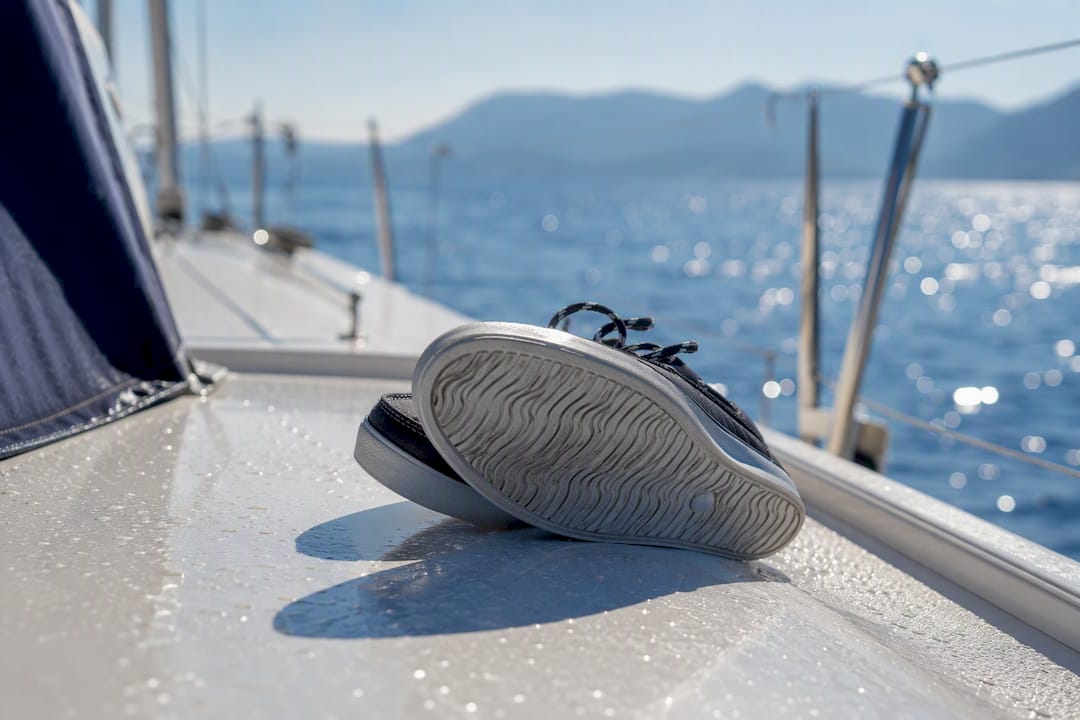
Rule 4: Sun exposure is relentless on water. Reflection off the sea doubles your UV load, so UPF fabric, a strapped hat, and polarized sunglasses aren’t optional extras.
Rule 5: Clothing has to work with your safety gear, not against it. Bulky jackets under a lifejacket restrict arm movement and can push the flotation collar out of position. Choose a slim midlayer that leaves room for the RYA-recommended lifejacket or buoyancy aid to sit correctly against your chest.
- Base layer: wicks sweat, never cotton
- Midlayer: traps heat without bulk
- Outer shell: blocks wind and spray
- Footwear: flat, non-marking, grippy
- Safety layer: lifejacket fits over everything else, not under it
What Should You Wear on a Dinghy vs a Yacht vs Offshore?
The boat you’re on changes everything about what belongs in your bag. A dinghy puts you inches from the water; an offshore passage can put you hours from shelter if the weather turns.
Dinghy sailing means expecting to get wet. The RYA is blunt about this: dinghy sailors should plan on splashes or a capsize and dress accordingly, with a buoyancy aid worn at all times, not just packed.
Coastal yachts and day-cruise charters offer more shelter and drier conditions, but a lifejacket still needs to be aboard and layers still matter once you’re moving at speed. Offshore passages raise the stakes further, with longer exposure, colder water, and less chance of a quick return to shore.
- Dinghy: buoyancy aid worn at all times, wetsuit or quick-dry shorts, water shoes with drainage, spare warm layer in a dry bag
- Coastal yacht/day cruise: lifejacket aboard and worn in rougher conditions, layered clothing, deck shoes, waterproof shell for spray
- Offshore: lifejacket with harness worn continuously, thermal base and insulated mid, sailing boots, full foul-weather set with hood
Activities shift the list, too. Racing crews favor closer-fitting, quick-dry gear that won’t snag lines. Snorkeling stops call for swimwear under your sailing layers so you’re not changing on deck. Multi-day passages demand more spares, since drying time between watches is limited.
- Dinghy: highest immersion risk, lightest kit, buoyancy aid mandatory
- Yacht day trip: moderate exposure, layers plus lifejacket on board
- Offshore: longest exposure window, full foul-weather gear and harness
What Should You Pack for Each Season on the Water?
A good sailing wardrobe flexes with the calendar. Here’s what actually earns a spot in your bag depending on when you’re heading out.
Summer kit works for most Aegean charters and warm-weather day sails:
- Lightweight moisture-wicking base or UPF rash guard
- Quick-dry shorts or lightweight pants
- Packable windbreaker for the ride back when the breeze picks up
- Boat shoes or secure strapped sandals (skip loose flip-flops)
- Hat with a chin strap and polarized sunglasses
The rash guard earns its place on longer trips. Even on a hot day, hours of sun reflection off the water adds up faster than most people expect, and reapplying sunscreen every two hours is harder to remember than just covering up.
Spring and autumn (transitional) conditions swing more, so build in insurance:
- Moisture-wicking base layer
- Fleece midlayer for cooler mornings and evenings
- Packable waterproof shell, since coastal showers arrive with little warning
- Long pants rather than shorts
- Closed deck shoes, with neoprene socks if the water’s still cool
This kit holds up well across a three or four day trip. The fleece and shell rarely need washing between wears, just a quick rinse of salt spray and an overnight hang.
Winter or exposed offshore conditions demand a different level of commitment:
- Thermal base layer, top and bottom
- Insulating midlayer, fleece or a light synthetic fill
- Offshore waterproof jacket and salopettes rather than a simple shell
- Sailing boots with a solid ankle grip
- Waterproof gloves and a warm hat
Salopettes outlast a standalone jacket and pants combo on longer trips because the high back and bib design keep spray from working its way in at the waist, which matters most when you’re on watch for hours at a stretch.
How Do You Choose the Right Sailing Shoe?
Deck footwear boils down to one question: does the sole grip wet fiberglass without marking it? Everything else is a variation on that theme.
Traditional leather boat shoes offer classic styling and reasonable grip on dry decks, but they can feel stiff once wet and take a while to dry out. Modern deck trainers trade some of that classic look for mesh uppers, faster drainage, and softer rubber compounds that flex with your foot. Closed-toe water shoes work well for dinghy sailing or wading ashore at anchor, prioritizing drainage over structure. Sailing boots step in for cold or offshore conditions, sealing out spray with a taller cuff and a warmer lining.
Brands across the category have converged on similar priorities. Dubarry’s performance sailing trainers use high-frequency bonded construction with a NonSlip-NonMarking outsole and water-dispersion channels to cut down on aquaplaning, while Gill’s OS Sailing Boot pairs a waterproof inner sock with a dual-density, slip-resistant sole built for offshore exposure. Helly Hansen, Musto, and Sperry round out the category, each with their own take on traction and quick-dry performance, and comparisons across these brands generally come down to a tradeoff between breathability, grip, and price.
- Fit close but not tight, and try shoes on with the thin socks you’ll actually wear
- Test lateral grip by twisting your foot, not just walking forward
- Look for drainage holes, quick-dry lining, and bonded (not stitched) uppers
Pro Tip: Break in new deck shoes on a wet bathroom floor before your trip. If they slip on tile, they’ll slip on a wet deck, and you’ll find out the hard way at the worst possible moment.
What Fabrics Should You Choose for Each Layer?
The fabric against your skin does more work than people give it credit for. Get it wrong and every other layer is fighting an uphill battle.
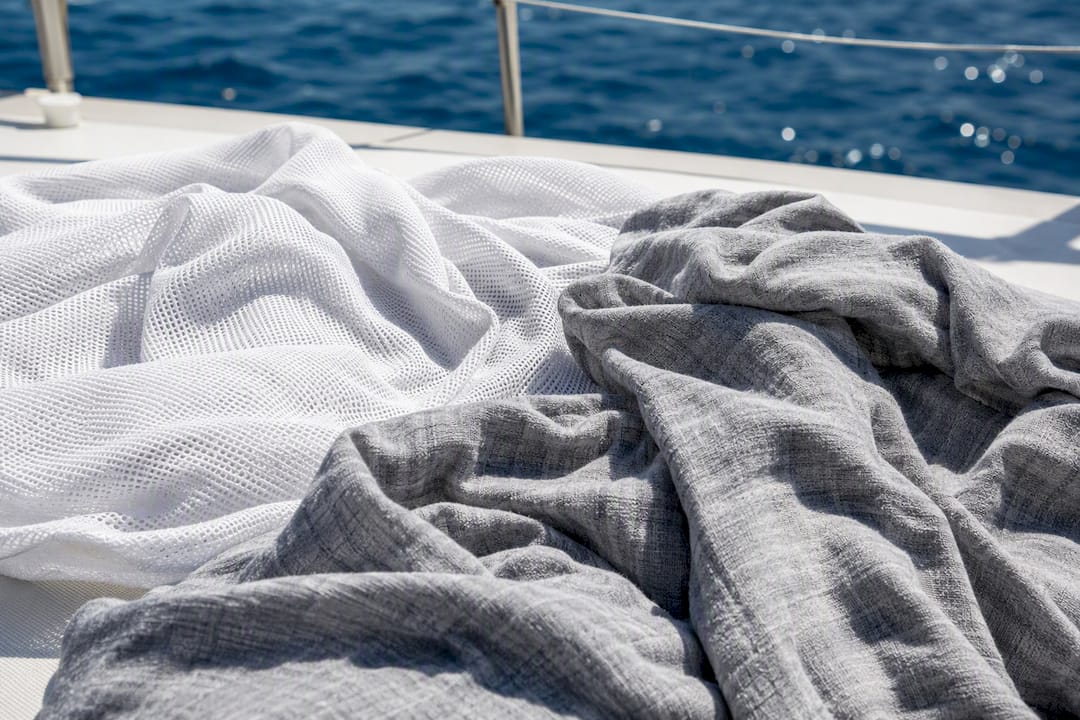
Base layer: synthetic polyester or nylon blends, or merino wool if you want built-in odor resistance on a multi-day trip. Cotton holds onto moisture and keeps you cold long after you’ve dried off everywhere else.
Midlayer: fleece is the default for good reason. It’s light, it insulates even when slightly damp, and it packs down small. A lightweight synthetic-fill jacket is a good step up for colder mornings.
Outer layer: look for genuine waterproof-and-breathable construction, taped seams, and an adjustable hood. Offshore sailors add a spray skirt or higher collar for when waves start coming over the bow.
- Base: synthetic or merino, never cotton
- Mid: fleece or light synthetic fill
- Outer: taped seams, adjustable hood, breathable membrane
Pro Tip: On multi-day trips, rinse salt out of technical fabrics with fresh water each evening if you can. Salt crystals trap moisture and make quick-dry fabric feel damp again by morning, even after it looks dry.
Which Accessories Actually Matter on Deck?
A handful of small items do more for comfort and safety than most people expect from something you can fit in a jacket pocket.
Lifejacket or PFD: dinghy sailors wear a buoyancy aid at all times. On yachts, it comes out when conditions turn, and fit depends on what’s underneath, so keep your midlayer trim enough to let the collar sit correctly.
Sun defense: a UPF top, a brimmed hat with a chin strap, and polarized sunglasses with a retention strap so a gust doesn’t send them overboard. Reapply high-SPF sunscreen and lip balm more often than you would on land, since glare off the water intensifies UV exposure.
Small extras that earn their space: sailing gloves for rope work, a face buff for wind and spray, neoprene socks if the water’s cool, a microfiber towel, and a compact dry bag for your phone or camera.
- Lifejacket fit checked before you leave the dock
- Hat with a strap, not just a brim
- Gloves for anyone handling lines
- Dry bag for anything electronic
What Should a Waterproof Jacket and Pants Actually Do?
A good foul-weather jacket earns its price through details you only notice once you’re wet without it. Look for a genuine waterproof-breathable membrane, fully taped seams, and adjustable cuffs that seal against a gust of spray.
The hood matters more than most buyers realize. A stiffened peak keeps visibility clear at the helm, where a floppy hood blocks your view exactly when you need it most.
- Choose trousers for milder day sails where spray is occasional
- Choose salopostyle or bib-front salopettes for offshore or cold-weather trips, since the high back blocks water at the waist
- Size the jacket to fit over your midlayer with room to move, not just room to breathe
A heavyweight offshore jacket is genuine overkill for a warm afternoon day cruise. A packable, lighter shell handles spray and breeze just as well without cooking you in the sun.
- Taped seams and a stiff hood peak for helm visibility
- Trousers for casual days, salopettes for exposed or cold conditions
- Room to layer underneath without feeling stiff
What Belongs on Your Pre-Departure Packing List?
Run through this before you leave the house, not once you’re already at the dock.
- Check the weather and water temperature for your route
- Strap on your hat and secure your sunglasses before boarding
- Stow your phone, wallet, and keys in a dry bag
- Confirm your lifejacket fits over your outer layer
- Layers: base, mid, packable shell
- Footwear: non-marking deck shoes
- Sun kit: hat, sunglasses, sunscreen
- Safety: PFD or lifejacket confirmed onboard
- Snacks, water, and your dry bag
Swap in reef shoes and a swimsuit for a snorkel stop, and add one extra midlayer if you’re staying out past sunset.
What Should You Never Wear on a Boat?
A few common wardrobe choices turn into real hazards once you’re on deck. Skip these:
- Cotton jeans: soak up water, stay heavy and cold for hours
- Heavy leather boots: poor drainage, slow to dry, dangerous once wet
- Flip-flops: no grip and no protection if you stub a toe on a cleat
- High heels or hard-soled shoes: mark the deck and offer zero stability
- Loose jewelry or scarves: can snag on rigging or a winch handle
What Should You Pack for a Sailing Trip in Halkidiki?
Sailing around Sithonia, from Neos Marmaras to Nikiti, Paliouri, and Kassandra, means dealing with a sea breeze that builds through the afternoon and drops off fast once the sun sets. Even a warm July day can feel noticeably cooler once you’re a mile offshore and the boat picks up speed.
A cooling sea breeze off Sithonia can make an 85-degree afternoon feel ten degrees cooler on deck, and that temperature drop happens fast once you’re moving under sail or heading back at sunset.
Charters like Halkidiki Boat Sailing’s day trips typically supply lifejackets, snorkeling gear, and refreshments, so you don’t need to pack any of that yourself. What you should bring: a slim insulating midlayer for sunset sails, a hat with a chin strap for faster transfers between coves, and reef-safe sunscreen, since some hidden cove routes involve more spray than sheltered bays.
A Skipper’s Quick Reminder Before You Board
I always ask guests one question before a private charter leaves the dock: do your shoes have real grip? Everything else, layers, sun protection, a light jacket for the ride home, guests tend to get right on their own. Footwear is where trips go wrong. Test yours on a wet surface before you leave home, not after you’re already on deck.
Ready to Put This Checklist to Use in Halkidiki?
Renting gear or piecing together a rental fleet’s worth of safety equipment is one way to sail Sithonia, but it means guessing what’s actually supplied and packing for every contingency yourself. Halkidiki Boat Sailing runs one signature yacht with a professional local skipper aboard every trip, so lifejackets, snorkeling gear, and refreshments are already handled before you even think about your outfit.
That means your packing list stays exactly as short as the one above: layers, sun protection, and shoes with real grip. Whether you’re booking a sunset cruise around Neos Marmaras or a full group day charter out to the hidden coves near Kassandra, check available dates and reach out for tailored packing advice before you book. If safety equipment and provider responsibility matter to you when choosing a charter, operator liability standards are worth a quick read too.
Where to Find More Sailing Clothing Guidance
- The RYA offers official UK guidance on dinghy versus yacht clothing and safety kit, useful as a baseline for any sailor.
- Henri-Lloyd’s clothing guide breaks down the layering system and fabric choices in more technical detail.
- Helly Hansen and Gill’s product pages show how footwear and outerwear technology actually performs in wet, windy conditions.
- Yachting Monthly’s shoe roundups compare grip, breathability, and price across major brands.
Sources
- What To Wear Sailing | Sailing (RYA)
- What to Wear Sailing: Complete guide to sailing clothing & gear – Henri-Lloyd
- What to wear sailing – Helly Hansen
FAQ
What shoes should you wear sailing?
Wear flat, non-marking deck shoes or sailing trainers with soft rubber soles for grip on wet surfaces. Save sailing boots for offshore or cold-weather trips where more coverage and warmth matter.
What should a woman wear on a sailboat?
The same three-layer system applies regardless of gender: a moisture-wicking base, a light midlayer, and a windproof or waterproof shell, paired with non-marking shoes and sun protection like a strapped hat and polarized sunglasses.
What pants should I wear sailing?
Quick-dry synthetic pants or shorts work for warm-weather day sails, while long pants or salopettes handle cooler, wetter, or offshore conditions better. Avoid denim, since cotton jeans soak up water and stay cold for hours.
What are the best sailing clothes?
The best sailing clothes combine moisture-wicking base layers, a packable insulating midlayer, and a breathable waterproof outer shell, all paired with non-marking footwear. For a Halkidiki day charter, that usually means lightweight layers plus a hat and sunglasses, since Halkidiki Boat Sailing supplies the lifejackets and snorkeling gear.