

TL;DR:
- Sustainable tourism balances environmental, economic, and sociocultural concerns to benefit both destinations and visitors. Making deliberate choices in transport, accommodation, and itinerary design reduces emissions and keeps spending local. Travelers play a vital role by choosing eco-friendly options and supporting community-owned businesses.
Sustainable tourism is defined as travel that fully accounts for its environmental, economic, and sociocultural impacts, addressing the needs of travelers, host communities, and the environment to ensure lasting benefits. The United Nations Environment Programme (UNEP) and the World Tourism Organization (UNWTO) formalized this definition to give the travel industry a measurable framework, not just an aspiration. Three pillars hold it together: environmental responsibility, local economic benefit, and sociocultural respect. Standards like the Global Sustainable Tourism Council (GSTC) translate those pillars into auditable criteria that destinations and operators can actually meet. Places like Bhutan and Machu Picchu have built entire visitor policies around these principles, proving that protecting a destination and welcoming travelers are not mutually exclusive goals.
What is a sustainable tourism guide and why does it matter?
Responsible travel, the recognized industry term for what most travelers call “eco-friendly travel,” is the practice of making deliberate choices that protect the places you visit. Every booking, every meal, and every transport decision either adds to or subtracts from a destination’s long-term health.
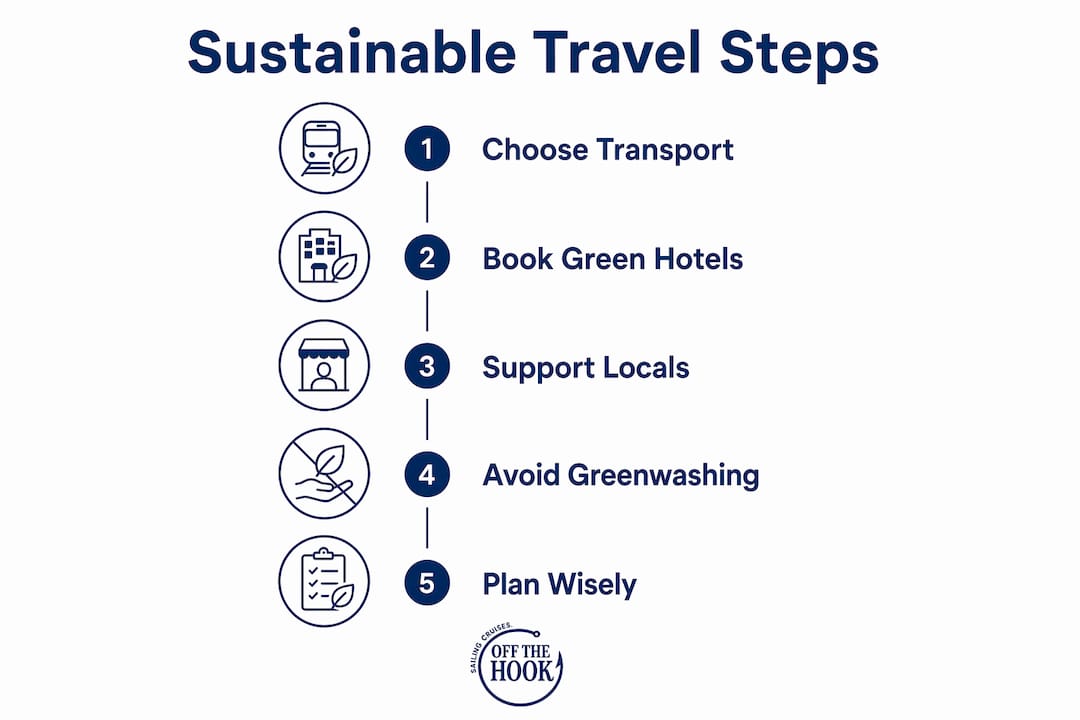
Transport is the single biggest lever you control. Train travel cuts CO2 emissions by 80–90% per passenger compared to flying the same distance. That figure means a rail trip from Athens to Thessaloniki produces a fraction of the carbon a short-haul flight generates. When rail is not an option, choosing direct flights over connecting routes reduces fuel burn significantly.
Slow travel compounds those gains. 42% of travelers in 2026 plan trips outside peak seasons to reduce transit emissions and engage more deeply with local communities. Traveling off-peak also means you spend more per day in one place rather than racing between airports. That depth of engagement benefits both you and the destination.
Accommodation choice matters more than most travelers realize. Independent hotels and locally owned guesthouses carry a 40–50% lower carbon footprint than large chain hotels, largely because of smaller scale and localized resource management. Choosing a family-run guesthouse in Neos Marmaras over a sprawling resort is not a sacrifice. It is often a richer, more personal experience.
Practical eco-friendly travel tips you can use today
- Choose rail or ferry over short-haul flights whenever the route allows.
- Pack light. Heavier luggage increases fuel consumption on every leg of your trip.
- Bring reusable items: a water bottle, tote bag, and reef-safe sunscreen protect both your budget and local ecosystems.
- Walk, bike, or use public transit within destinations. In coastal villages like Nikiti or Paliouri, walking between tavernas and beaches is genuinely the best way to experience the place.
- Eat local and seasonal food. A grilled octopus at a harbor-side taverna in Neos Marmaras supports a local fisherman and produces far fewer food miles than imported menu items.
- Consider carbon offsets for unavoidable flights, but only through verified programs like Gold Standard or Verra’s Verified Carbon Standard.
Pro Tip: Book accommodations with Green Key or GSTC certification. These labels require independent audits, so they carry real weight rather than just marketing language.
How can travelers support local economies when they travel?
Economic leakage is the quiet crisis of mass tourism. Profits from foreign-owned resorts routinely bypass host communities, leaving local residents with low-wage service jobs and minimal share of the revenue their land and culture generate. Understanding leakage changes how you book.
The fix is direct and practical. Booking locally owned accommodations, hiring independent guides, and eating at family restaurants keeps money circulating within the community. A privately owned guesthouse in Kassandra reinvests its revenue locally in ways a multinational hotel chain simply does not.
Here is what responsible spending looks like in practice:
- Book directly with local operators rather than through large online travel agencies that take significant commissions.
- Hire community-run tour guides who know the area’s history, ecology, and culture firsthand.
- Buy souvenirs from local artisans, not mass-produced items imported from outside the region.
- Avoid all-inclusive resorts where every dollar stays inside the property and never reaches local restaurants, shops, or guides.
- Stay longer in fewer places. A week in Sithonia, rotating between Neos Marmaras and Nikiti, generates more local economic benefit than five nights split across five different countries.
Apps like FairTrip help travelers identify vetted local operators before they arrive, reducing the guesswork of finding authentic businesses on the ground.
Pro Tip: Ask your accommodation host where they recommend eating and shopping. Local referrals almost always lead to better experiences and keep your spending in the right hands.
How do you spot greenwashing in the travel industry?
Greenwashing is the practice of marketing a product or service as environmentally friendly without meaningful evidence to support the claim. The travel industry is particularly prone to it, because “eco” and “green” labels cost nothing to print on a brochure.
Third-party certifications like Green Key require independent audits of energy and water usage, making them far more reliable than vague self-applied labels. LEED certification and the Biosphere Responsible Tourism standard operate on similar audit-based models. A hotel that displays one of these logos has been evaluated by an external body, not just by its own marketing team.
Before you book, use this checklist:
- Search for a named certification (Green Key, GSTC, Biosphere) on the property’s website.
- Verify the certification on the certifying body’s official registry, not just the hotel’s own page.
- Ask specific questions: How does the property manage waste? What percentage of its energy comes from renewable sources?
- Assess staff knowledge. A genuinely sustainable operation trains its team to answer these questions confidently.
- Read recent guest reviews for mentions of actual practices, not just marketing language.
Avoiding greenwashing requires demanding transparent proof of sustainability practices. If an operator cannot provide specifics, treat the claim as unverified.
Pro Tip: The GSTC maintains a public database of certified destinations and operators. Checking it takes two minutes and removes all doubt about whether a certification is real.
How does trip planning shape your overall sustainability footprint?
️ Most travelers focus on small actions like reusable bottles while overlooking the decisions that actually drive their sustainability footprint: itinerary design and accommodation choices. Longer stays in a single location reduce resource use, cut transit emissions, and improve trip reliability compared to multi-stop itineraries. They also give you time to genuinely know a place.
Consolidated booking workflows that combine hotels, transport, and tours in one platform reduce redundant searches, minimize wasted transit legs, and produce more coherent itineraries. The environmental benefit is real, and so is the reduction in travel stress.
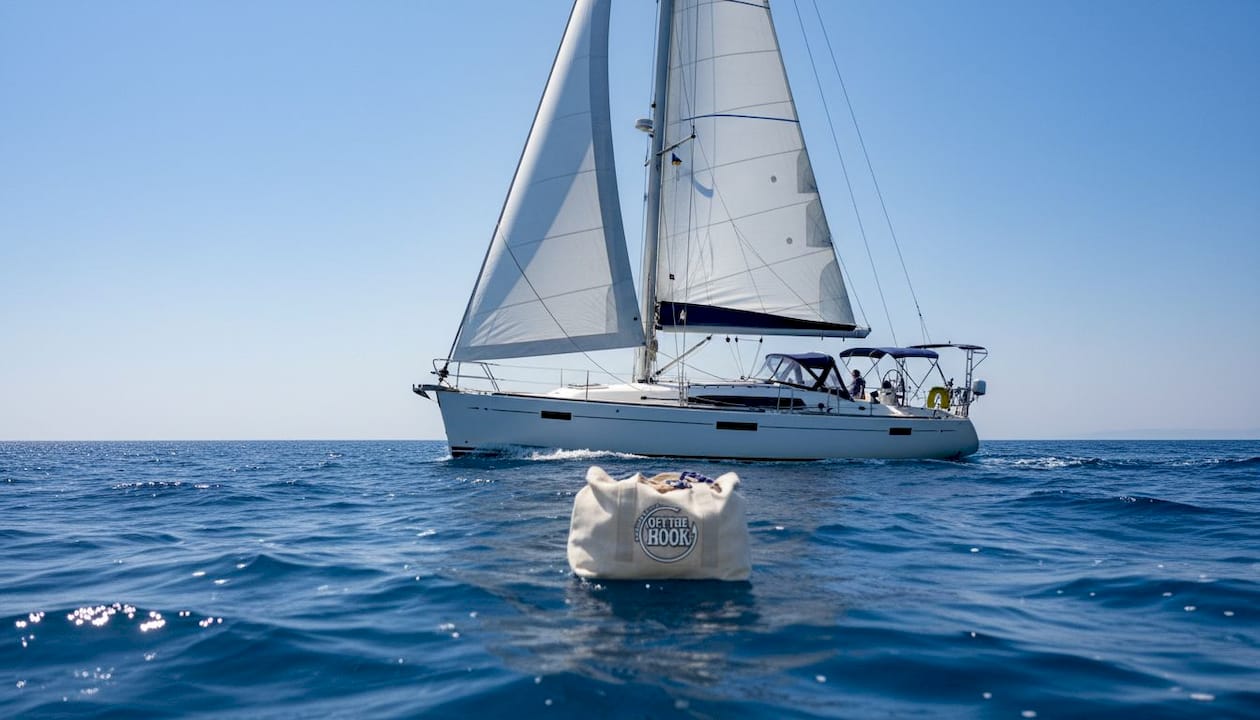
Group travel amplifies these gains. A private sailing cruise with six people shares fuel, crew, and resource costs across all travelers, producing a lower per-person footprint than six separate motorboat rentals.
| Trip structure | Environmental impact | Local economic benefit |
|---|---|---|
| Multi-stop, short stays | High transport emissions, low local spend | Minimal per destination |
| Single-location, longer stay | Low transport emissions, efficient resource use | Strong local reinvestment |
| Group travel, shared vessel | Lowest per-person footprint | Concentrated local benefit |
| All-inclusive resort | Moderate transport, high on-site resource use | Low leakage risk is high |
The table makes the pattern clear. Fewer stops, longer stays, and shared experiences consistently outperform the classic “see as many places as possible” approach on every sustainability measure.
Key Takeaways
Sustainable tourism requires deliberate choices about transport, accommodation, spending, and itinerary design, and those structural decisions matter far more than any single eco-friendly habit.
| Point | Details |
|---|---|
| Transport is the biggest lever | Train travel cuts CO2 by 80–90% vs. flying; choose rail or ferry whenever possible. |
| Accommodation choice matters | Independent, locally owned guesthouses have a 40–50% lower carbon footprint than chain hotels. |
| Leakage undermines local benefit | Book directly with local operators and avoid all-inclusive resorts to keep spending in the community. |
| Certifications beat labels | Green Key and GSTC require independent audits; vague “eco-friendly” claims do not. |
| Itinerary design drives impact | Longer stays in fewer locations reduce emissions and improve local economic benefit simultaneously. |
Why sustainable travel is a mindset, not a checklist
I have spent years watching travelers arrive in places like Sithonia with the best intentions and still make choices that undermine the communities they came to appreciate. The most common mistake is treating sustainability as a checklist of small actions rather than a consistent way of asking one question before every decision: who benefits from this?
Sustainable travel is best understood as an ongoing mindset of inquiry and responsibility, not a fixed product or destination. That framing matters because it removes the pressure of perfection. You do not need to be a zero-waste traveler to make a meaningful difference. You need to be consistent.
The Five Decision Points for Responsible Travel is a framework I find genuinely useful. Before each booking, it asks you to evaluate who profits, what environmental cost is involved, whether local culture is respected, whether workers are treated fairly, and whether the experience is honest. Running through those five questions takes less than five minutes and produces dramatically better decisions than any single eco-label can guarantee.
Halkidiki Sithonia, specifically the areas around Neos Marmaras, Nikiti, Paliouri, and Kassandra, offers something rare: a destination where authentic local experiences and low-impact travel genuinely align. Small-group sailing, local tavernas, and pristine coastline that rewards slow exploration rather than rushed sightseeing. That combination is not accidental. It reflects a region that has not yet been overrun by mass tourism, and keeping it that way requires travelers who choose intentionally.
Sustainable travel is not a sacrifice. It is almost always the more memorable, more connected, and more rewarding way to travel.
— George
Sail Halkidiki the right way with Halkidiki Boat Sailing
Private sailing is one of the most naturally sustainable ways to experience a coastal destination. A small group aboard a single vessel shares fuel, minimizes coastal disruption, and puts spending directly into the hands of local crew and operators rather than multinational platforms.
Halkidiki Boat Sailing operates the “Off The Hook” sailing yacht exclusively in the crystal-clear waters of Halkidiki Sithonia, covering pristine coastlines near Neos Marmaras, Nikiti, Paliouri, and Kassandra. Every cruise is fully crewed and all-inclusive, with a professional local skipper, snorkeling gear, refreshments, and fuel bundled into one straightforward package. The weekly private cruise gives you seven days of slow, immersive coastal travel at its most authentic. For a shorter experience, the sunset private cruise delivers four hours of golden-light sailing with zero logistical hassle.
FAQ
What is sustainable tourism in simple terms?
Sustainable tourism is travel that balances environmental protection, local economic benefit, and cultural respect so that destinations remain healthy for future visitors and residents alike.
Which transport option is most eco-friendly for travelers?
Train travel is the most sustainable transport choice, producing 80–90% less CO2 per passenger than flying the same route.
How do I know if a hotel’s eco-friendly claims are real?
Look for third-party certifications like Green Key, GSTC, or Biosphere, and verify them on the certifying body’s official registry rather than relying on the hotel’s own marketing.
What is economic leakage in tourism?
Economic leakage occurs when tourism revenue flows out of a destination through foreign-owned businesses, leaving host communities with minimal financial benefit despite high visitor numbers.
Does slow travel actually reduce my environmental impact?
Yes. Longer stays in fewer locations cut transit emissions, reduce resource consumption, and increase the amount of money that stays within local communities.