
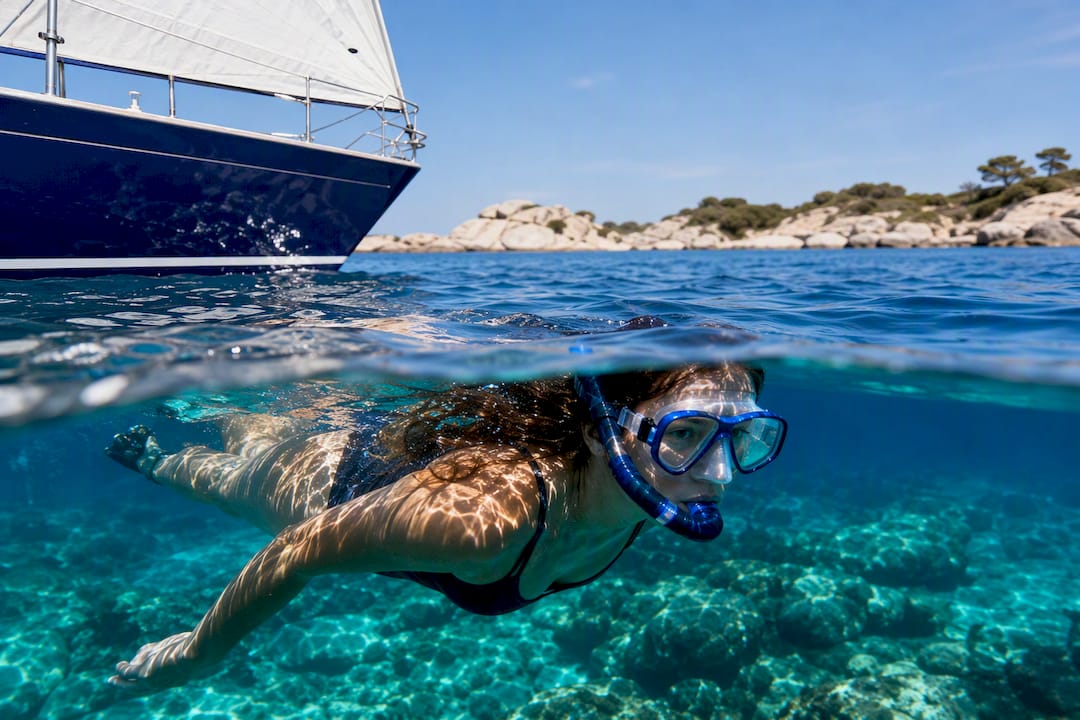
Kavourotrypes, Karydi, the Diaporos islands, Porto Koufo, and the rocky ends near Sarti stand out as the best snorkeling spots in Sithonia, prized for their clear water and easy rock-cove access. The single biggest factor in a good day here isn’t the spot you pick. It’s timing: get in before 9 a.m., ideally in June or September, and bring your own mask since rental gear is scarce.
TL;DR:
- Visiting Sithonia before 9 a.m. in June or September offers the best and calmest water conditions for snorkeling.
- Kavourotrypes and Karydi are top spots, with Kavourotrypes favored by confident swimmers and Karydi ideal for families and beginners.
- Marine life mainly includes octopus, wrasse, bream, salema, starfish, and sea urchins, with Posidonia seagrass providing an important nursery.
- Rental snorkel gear is limited and inconsistent, so bringing your own well-fitting mask and snorkel is recommended.
- Opting for a private sail aboard Off The Hook eliminates gear hunting and logistical guesswork, providing sheltered, expert-chosen spots suited to daily conditions.
Table of Contents
- Snorkeling Spots Sithonia Travelers Keep Coming Back To
- What You’ll Actually See Underwater
- Gear and Safety Basics Before You Get In
- When to Go for the Clearest Water
- Getting to Each Spot: Shore, Kayak, or Boat
- Why a Private Sail Beats Renting Gear and Guessing
- A Local’s Honest Take on Timing
- Book a Private Sail Instead of Chasing Parking Spots
- Sources
- FAQ
Snorkeling Spots Sithonia Travelers Keep Coming Back To
Sithonia’s coastline does something Kassandra’s sandy bays simply can’t: it delivers consistently clear water thanks to its rocky, indented shore, with visibility often reaching clear and wide ranges on calm mornings. That’s the reason nearly every serious snorkeling guide to Halkidiki steers you toward this middle peninsula rather than its sandier neighbor.
Kavourotrypes (Orange Beach) tops most lists for good reason. This isn’t one beach but a string of small rocky coves carved into pale cliffs, each with its own pocket of turquoise water. The rock formations create natural windbreaks, which keeps the water calm even when a breeze is picking up elsewhere. Regional guides consistently name Kavourotrypes and Karydi among the top picks in Sithonia, and once you’re in the water, it’s obvious why. Confident swimmers and anyone chasing underwater photos will find the best light and clearest visibility here, though the coves fill up fast by midmorning in July and August.
Karydi (also spelled Karidi), near Vourvourou, is the opposite experience: a wide, shallow, sheltered bay with the kind of gentle slope that makes it the easiest entry point on the peninsula. Sand gives way gradually to rock and grass beds a short swim from shore. If you’re introducing kids or a nervous first-timer to snorkeling, this is where to do it.
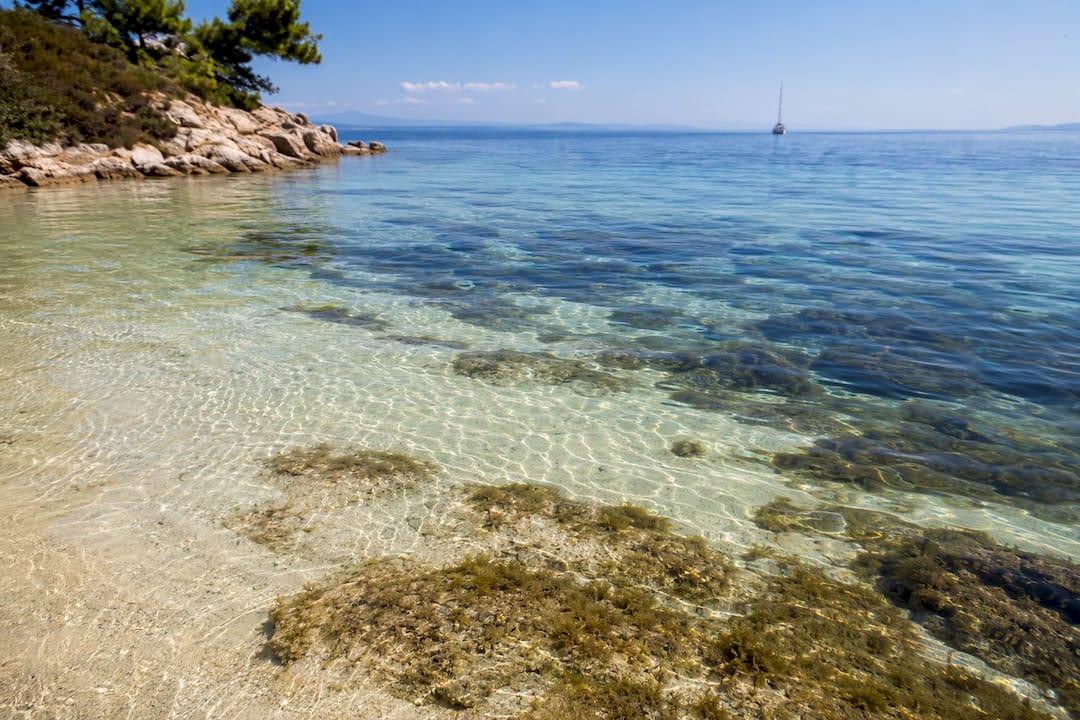
Diaporos and the surrounding islets, tucked just off Vourvourou, reward a bit more effort. The channels between the islands hide extensive Posidonia meadows and calm shallows that are best reached by boat or kayak rather than a long shore swim. This is where you’ll find the widest variety of marine life on the whole peninsula, since the seagrass acts as a nursery for juvenile fish. Our guide to Sithonia’s bays by boat covers how sailors typically approach this stretch.
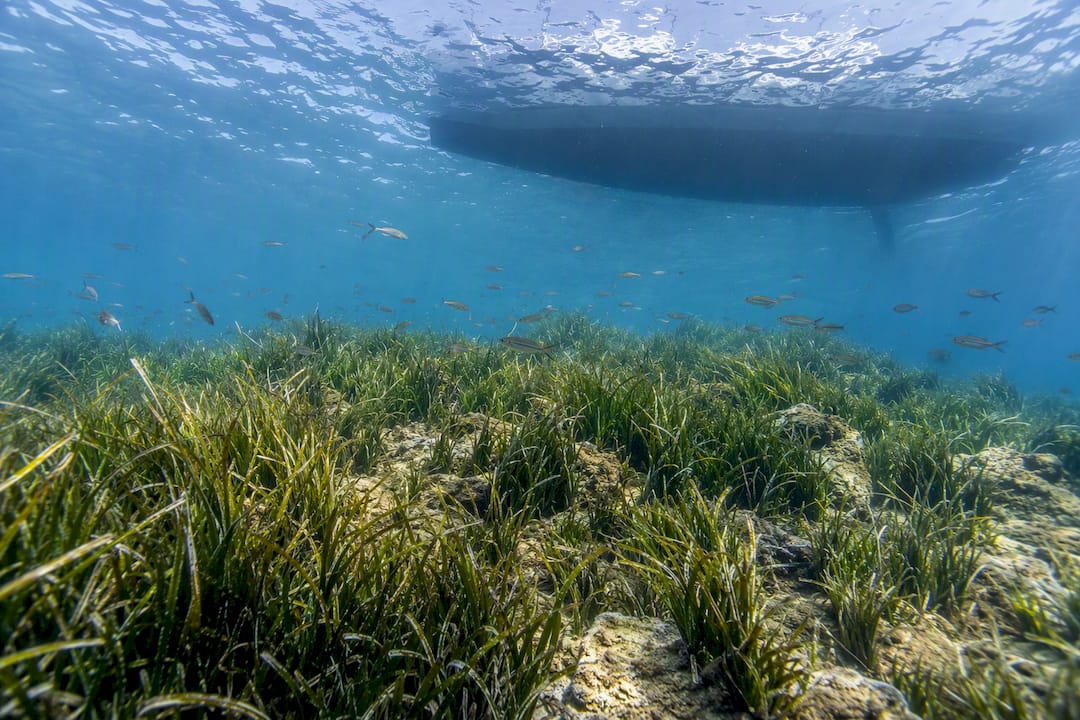
Porto Koufo, an almost fully enclosed natural harbor near Sithonia’s southern tip, splits into two very different snorkeling experiences. The inner edges are flat, calm, and forgiving, good for families wading in from the shoreline. But swim toward the harbor mouth and the seabed drops away dramatically, giving experienced snorkelers dramatic cliff walls to explore.
Sarti’s rocky ends offer maybe the most convenient snorkeling on the peninsula. The town beach itself is sandy, but walk to either rocky point and you’re in clear water within a few strokes, no boat, no long drive, just a short walk from a café or your rental.
A handful of smaller coves round out the picture. Azapiko and Klimataria sit along the quieter southeastern coast, and Klimataria in particular has shallow reef structures up to roughly 3 meters deep that visitors describe as reliably clear even on busier days. Aretes and Agios Ioannis offer a similar mix of rock and small sandy pockets, less discovered simply because they sit off the main coastal road. Kalamitsi, near Nikiti, gives you a longer sandy approach with rockier snorkeling toward its edges, a good middle-ground option if your group has mixed comfort levels.
- Kavourotrypes: rocky, best for confident swimmers, watch for midday crowds.
- Karydi: shallow and sandy, best for families and beginners.
- Diaporos: boat or kayak access, richest marine life.
- Porto Koufo: calm inner edges plus deep cliff drops near the mouth.
- Sarti: easiest walk-in access from town.
- Klimataria, Azapiko, Aretes, Agios Ioannis, Kalamitsi: quieter alternatives worth the detour.
Pro Tip: If a cove feels crowded when you arrive, don’t force it. Sithonia has enough small coves within a ten-minute drive of each other that moving on almost always beats squeezing into a packed spot.
What You’ll Actually See Underwater
Sithonia’s underwater scenery leans more Mediterranean rock garden than tropical reef, and that’s part of its appeal. Expect to spot octopus tucked into crevices, schools of wrasse and bream darting through the shallows, silvery salema moving in loose formations, and territorial little damselfish guarding patches of rock. Starfish and sea urchins cling to the rocks in the calmer coves, especially around Kavourotrypes and Diaporos.
The real backbone of this ecosystem is Posidonia oceanica, the seagrass meadows that carpet the seabed in sheltered bays like Diaporos and parts of Porto Koufo. Treat these meadows the way you’d treat a coral reef: don’t stand on them, don’t anchor into them, and don’t let curiosity turn into contact.
On a calm morning, visibility in the 8 to 15 meter range is common. Wind chop, recent rain, and heavy boat traffic all cut that number down fast, which is exactly why timing matters more than which specific cove you choose.
Gear and Safety Basics Before You Get In
A well-fitting mask makes or breaks the experience, and it’s worth bringing your own. Local rental options exist but they’re patchy and often first-come, first-served, especially in July and August. A partner guide comparing full-face and traditional snorkel masks is worth a read if you’re buying new gear before the trip.
Beyond the mask, a few extras go a long way:
- Fins for covering distance without tiring your legs.
- Reef-safe sunscreen, since you’ll be face-down and exposed for long stretches.
- A rash vest or light wetsuit top for sun and scrape protection.
- Water shoes for rocky entries like Kavourotrypes and Sarti.
- A snorkel vest for weaker swimmers or anyone still building confidence.
Always snorkel with a buddy and stay within sight of the shore or your boat. Watch for boat traffic near marina entrances and popular anchorages, and never stand on Posidonia beds to rest, even briefly. In busy coves, stagger your entry rather than clustering with other swimmers near the same rocks.
Pro Tip: If you’re snorkeling with children or older family members, Karydi and other Vourvourou bays are the safer bet. The gradual slope and calm water forgive mistakes that a rocky entry at Kavourotrypes won’t.
When to Go for the Clearest Water
Morning is the whole game. Wind and boat traffic both build through the day, so the window between sunrise and roughly 9 a.m. gives you the calmest, clearest conditions almost every time. June and September are the sweet spots for the season overall, with warm water, fewer crowds, and generally gentler wind than the peak of summer.
Watch for the Meltemi, the seasonal northerly wind that can turn a glassy cove choppy within an hour. The rule of thumb: pick whichever coast is sheltered from that day’s wind direction. If a northeasterly is blowing, Porto Koufo’s enclosed harbor tends to stay calmer than exposed east-facing coves.
- Check Meteo the morning of your trip, not the night before.
- Keep a backup spot in mind if your first choice looks rough.
- Treat any forecast with more than a light breeze as a signal to switch coasts.
Getting to Each Spot: Shore, Kayak, or Boat
Access varies a lot from cove to cove, and it shapes which spots suit a spontaneous afternoon versus a planned outing.
- Shore-accessible coves like Sarti’s rocky ends, Karydi, and Kavourotrypes (via a short walk down a dirt path) work well if you’re driving yourself and want flexibility.
- Kayak or boat-only spots, especially the Diaporos channels, reward the extra effort with quieter water and richer marine life since foot traffic simply can’t reach them.
- Organized boat tours typically bundle a safety briefing, snorkel gear, and a skipper who already knows which coves are calm that day, often departing from Neos Marmaras or Porto Carras Marina.
Parking near Kavourotrypes fills up early in summer, and the path down is uneven enough to matter if you’re carrying gear. Private craft anchoring near Posidonia beds should always use designated buoys or sandy patches rather than dropping anchor directly onto the grass.
Why a Private Sail Beats Renting Gear and Guessing
Halkidiki Boat Sailing runs one dedicated vessel, Off The Hook, for exactly this kind of day: fully crewed, all-inclusive, with snorkel gear already on board. That removes two of the biggest headaches in this article, finding a mask that fits and guessing which coast is calm.
A private sail also solves the Diaporos access problem directly. Instead of arranging a kayak or hoping a tour has space, your skipper reads the wind that morning and picks the sheltered cove accordingly, often reaching channels a shore-bound traveler never sees. It’s the same leeward-coast logic covered above, just handled by someone who does it daily.
A Local’s Honest Take on Timing
The biggest mistake I see visitors make isn’t choosing the wrong cove. It’s showing up at noon expecting the same water they saw in a photo taken at 7 a.m. Sheltered coves and an early start beat any single “best” spot on this list. If you only take one thing from this guide: pick a cove that’s protected from that day’s wind, get there before the breeze builds, and float over the seagrass instead of standing in it.
— George
Book a Private Sail Instead of Chasing Parking Spots
If juggling gear rental, cove logistics, and wind forecasts sounds like more planning than you want on vacation, a private sail on Off The Hook cuts that out entirely. Every excursion includes a professional skipper, fuel, refreshments, snacks, and snorkel gear, so you show up and get in the water rather than spending your morning hunting for parking near Kavourotrypes. This setup suits families who want the safety of a sheltered cove chosen for that day’s conditions, couples looking for a quieter stretch of coast, and small groups who’d rather split one boat than coordinate separate cars and rentals.
The Sunset Private Cruise works well for a shorter outing with a snorkel stop built in, while the Weekly Private Cruise suits travelers who want several different coves across a longer stay. Check availability and pick the format that fits your group.
Sources
A quick check the morning of your trip beats any guide written weeks in advance. Meteo.gr gives the most reliable local wind and sea-state forecast for deciding which coast to head to. Visit Greece offers official regional travel context if you’re still mapping out your route through Sithonia. For deeper spot-by-spot notes beyond what’s covered here, our own guide to Sithonia’s map and travel logistics and the 12 best swim spots roundup are worth bookmarking.
- Snorkeling in Sithonia – Halkidiki
- Best snorkeling beaches in Halkidiki · Beaches for Kings
- Snorkeling and Diving in Sithonia: The Best Clear-Water Spots | Lauer House
- Best Snorkelling Spots in Kassandra and Sithonia You Can Reach on a Tour
- Meteo
FAQ
What Is the Best Snorkeling Spot in Sithonia?
Kavourotrypes and Karydi are the two most recommended spots, with Kavourotrypes suiting confident swimmers and Karydi better for beginners and families.
When Is the Best Time to Snorkel in Sithonia?
Early morning before 9 a.m. offers the calmest water, and June and September tend to bring the clearest conditions with fewer crowds than peak summer.
Do I Need to Bring My Own Snorkel Gear?
Yes. Rental gear is limited and inconsistent across Sithonia’s beaches, so bringing a well-fitting mask and snorkel is the safest bet.
Is Diaporos Accessible Without a Boat?
Not easily. The Diaporos channels and islets are best reached by boat or kayak, which is also why the marine life there tends to be richer than in shore-only coves.
Can Beginners and Kids Snorkel Safely in Sithonia?
Yes, particularly at Karydi in Vourvourou, where the shallow, gradual, sheltered bay makes for an easy and low-risk introduction compared to rockier coves like Kavourotrypes.
Does Halkidiki Boat Sailing Include Snorkeling Gear on Its Tours?
Yes, every private cruise aboard Off The Hook includes snorkel gear along with a skipper, fuel, and refreshments as part of the all-inclusive package.