
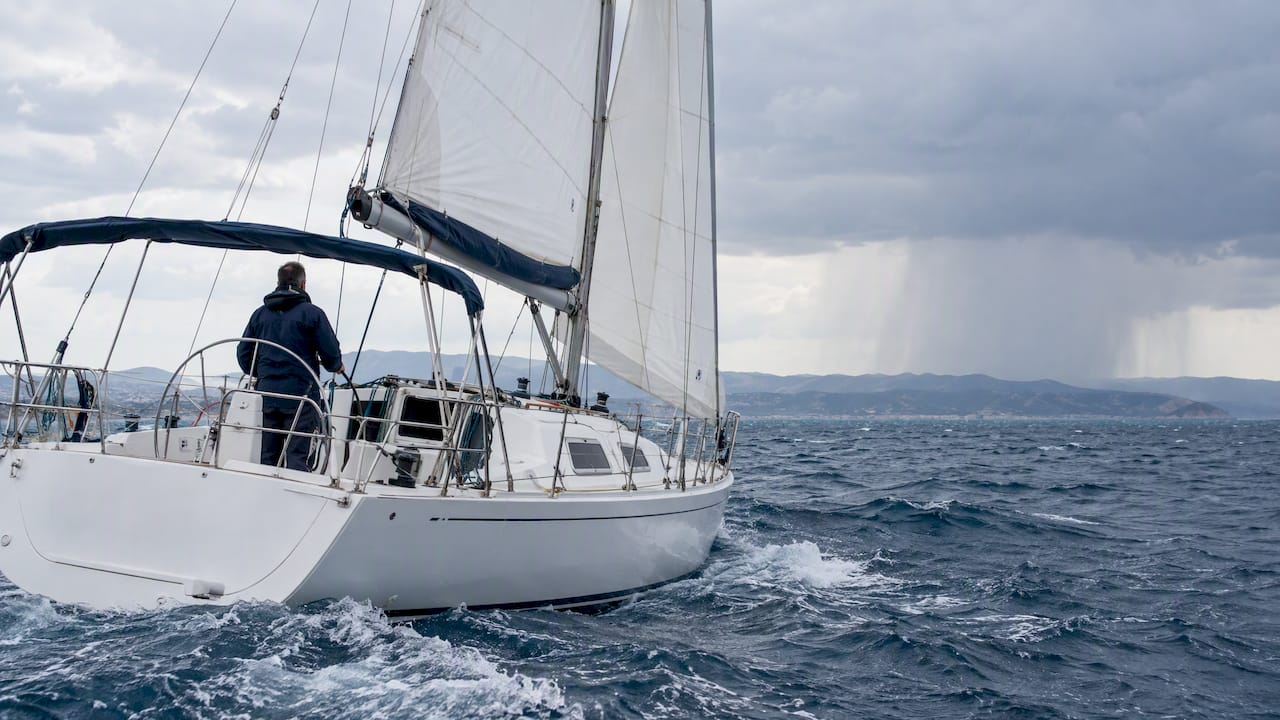
Light rain rarely cancels a private sail in Halkidiki. What actually drives a captain’s decision is wind strength, visibility and thunderstorm risk, not a passing drizzle. Skippers check professional marine forecasts from the Hellenic National Meteorological Service before every departure, and we at Halkidiki Boat Sailing reach out to guests directly with clear options if weather turns unsafe aboard Off The Hook.
TL;DR:
- June and August average about two rainy days each, July about one, while October averages six as autumn systems arrive.
- Skippers typically reassess within 2 to 24 hours of departure; borderline forecasts may prompt a later start or sheltered Sithonia route instead of cancellation.
- If rain starts underway, crews reef early, slow down, check GPS, secure loose gear, and seek a sheltered cove before returning to port.
- Before booking, confirm whether safety cancellations bring a refund, rescheduling, or both; policies vary, so ask when the operator will notify you.
- Pack a waterproof jacket, quick drying layers, non slip shoes, and a dry pouch; families should have the crew check children’s lifejacket fit.
Table of Contents
- What Halkidiki weather actually looks like during sailing season
- How your skipper decides whether to sail, delay, change route or cancel
- Safety steps and on-board procedures if rain starts during your cruise
- What to pack and wear for a private sail in case of rain
- Booking, refund and rescheduling: what weather policies you should expect and ask about
- How rain can still make the day memorable: on-board alternatives and small adjustments
- Impact of rain on visibility and sightseeing opportunities during boat tours
- Advice on how rain can affect onboard amenities and comfort
- Recommendations for photographers or avid sightseers to prepare for rainy conditions
- Information on how rain may affect sea conditions such as waves or currents and its implications for passengers
- Guidance on how rain influences wildlife sightings or snorkeling experiences
- Author perspective: George from Halkidiki Boat Sailing explains how we handle rainy days
- If you want a stress-free private sail in Halkidiki, here’s how we handle weather
- FAQ
- Sources
What Halkidiki weather actually looks like during sailing season
Halkidiki enjoys a Mediterranean climate that makes summer sailing reliably dry. June averages about 2 rainy days, July about 1, and August about 2, according to weather data for Halkidiki. October looks different, with roughly 6 rainy days on average as the season shifts toward autumn systems.
Most summer rain in Halkidiki falls as a short, localized shower rather than a sustained system, which is why cancellations in July and August are uncommon, according to regional weather patterns.
A quick shower passing over Sithonia is a different animal than a system carrying strong gusts or lightning. The distinction matters because:
- A brief summer shower rarely affects sailing conditions in any meaningful way.
- A system paired with wind or thunderstorm activity changes everything about the decision.
This is also why May through September remains the preferred window for sailing here: warm air, warm sea, and the lowest odds of a day lost to weather.
How your skipper decides whether to sail, delay, change route or cancel
Our skippers do not guess. They check short-term marine forecasts, local radar, and conditions specific to the Sithonia coastline within a tight window before departure. Industry practice among professional captains is to review forecasts within 2 to 24 hours of departure rather than days in advance, when conditions are still too uncertain to call accurately.
A handful of factors actually move the needle on a go or no-go decision:
- Wind speed and gust strength, since these affect boat handling far more than rain itself.
- Visibility, especially if a squall could reduce sightlines near other vessels or the coast.
- Thunderstorm risk, which is treated as a hard stop regardless of how light the rain looks.
- Crew and guest condition, including whether anyone on board has mobility or comfort concerns.
- Availability of a sheltered route or safe harbor along the planned course.
When a forecast looks borderline, a skipper’s first move is usually to adjust rather than cancel outright. That might mean shifting the start time by an hour, choosing a route that stays closer to the sheltered waters around Neos Marmaras, or swapping the order of stops so exposed stretches come later, once conditions have cleared.
Pro Tip: Ask your skipper what time they plan to make the final weather call. A specific answer, like “we reassess two hours before departure,” is a far better sign than a vague “we’ll see.”
This habit of setting a precise reassessment point rather than a loose promise is standard practice among experienced skippers, according to sailing safety guidance, and it’s exactly what proactive communication is supposed to look like.
Safety steps and on-board procedures if rain starts during your cruise
If rain catches a cruise mid-sail, the crew follows a sequence built around reducing risk early rather than reacting late. According to practical sailing safety guidance, the steps typically look like this:
- Check on every guest and confirm lifejackets are on or within easy reach.
- Reef the sail early, before wind strength makes the process harder to manage.
- Reduce speed to maintain control and increase the margin for sudden gusts.
- Confirm the boat’s position using GPS, since visibility can drop fast in heavy rain.
- Identify the nearest shelter option, whether that’s a sheltered cove or a return to port.
- Secure loose gear on deck so nothing becomes a hazard if the boat rolls.
Pre-departure checks like securing hatches and clearing cockpit drains make a real difference once rain actually arrives, according to sailing meteorology guidance, because a boat that’s already prepared handles a sudden squall far more smoothly than one caught off guard.
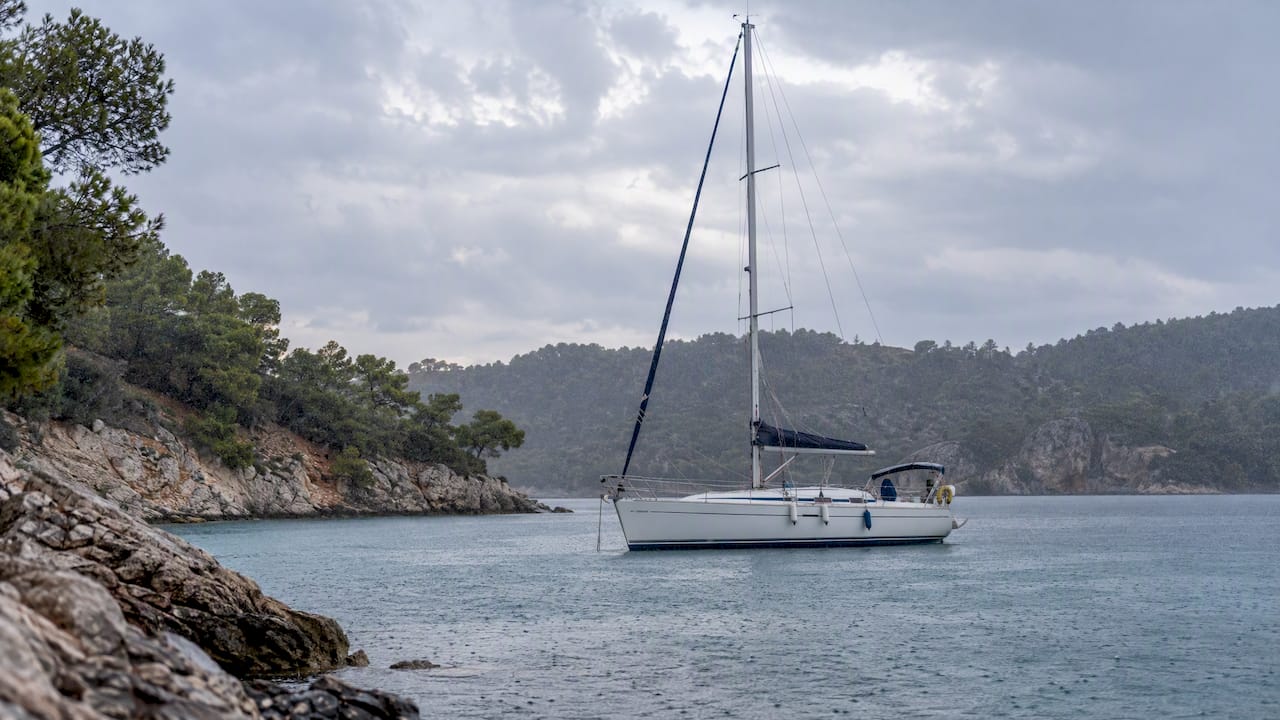
Anchoring in a sheltered cove is usually preferred over heading straight back to port, since it keeps the day on track without sacrificing safety. A return to port only becomes the chosen path when conditions escalate past what a sheltered anchorage can handle. Throughout, the crew stays in contact using VHF radio, with the international distress protocol available as a last resort. The entire approach is built around prevention: a boat that reefs and slows down early almost never needs a rescue plan.
What to pack and wear for a private sail in case of rain
Packing smart for a Halkidiki sail means preparing for both sunshine and the occasional shower, since summer days can shift quickly from clear skies to a passing cloud. A light, practical kit covers you either way:
- A packable waterproof jacket that takes up almost no space in a day bag.
- Quick-dry layers instead of heavy cotton, which stays wet and uncomfortable.
- Non-slip shoes, since a wet deck demands better grip than flip-flops offer.
- A spare set of dry clothes, especially for children.
- Zip-top bags or a dry pouch for phones and cameras.
Pro Tip: Pack a light jacket even for a sunset sail. Evening temperatures drop faster on the water than they do on land, rain or not.
Families traveling with kids or older guests should ask the crew to double-check lifejacket fit before departure, a habit sailing safety resources recommend as standard practice for anyone less experienced on board. For a fuller rundown, our boat trip packing list and this seaside packing guide both cover the basics in more depth. Don’t forget sunscreen either: a cloudy morning in Halkidiki often clears into full sun by midday.
Booking, refund and rescheduling: what weather policies you should expect and ask about
A fair weather policy should never leave you guessing. Look for an operator that puts the safety call in the skipper’s hands, reviews forecasts close to departure rather than days out, and offers a real choice between a refund and a rescheduled date when conditions force a change.
Before you book, these questions separate a clear policy from a vague one:
- Will you still sail if it’s lightly raining, or only in clear conditions?
- What specific conditions would trigger a cancellation or route change?
- How far in advance do you check the forecast, and when will I hear from you?
- If my sail is cancelled, do I get a refund, a reschedule, or both?
Our own approach keeps this simple: the skipper makes the safety call based on real conditions, not a rigid rulebook, and every package is all-inclusive from the start, so there’s no separate fee structure to untangle if plans shift. You can read more about how weather-related changes are typically handled on our cancellation policy page.
How rain can still make the day memorable: on-board alternatives and small adjustments
Not every rainy forecast means a lost day. When conditions are manageable, a skipper has several ways to keep the cruise enjoyable without compromising safety.
- Moving to a wind-protected cove near Neos Marmaras or Nikiti, where the water stays calmer even when a shower passes through.
- Shifting the timing of the sail, so guests catch clearer windows for swimming or sightseeing.
- Using sheltered anchorages for a relaxed swim stop or an on-board meal while a shower rolls past.
A light shower in a sheltered bay can turn into one of the coziest parts of the trip if the skipper has room to adjust, something charter guidance points to directly: flexibility, not rigid scheduling, is what makes weather manageable. The line a skipper won’t cross is a thunderstorm or strong gusts, both of which are treated as firm no-go signals rather than something to wait out. On a day with scattered showers, expect shorter swim windows between bursts of rain, more time spent under the sprayhood, and occasionally a dockside meal if sailing conditions call for it.
Impact of rain on visibility and sightseeing opportunities during boat tours
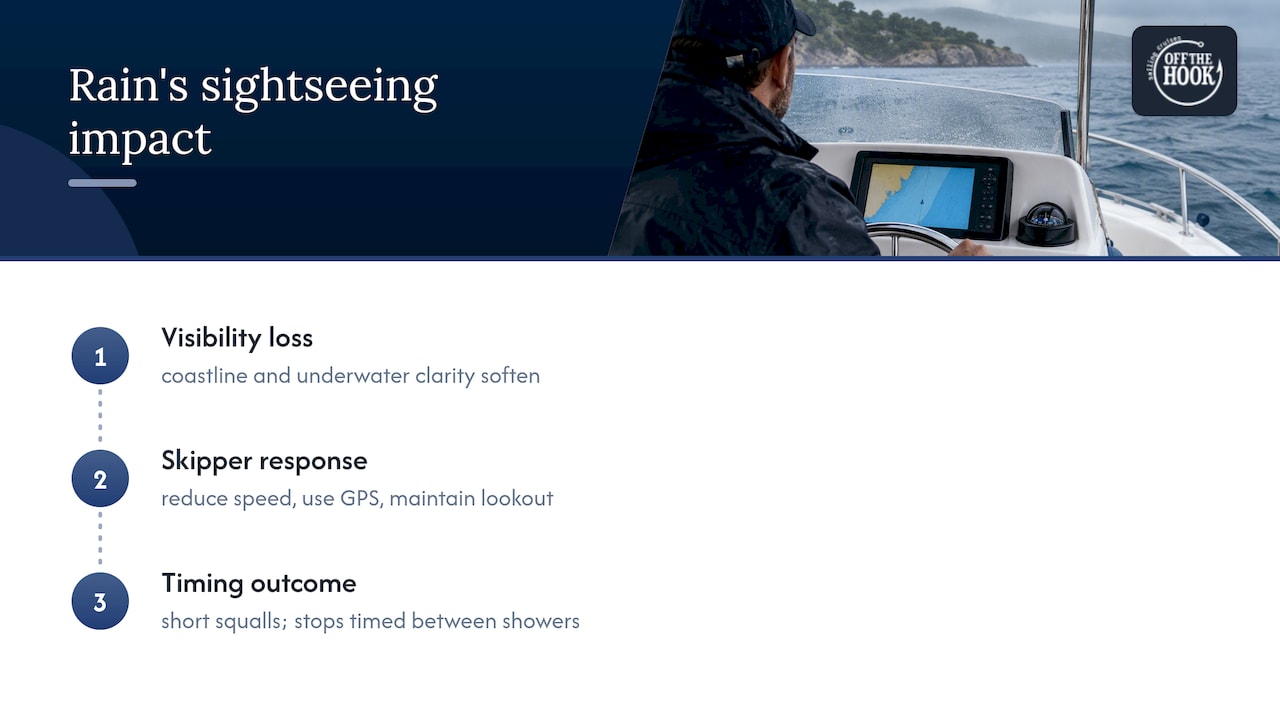
Rain changes what you can see long before it changes whether the boat can sail. A steady shower softens the coastline into a hazy outline, and the turquoise clarity that makes Halkidiki’s water so photogenic fades under overcast skies. Distant landmarks around Kassandra or Sithonia become harder to pick out, and the famous visibility into the water column drops noticeably compared to a bright, calm day.
None of this is a safety issue on its own. A skipper will reduce speed and lean more heavily on GPS and a steady lookout when rain limits sightlines, a standard adjustment covered in sailing meteorology guidance, but it does mean the view changes. Coastal cliffs near Paliouri or the pine-backed shoreline near Neos Marmaras lose some of their contrast under gray skies, and photos taken during a shower will look flatter than the postcard shots taken in full sun.
The upside is that rain rarely lasts long in a Halkidiki summer. A squall that limits visibility for twenty minutes often clears into bright, washed skies shortly after, and the light right after a shower can be some of the sharpest of the day. If sightseeing is your main goal, a skipper can time stops at scenic points for the gaps between showers rather than pushing through the thick of one.
Advice on how rain can affect onboard amenities and comfort
A private sail is built around open-air comfort, so rain does change the experience on deck, even if it never threatens safety. Cushioned seating areas get covered or moved to drier spots, and the sprayhood becomes the default gathering point rather than the open bow or stern where guests usually relax in the sun.
Food and drink service continues, but the setup shifts. Snacks and refreshments that are normally enjoyed on open deck move closer to shelter, and the crew keeps a practical eye on anything that could get wet, including bags, electronics, and dry clothing. Guests who packed a zip bag or dry pouch for their phone will appreciate it here.
Swimming stops still happen if conditions allow, since a warm rain shower over warm Aegean water is a different experience than a cold front. Towels and dry layers matter more on these days, which is part of why a spare set of clothes earns its place in any packing list for a Halkidiki sail. The overall rhythm of the day slows slightly: more time under cover, a bit less lounging in open sun, and a crew that adapts seating and timing around whatever the sky is doing.
Recommendations for photographers or avid sightseers to prepare for rainy conditions
Shooting photos on a boat in the rain takes a little more preparation than a sunny day, but the results can be worth it. Overcast light flattens harsh shadows and often produces richer color in the water and coastline than a midday sun that washes everything out.
A few practical habits make the difference between frustration and good shots:
- Keep your camera or phone in a waterproof pouch or dry bag between shots, not just during a downpour.
- Use a lens cloth to wipe spray or rain drops before shooting, since a wet lens ruins contrast fast.
- Favor shots looking toward shore or shoreline cliffs near Sithonia, where the contrast between gray sky and green pine tends to pop.
- Shoot right after a shower clears, when the air is washed clean and colors look sharper.
Avid sightseers should also ask the skipper where the best shelter spots are along the planned route, since a sheltered cove near Nikiti or Neos Marmaras often doubles as a great vantage point to wait out a shower without missing the view. Patience pays off here: a ten-minute squall followed by clearing skies often produces better light than a flat, cloudless afternoon.
Information on how rain may affect sea conditions such as waves or currents and its implications for passengers
Rain itself doesn’t stir up the sea, but the systems that bring heavier rain often bring wind along with it, and wind is what actually changes wave height and current behavior. A light, isolated shower on a calm day typically leaves sea conditions untouched. A rain system tied to stronger wind is a different story, since it can build chop quickly, especially in open water away from the shelter of the coastline.
This is part of why skippers weigh wind and sea state together rather than treating rain as the deciding factor on its own, a point echoed in practitioner sailing guidance. For passengers, choppier water mainly affects comfort rather than safety on a well-handled boat: motion sickness becomes more likely, and open-deck areas get wetter from spray.
Crews respond by hugging closer to the sheltered side of the coastline, such as the protected waters near Neos Marmaras, where headlands break up both wind and wave action. If sea conditions build past what’s comfortable, the skipper will adjust the route or timing rather than push through choppier open water. Passengers prone to motion sickness should mention it before departure so the crew can plan a route that favors calmer, sheltered stretches from the start.
Guidance on how rain influences wildlife sightings or snorkeling experiences
Rain changes the underwater view more than it changes what’s actually swimming below. Runoff and surface disturbance from a shower can cloud near-shore water temporarily, which makes snorkeling less rewarding right after a downpour, even though the fish and marine life haven’t gone anywhere.
Wildlife sightings above the water, like seabirds or the occasional dolphin sighting further offshore, tend to drop during active rain simply because visibility across the water’s surface narrows. Once a shower passes and the water settles, conditions often bounce back quickly, especially in the clearer coves around Kassandra and Sithonia where runoff has less impact.
For snorkeling specifically, timing matters more than forecast. A sheltered bay that wasn’t exposed to heavy runoff will clear faster than open water near a river mouth or developed shoreline. If snorkeling is a priority for your day, ask your skipper to plan that stop for later in the trip, after any morning showers have cleared and the water has had time to settle.
Author perspective: George from Halkidiki Boat Sailing explains how we handle rainy days
Every sail starts with checking the forecast regularly and communicating early with guests if conditions change. Adjusting plans due to weather often involves choosing safer or more sheltered routes or timing while aiming to maintain a pleasant experience.
— George
If you want a stress-free private sail in Halkidiki, here’s how we handle weather
We built our booking process around one idea: you shouldn’t have to guess what happens if the sky turns gray. Every private sail aboard Off The Hook, whether it’s our Full Day Private Cruise, our Sunset Private Cruise, or our Weekly Private Cruise, comes with a crew-led safety call and direct communication if plans need to shift.
If rain is forecast around your travel dates, check the operator’s weather policy and options for rescheduling or refunds before booking to understand how the day might unfold.
FAQ
Will light rain cancel my private sailing cruise in Halkidiki?
Usually not. Our skippers base cancellations on wind, visibility and thunderstorm risk rather than rain alone, following the same safety-first approach used across professional charter weather policies.
How far in advance will I know if my sail is cancelled for weather?
Most professional operators review forecasts within 2 to 24 hours of departure and communicate decisions as early as possible rather than waiting until the last minute. We follow this same approach and reach out directly once a call is made.
What happens if a thunderstorm appears while we’re already sailing?
The crew treats thunderstorm risk as a firm stop, reefing early, reducing speed and heading for the nearest shelter or safe harbor, following standard sailing safety procedure. Prevention, not last-minute recovery, is the priority.
What should I pack in case it rains during my boat tour?
Bring a packable waterproof jacket, quick-dry layers, non-slip shoes and a dry bag for electronics. A spare set of dry clothes is worth packing too, especially for children.
Can I get a refund or reschedule if my cruise is cancelled for weather?
Reasonable policies offer a refund or a rebooked date when a captain cancels for safety reasons. Ask any operator directly how they handle this before booking, since terms vary between operators.
Sources
For live conditions and background on the guidance above, the Hellenic National Meteorological Service publishes current marine and coastal forecasts. Local seasonal averages referenced here come from Halkidiki weather data, and the safety practices described draw on sailing safety guidance and pre-departure checklists.
- Halkidikitravel
- How to sail in heavy rain and rough weather | Sailers
- Boat charter weather policy guidance
- Sailing in the rain: Things to check before setting sail | YACHT