
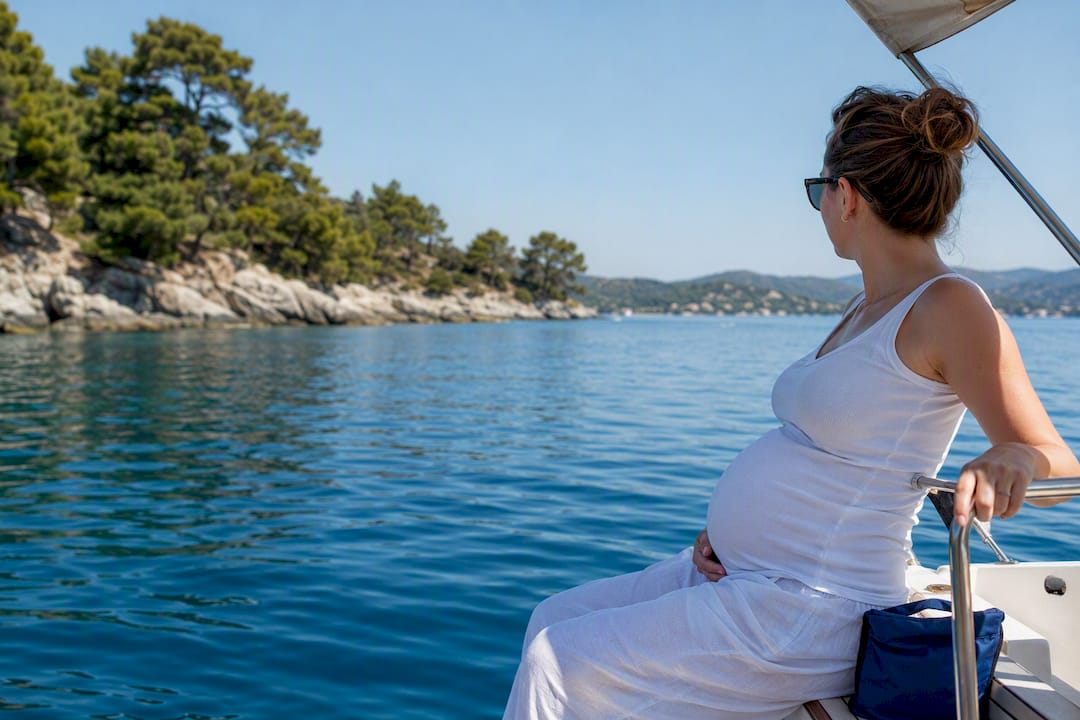
Yes, most healthy, low-risk pregnancies allow for calm, inshore boat tours once your provider gives the go-ahead. The main condition is speed and sea state: skip anything fast, offshore, or jolty, since sudden impacts and rough water carry the real risk, not boats themselves. The rest comes down to timing, seating, and preparation, which the sections below walk through in detail.
TL;DR:
- Safe boating during pregnancy depends on keeping speed and sea state gentle, with fast, offshore, or jolty trips increasing the risk of falls, dehydration, and impact injuries.
- Most cruise lines restrict travel beyond 24 weeks of gestation, and pregnancy symptoms or risks like preterm labor require personalized medical clearance before booking.
- The second trimester offers the greatest flexibility for trips up to three hours, while early and late pregnancy limit outings to around two hours or less.
- Pregnant travelers should prioritize stable, inshore vessels, ask about route and safety features, and prepare with snacks, proper PFD fit, and ground plans for emergencies.
- Boarding and disembarking pose higher injury risks than sailing itself, so careful planning for safe access and crew assistance is essential.
Table of Contents
- Why Calm, Stable Boat Tours Are Usually Safe During Pregnancy
- How Far Along Can You Be? Trimester-by-Trimester Limits
- Beating Seasickness Without Guesswork
- What to Ask Before Booking a Boat Tour While Pregnant
- Boarding Safely: The Riskiest Moment of Any Trip
- Emergency Planning and When to Skip the Trip Entirely
- How Halkidiki Boat Sailing Supports Pregnant Guests Aboard Off The Hook
- Your Pre-Trip Checklist for Boat Tours During Pregnancy
- What Actually Matters More Than the General Advice
- Set Sail With Confidence Aboard Off The Hook
- Sources
- FAQ
Why Calm, Stable Boat Tours Are Usually Safe During Pregnancy
Pregnancy doesn’t rule out the water. The CDC Yellow Book’s 2026 guidance for pregnant travelers states that low-impact, stable boat rides are generally permissible for most healthy, low-risk pregnancies once a physician has signed off. The distinction that matters is between a gentle sail across sheltered water and a fast, bouncing ride that slams against waves. The second scenario is what medical guidance actually warns against, not boating as a category.
Travel-medicine reviews go a step further, recommending that pregnant travelers walk their full itinerary past a provider before departure, since some activities that seem harmless on paper (long transit days, unaccustomed exertion, extended sun exposure) add up in ways a single symptom checklist won’t catch. Cruise operators have already built this caution into their policies. Most cruise lines restrict travel beyond roughly 24 weeks gestation and often ask for a physician’s note before boarding, which tells you something about how the industry itself views the risk curve.
The concerns worth tracking on any pregnancy-friendly outing are consistent across sources:
- Motion sickness, worsened by pregnancy hormones that heighten sensitivity to movement
- Falls and slips, especially during boarding, disembarking, or moving around a deck
- Dehydration, which compounds faster in pregnancy and under sun exposure
- Temperature extremes, since pregnant bodies regulate heat less efficiently
- Delayed access to emergency care, the risk that grows the farther offshore you go
Fast or offshore rides raise every one of these risks simultaneously. A boat cutting through open water at speed creates repeated jolts through the spine and pelvis, exactly the kind of unaccustomed impact travel-medicine guidance discourages. A sailing tour moving at a walking pace through a sheltered bay does not carry the same physical load, which is why the type of trip matters more than the simple fact of being on water.
How Far Along Can You Be? Trimester-by-Trimester Limits
There’s no single cutoff that applies to every pregnancy, but clinicians and travel-medicine sources converge on a similar shape: shorter, gentler outings early and late, with the most flexibility in the middle.
A reasonable framework looks like this:
- First trimester: cap outings around 2 hours. Morning sickness and fatigue are usually the limiting factors here, not physical risk, but shorter trips make it easier to bail if nausea hits.
- Second trimester: often the most comfortable window, allowing up to 3 hours. Energy typically rebounds and morning sickness fades for most people.
- Third trimester: dial back to roughly 1 hour. Balance shifts as the pregnancy progresses, and comfort drops sharply on anything longer.
Statistic Callout: Most cruise lines set their own hard boundary around 24 weeks gestation, per travel-medicine guidance — a useful benchmark even for shorter charter trips, since it reflects industry-wide caution about the third trimester specifically.
The physiology behind these numbers is straightforward. Early on, nausea and exhaustion make longer outings unpleasant rather than dangerous. By the third trimester, the hormone relaxin has loosened ligaments throughout the body to prepare for delivery, which reduces stability and makes a moving deck a genuinely different experience than it was months earlier. There’s also the practical matter of preterm labor: any pregnancy with a history of it, or current signs of contractions, changes the entire calculation.
These caps assume a straightforward pregnancy. Hypertension, any bleeding, or a prior preterm labor history should prompt a direct conversation with your provider before booking anything, regardless of trimester. The duration limits above are a starting point for that conversation, not a substitute for it.

Beating Seasickness Without Guesswork
Pregnancy hormones don’t just affect your stomach on land; learning more about seasickness on a yacht charter can help you prepare effectively. They amplify the inner ear’s sensitivity to motion, which is why seasickness often hits harder and faster during pregnancy than it did before. The fix starts with where you sit: a seat mid-ship, low and centered, moves the least of any spot on a boat, which makes it the best place to ride out choppy patches. Timing matters too. A light meal an hour or two before departure tends to settle better than boarding on an empty stomach or right after a heavy one.
Several nonpharmacologic measures work well without any medication at all:
- Ginger, in tea, candies, or capsule form, is a go-to recommendation from Mayo Clinic’s guidance on motion sickness in pregnancy
- Acupressure wristbands, a low-risk option many travelers pack as a backup
- Fresh air and a fixed horizon, staying above deck and looking outward rather than down at a phone
- Steady hydration, since dehydration makes nausea noticeably worse
- Small, bland snacks, kept on hand rather than skipped
Pro Tip: Pack a small cooler bag with ginger chews, crackers, and a refillable water bottle before you leave the hotel. Fumbling for snacks mid-sail is harder than it sounds once the boat starts moving.
Over-the-counter antiemetics and antihistamines are common for seasickness generally, but pregnancy changes the calculus on almost every medication. Confirm any specific product with your OB/GYN before your trip rather than assuming what worked pre-pregnancy is still the right call. Packing snacks is easy; packing the right one takes a look at what’s actually allowed on board ahead of time.
What to Ask Before Booking a Boat Tour While Pregnant
Not every boat tour is built the same, and the differences matter more when you’re pregnant. A private sailing charter moving through sheltered coves is a different experience entirely from a packed group tour running a fixed schedule at open-water speed.
- Choose small, stable vessels over fast group tours. A sailing boat moving at a gentle pace through inshore water puts far less physical stress on your body than anything designed for speed.
- Ask about sea state and route before you book. A good operator can tell you exactly where you’re headed and how sheltered that water is on a given day.
- Confirm restroom access. This sounds minor until you’re two hours into a trip and need it, especially with pregnancy’s demands on bladder frequency.
- Check for shaded seating. Sun exposure compounds dehydration risk, and shade should be a given, not an afterthought.
- Ask about crew experience and flexibility. Crews who’ve hosted pregnant guests before know to check in, adjust pacing, and change plans if you need them to.
- Get the emergency plan in plain language. Where’s the nearest medical facility relative to the route, and what’s the process if you need to get back quickly?
- Review the cancellation and weather policy. Rough conditions should mean the trip changes or reschedules, not that you push through them.
- Check PFE fit in advance. A properly fitted personal flotation device matters more, not less, as your body changes shape.
Non-slip decks and sturdy handrails aren’t glamorous details, but they’re the ones that actually prevent injuries. A private charter that can shift its own itinerary around your comfort is worth more than a longer route on a bigger boat.
Boarding Safely: The Riskiest Moment of Any Trip

The sail itself usually isn’t where injuries happen. Boarding and disembarking carry more real risk than the time spent moving through calm water, largely because footing is unpredictable and the transition between dock and deck is rarely flat.
A few habits reduce that risk substantially:
- Look over the boarding setup before you step on. A wobbly gangplank or a big step down is worth flagging to the crew first.
- Ask for a hand. Good crews expect this request and won’t think twice about it.
- Keep three points of contact at all times when stepping aboard, meaning two hands and a foot, or two feet and a hand, always in contact with something stable.
- Wear grippy, closed-toe shoes rather than sandals or flip-flops.
- Skip carrying bags or coolers while boarding. Hand them to crew or set them down first.
Late in pregnancy, the hormone relaxin loosens ligaments throughout your body, which quietly shifts your balance in ways you might not notice until you’re stepping onto a moving surface. Wide, flat sections of deck are far more forgiving than the bow or stern, where motion is amplified and railings are often lower.
Emergency Planning and When to Skip the Trip Entirely
Preparation matters more than most people expect, and it starts before you ever leave the dock. Know where the nearest hospital or clinic sits relative to your route, share your itinerary with someone on land, and carry any pregnancy documentation or clinician’s note your provider recommends. A basic first-aid kit and any regular medications belong in your bag regardless of how short the trip is.
Statistic Callout: Most cruise operators cap travel at roughly 24 weeks gestation without a physician’s note, a policy shaped directly by the industry’s own risk assessment for later pregnancy.
Certain symptoms mean stopping the trip immediately, no exceptions:
- Any vaginal bleeding
- Severe or persistent abdominal pain
- Contractions or tightening that comes in a pattern
- Dizziness or fainting
- A noticeable drop in fetal movement
Some conditions mean skipping the outing altogether rather than adjusting it. Placenta previa, a recent episode of preterm labor, uncontrolled hypertension, or any active bleeding are reasons to reschedule, not push through. If your clinician has already advised against water activities, that guidance overrides anything general advice (including this article) can offer. Travel insurance built for boat trips is worth arranging ahead of time so a rescheduled or canceled trip doesn’t become a financial headache on top of everything else.
How Halkidiki Boat Sailing Supports Pregnant Guests Aboard Off The Hook
A private sailing charter changes the entire risk profile compared to a fixed-schedule group tour, and that’s the model Halkidiki Boat Sailing runs on. Every trip aboard Off The Hook is fully crewed and private, which means the pace, the route, and the stops adjust around the guests on board rather than a schedule set months in advance.
That flexibility shows up in a few concrete ways:
- Provisioning is inclusive, so shade, water, and snacks are already part of the trip rather than something to negotiate.
- Restroom access is available on board, a detail that matters far more once you’re pregnant than it did before.
- The weather cancellation policy means a trip reschedules around rough conditions instead of running through them.
- Crew are experienced with helping guests board and disembark safely, and can offer seating in the most stable part of the boat, typically mid-ship, for anyone who needs it.
- Skippers regularly redirect toward sheltered coves around Neos Marmaras or Nikiti when a guest reports discomfort, rather than sticking to a rigid itinerary.
We recommend confirming your provider’s clearance and travel insurance details before booking, and mentioning your pregnancy when you reserve so the crew can plan seating and pacing in advance.
Your Pre-Trip Checklist for Boat Tours During Pregnancy
Print this, tape it to the fridge, and check items off before you head to the dock:
- Get written or verbal clearance from your OB/GYN.
- Identify the nearest hospital or clinic to your route.
- Confirm your PFD fits properly over your current shape.
- Pack water, ginger chews or tea, and small bland snacks.
- Wear grippy, closed-toe shoes for boarding.
- Confirm restroom access and shaded seating with the operator.
- Share your itinerary with someone on land.
- Set a duration expectation based on your trimester (2 hours, 3 hours, or 1 hour, first through third).
If your clinician advises against it, or if you notice bleeding, contractions, or reduced fetal movement, skip the trip. There’s always another sunset.
What Actually Matters More Than the General Advice
Most guidance on boating during pregnancy treats the boat as the variable. It isn’t. The variable is speed, sea state, and how quickly you can get off the water if something feels wrong, and that reframes almost every decision worth making.
The conventional wisdom leans hard on trimester as the deciding factor, but a calm inshore sail in week 30 carries less risk than a fast open-water ride in week 14. Duration caps and trimester guidelines are useful defaults, not verdicts. What should come first is the type of vessel and the operator’s willingness to adapt, because those two factors do more to determine your actual risk than a calendar date does.
If there’s one thing worth prioritizing above the rest, it’s asking direct questions before you book: sea state, route, restroom access, crew experience. A five-minute phone call answers more than any generic checklist can, and it puts the decision back where it belongs, with your provider and the people actually running the boat that day.
— George
Set Sail With Confidence Aboard Off The Hook
Halkidiki Boat Sailing runs one boat, one crew, and one philosophy: the trip bends around the guests, not the other way around. That’s a real advantage for pregnant travelers compared to a fixed-schedule group tour where the route and pace are locked in regardless of who’s aboard. Off The Hook’s private, fully crewed sails through Sithonia’s sheltered waters near Neos Marmaras and Nikiti mean shorter transfers to shore, calmer routes on request, and a crew that adjusts seating and pacing the moment you mention you’re expecting.
The Sunset Private Cruise runs a moderate four hours, an easy fit for second-trimester duration guidelines, with shade, water, and snacks already built in. Mention your pregnancy when you reserve, confirm your provider’s clearance beforehand, and let the crew handle the rest.
Sources
- Pregnant Travelers – CDC Yellow Book, 2026 edition – NCBI Bookshelf
- Boating safety tips for pregnant people — Boatsetter
FAQ
When should you stop going on a boat when pregnant?
Stop or reschedule if you have vaginal bleeding, severe abdominal pain, contractions, dizziness, fainting, or reduced fetal movement, and always defer to your clinician’s specific guidance for your pregnancy.
Is a bumpy boat ride bad for pregnancy?
Fast, jolting rides over open water raise real risks around falls and physical impact, which is why CDC and travel-medicine guidance recommends calm, low-impact boat rides instead of high-speed or offshore trips.
How many weeks pregnant can you be on a boat?
There’s no universal cutoff, but most cruise operators restrict travel beyond roughly 24 weeks gestation without a physician’s note; private sailing charters offer more flexibility since the pace and duration adjust to the guest.
Can a bumpy ride affect pregnancy?
Repeated jolts and impacts from fast, rough-water rides are the specific concern in medical guidance, not gentle movement on calm water, which is why choosing a stable, slow-paced sailing tour matters more than avoiding boats altogether.