

Expect octopus, wrasse, sea bream, and sea urchins in nearly every rocky cove, with nudibranchs, loggerhead sea turtles, and seasonal tuna rewarding patient swimmers. Sithonia, especially the coves around Kelyfos Island, delivers the richest encounters. The months around June and September, especially in early morning, tend to provide calm water and good visibility for spotting wildlife.
TL;DR:
- Sightings of shy species like octopus and nudibranchs are more likely near border zones between habitats, requiring patience and slow movements.
- The best time for marine life encounters is June and September in calm early mornings, when visibility can reach 20 to 30 meters, and water temperatures are comfortable.
- An experienced guide or private boat trip significantly increases chances of observing larger species such as groupers and sea turtles in less crowded, undisturbed coves.
- Rocky reefs near Sithonia’s coves, especially around Karydi, Kavourotrypes, and Kelyfos Island, provide the highest diversity and abundance of marine species.
- Wading or snorkeling with appropriate gear, patience, and reduced disturbance enhances chances of spotting rare or shy animals, whereas popular sites or midday visits tend to limit sightings.
Table of Contents
- What Marine Life Lives in Halkidiki Waters?
- Where to Find the Best Marine Life in Halkidiki
- When Is the Best Time to See Marine Life in Halkidiki?
- How to Spot Shy Marine Life in Halkidiki
- Common Hazards and First Aid for Snorkelers
- Why a Private Sail Improves Your Odds of Great Sightings
- An Editor’s Take on Spotting Marine Life the Right Way
- Sources
- FAQ
What Marine Life Lives in Halkidiki Waters?
Halkidiki’s underwater world rewards anyone willing to look closely at the seams where habitats meet. The peninsula’s three fingers, Sithonia in particular, hold a mix of Mediterranean species that shift depending on whether you’re floating over rock, seagrass, or open sand.
Rocky reefs and boulder fields close to shore host the fish you’ll see most often. Wrasse dart between crevices in flashes of orange and blue, while damselfish hold territory over small patches of algae. Sea bream cruise in loose schools along drop-offs, and if you slow down near a ledge, you may catch a juvenile grouper watching from the shadows. Scorpionfish are the ones you want to notice before they notice you, since they sit motionless on rock or sand and blend in almost perfectly.
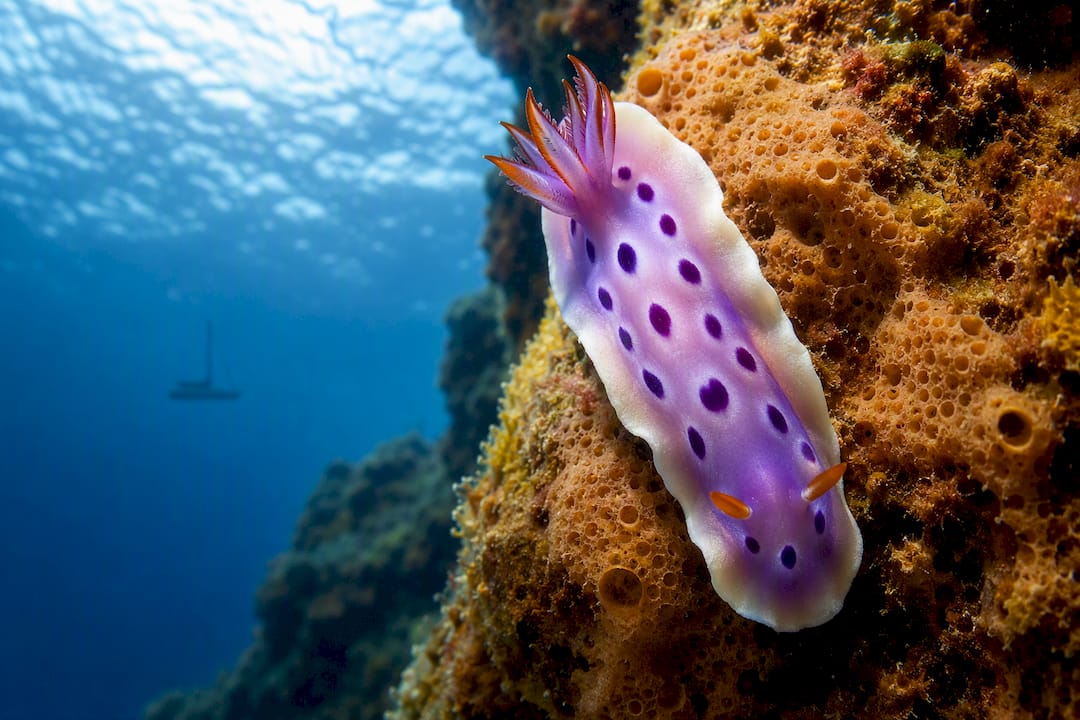
Invertebrates are where Halkidiki really earns its reputation among snorkelers. Octopus dens show up as small piles of shell debris outside a crack in the rock, a giveaway worth learning to spot. Nudibranchs, tiny and vividly colored sea slugs, cling to sponges and algae in the same border zones. Sea urchins cluster on shallow rocks in numbers, which makes them a genuine hazard as well as a common sight. Sponges and small crustaceans round out the cast on almost any rocky slope.
Open water brings seasonal visitors. Tuna move through Halkidiki’s waters from May through September, and loggerhead sea turtles are a realistic, if not guaranteed, sighting for boat-based visitors during the warmer months. The Mediterranean monk seal does live in Greek waters, but it’s a rare visitor here, not something to plan a trip around.
Three habitat types explain most of what you’ll find:
- Rocky reef: fish, octopus, nudibranchs, sea urchins, and the best odds of spotting a grouper or moray eel in a crevice.
- Posidonia seagrass meadows: nurseries for juvenile fish and a favorite haunt of cuttlefish and small sea bream.
- Sand flats: less crowded visually, but worth checking for rays, flatfish, and burrowing crustaceans.
Posidonia meadows do more than provide scenery. These seagrass beds function as nurseries for juvenile fish and cuttlefish, which is why a swim along a seagrass edge often turns up more life than a swim over open sand.
For underwater photographers, the border zones between habitats consistently produce the best shots: a nudibranch on a sponge at the rock-seagrass line, or an octopus half hidden where boulders give way to sand.
Where to Find the Best Marine Life in Halkidiki
Not every cove delivers the same experience, and choosing the right spot matters more than most visitors realize. Sithonia’s rugged, indented coastline concentrates biodiversity in a way that Kassandra’s more uniform sandy beaches simply don’t match. If marine life is the goal, Sithonia is where to spend your time.
-
Karydi and Kavourotrypes. These Sithonia beaches sit against granite boulders that plunge straight into clear water, creating the rocky structure that fish and octopus favor. Visibility here typically runs 8 to 15 meters under normal conditions, plenty for spotting wrasse and sea bream from the surface.
-
Agios Ioannis and Azapiko. Quieter than the marquee beaches, both offer the same rocky-cove structure with fewer swimmers stirring up sediment, which usually means better sightings of shy species.
-
Kelyfos Island (Turtle Island). This island is a genuine dive destination, with drop-offs and canyon-like topography that support a wider variety of reef life than shallow shore dives. It rewards snorkelers too, but scuba divers get access to the deeper ledges where larger groupers and moray eels hide.
-
Neos Marmaras and the Porto Carras coastline. These make excellent launch points for reaching quieter coves by boat rather than fighting for space on a crowded shoreline. A short sail from here opens up bays that see far less foot traffic.
-
Ammouliani and its surrounding islets. This small island stands out for nudibranch sightings and rich rocky-slope communities, making it a strong pick for anyone chasing macro life specifically.
Shore-entry spots like Karydi suit families and beginners. Boat-access sites around Kelyfos and Ammouliani suit divers and snorkelers chasing something beyond the shallows, and reaching them almost always means arranging a sail rather than walking in from a beach towel.
When Is the Best Time to See Marine Life in Halkidiki?
Timing changes everything underwater. Water temperature, wind, and light all shift what you’ll see and how comfortable you’ll be seeing it.
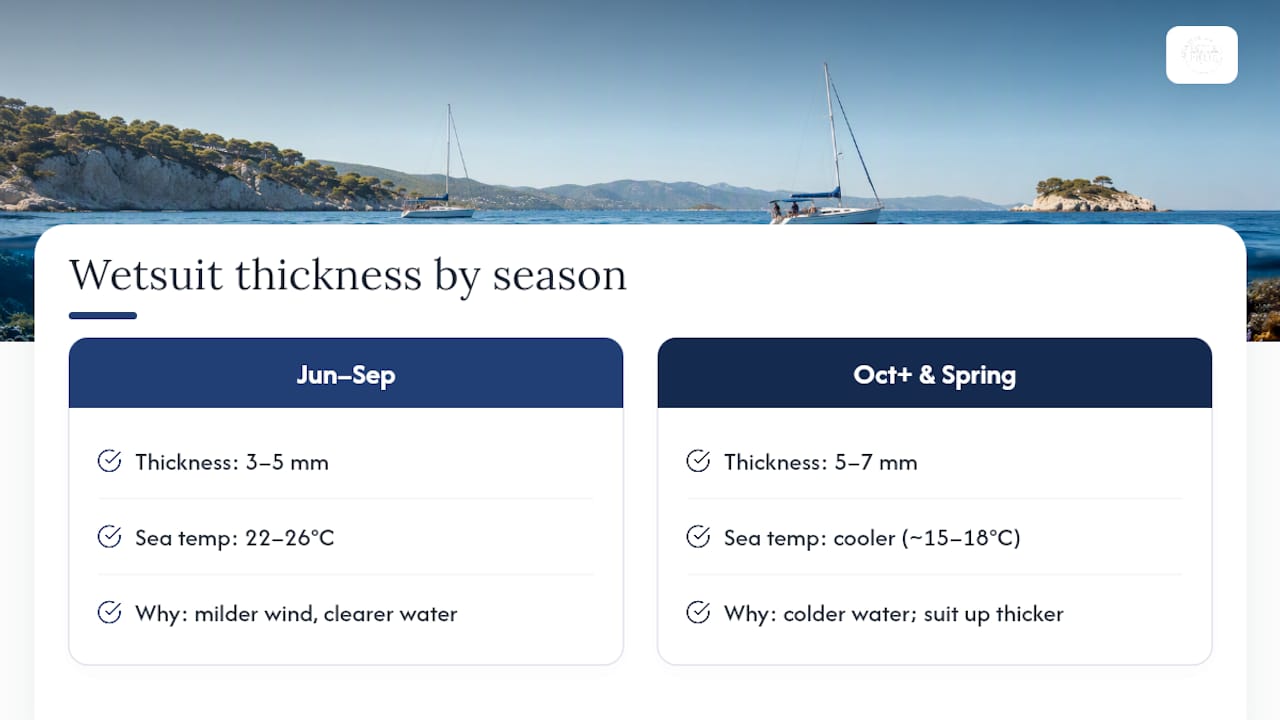
Sea temperatures swing widely across the year. Summer waters reach 22 to 26°C, while winter drops to 15 to 18°C. That range is why June and September consistently get recommended over the peak of July and August, when warmer water can bring plankton blooms that cloud visibility.
June and September aren’t just about comfort. Wind tends to be milder in these shoulder months, and the water hasn’t yet built up the summer haze that comes with heavy boat traffic and swimmer activity. Visibility on calm days for boat-based dives can reach 20 to 30 meters, a dramatic step up from the 8 to 15 meters typical of busy shore snorkeling spots.
Time of day matters just as much as month. Local guides consistently point to early morning as the window with the calmest seas, since afternoon breezes tend to pick up and stir the surface. A dawn or early sail also means fewer boats and swimmers ahead of you, so the water hasn’t been churned before you get there. Our own guide to Sithonia’s morning snorkel spots breaks this down site by site.
Wetsuit choice should track the season closely. A 3 to 5mm suit covers most people comfortably from June through September. Once you’re diving from October onward, or in spring before the water has warmed, a 5 to 7mm suit is the more realistic call. Anyone tracking current sea temperatures month by month can dial in gear choice before booking a trip rather than guessing.
How to Spot Shy Marine Life in Halkidiki
Most disappointing snorkels come down to one mistake: moving too fast. Octopus, nudibranchs, and other shy species reward patience, not distance covered.
The single best technique is to slow down and scan border zones, the places where rock meets sand or where a boulder field gives way to a seagrass meadow. These transition areas concentrate life because they offer both cover and food access. Watch for subtle signs rather than the animals themselves: a small patch of disturbed sand near a crevice, an unusual color against gray rock, a shell pile at the base of a boulder. These are the tells that experienced local divers rely on far more than sharp eyesight alone.
A few practical habits make a real difference:
- Fit your mask before entering the water, not after, since a leaking mask wrecks focus fast.
- Choose low-profile fins for control near rock rather than long free-diving fins built for speed.
- Use reef-safe sunscreen, since standard formulas can affect the same seagrass and rocky habitats you’re there to see.
- Consider a guide or a private sail to reach coves that see less swimmer traffic, since undisturbed water almost always holds more life.
- Never touch or feed anything, and keep fin kicks small and controlled near the seafloor.
Snorkeling suits shallow rocky coves and seagrass edges well, since most of the interesting life here sits in the top few meters. Scuba diving opens up Kelyfos Island’s drop-offs and any target species that favors depth, like larger groupers tucked into canyon walls.
Pro Tip: Cover less ground, not more. The best macro sightings, nudibranchs especially, come from a slow, short swim along a single stretch of boulder cracks or seagrass edge rather than a long swim across open water.
Common Hazards and First Aid for Snorkelers
Halkidiki’s marine life is mostly harmless, but a handful of species deserve real caution. Knowing what to do in the first sixty seconds after an incident matters more than any gear you’re carrying.
-
Sea urchins. Wearing water shoes on rocky shores is the single best prevention, since urchins cluster on shallow rocks in numbers. If a spine penetrates skin, soak the area in warm water, remove visible spine fragments with tweezers, and see a doctor if spines are deep or break off under the skin.
-
Jellyfish. Avoid drifting patches when visible from the surface. Rinse a sting with seawater or vinegar depending on local guidance, avoid fresh water, and seek emergency care if you notice widespread welts, difficulty breathing, or dizziness.
-
Scorpionfish and puncture wounds. Never handle rocks or sand blindly, since scorpionfish rest motionless and blend into their surroundings. If stung, immobilize the affected limb and get medical assessment promptly, since these punctures carry a real infection risk.
-
General precautions. Swim with a buddy, respect posted beach signage, and keep a small first-aid kit on the boat or beach. A few minutes of preparation avoids most of the incidents above entirely.
Why a Private Sail Improves Your Odds of Great Sightings
Marine life shows itself best where fewer people have been. That’s the whole logic behind reaching Halkidiki’s quieter coves by boat rather than fighting for space at a popular beach.
A private sail reaches coves that stay land-inaccessible, the same undisturbed water that tends to hold more octopus, turtles, and fish than a crowded shoreline ever will. Aboard Off The Hook, Halkidiki Boat Sailing bundles a professional skipper, snorkel gear, and route knowledge built from years working these specific waters around Sithonia and Neos Marmaras. That local knowledge means knowing which cove is calm at 8 AM and which one still has boat traffic from the night before. Our guide to what to expect on a private boat tour covers the practical side of planning one of these trips.
If you’re weighing this against a general charter, the broader category of small private boat excursions shares the same core advantage: fewer people, quieter water, better sightings.
An Editor’s Take on Spotting Marine Life the Right Way
Most marine life advice for Halkidiki treats species lists and dive sites as the whole story. They aren’t. The real variable is disturbance, how many swimmers churned the water before you arrived, how much noise your fins make, whether you’re covering ground or holding still at a border zone.
Conventional advice overweights where and underweights how. A mediocre cove approached slowly, at dawn, with a guide who knows which crack holds an octopus den, will outperform a famous dive site visited at noon in August with fifty other swimmers. Sithonia’s reputation is earned, but it’s earned by people willing to move at the pace the marine life demands, not by the coordinates alone.
If you take one thing from this guide, prioritize timing and pace over chasing a specific location. Book an early sail, pick a quieter cove over a popular one, and slow down once you’re in the water. The species will still be there. Whether you see them depends entirely on how you show up.
— George
Sources
- Diving and Snorkeling in Halkidiki | PADI
- Marine life in Halkidiki — Tripbase (Scuba diving summary)
- Diving and Snorkeling in Halkidiki, Greece | WikiBubbles
- Snorkeling in Sithonia – ChalkidikiHub
FAQ
What Kind of Marine Life Is in Greece?
Greek waters generally host wrasse, sea bream, octopus, moray eels, groupers, and seasonal visitors like loggerhead sea turtles and tuna, with regional variation depending on coastline type and habitat.
What Is Halkidiki Famous for?
Halkidiki is known for its three peninsula “fingers,” clear turquoise water, and secluded coves, with Sithonia in particular prized for rocky shores that support rich marine life compared to more uniformly sandy stretches.
What Sea Does Halkidiki Have?
Halkidiki borders the northern Aegean Sea, with its three peninsulas creating sheltered gulfs and bays that offer calmer conditions than the open Aegean beyond them.
Are There Nudist Beaches in Halkidiki?
Some informal nudist-friendly stretches exist along quieter parts of the Halkidiki coastline, though they aren’t officially designated, so checking local signage and current guidance before visiting is the safer approach.
When Is the Best Time to See Marine Life in Halkidiki?
June and September offer the best combination of visibility and mild winds, with early morning being the calmest and clearest window on any given day.