

One soft-sided bag, sorted into five categories, clothing, sun protection, safety, electronics, and food, handles nearly every day or multi-day boat trip you’ll take. Confirm what your operator supplies before departure, then fill the gaps yourself.
Here’s your top-10 starting checklist:
- Life jacket (PFD) or confirmation the boat provides one for every guest
- Reef-safe sunscreen
- Wide-brim hat
- Polarized sunglasses
- Quick-dry layer or light windbreaker
- Nonslip footwear with light or white soles
- Waterproof phone case or dry bag
- Refillable water bottle
- Basic first-aid kit and seasickness remedy
- Snacks that won’t melt, crumble, or smell up the cabin
Print this list, tape it to your fridge, and check items off the night before. If you’re booking through an operator, ask them directly what’s already on board. Most crewed charters supply more than you’d expect.
Key Takeaways
Packing well for a boat trip means matching quick-dry layers, sun protection, and safety gear to your trip length, then confirming with your operator what’s already provided.
| Point | Details |
|---|---|
| Start with five categories | Cover clothing, sun protection, safety, electronics, and food before adding extras. |
| Match quantities to trip length | Day trips need minimal gear; week-long and bareboat trips need spare clothing, more water, and backup navigation tools. |
| Confirm before you pack | Ask the operator what’s already on board, life jackets, snorkel gear, and towels are often included. |
| Use soft luggage and dry bags | Soft-sided duffels and separated dry bags stow better and protect valuables from spray. |
| Book a crewed option to skip the list | Halkidiki Boat Sailing’s cruises aboard Off The Hook include fuel, snorkel gear, and refreshments, cutting your packing list down significantly. |
Table of Contents
- Boat Trip Packing List by Category
- How Should You Adjust Your Packing List by Trip Length?
- What’s the Best Way to Prevent and Treat Seasickness?
- What Bags Work Best for Boat Storage?
- What Safety Items Should You Confirm Before Boarding?
- What Electronics and Documents Should You Pack?
- How Do You Pack Efficiently for Limited Boat Space?
- What Do Local Skippers Recommend for Sailing in Halkidiki?
- What Should You Check in the 48 Hours Before Boarding?
- A Skipper’s Take on Common Packing Mistakes
- Prefer Not to Pack a Cooler at All?
- Sources
- FAQ
Boat Trip Packing List by Category
A well-packed boat bag isn’t about bringing everything. It’s about bringing the right things in the right fabric, then trusting the crew for the rest.
Clothing and layers
Skip cotton entirely. It soaks up spray and salt water and stays damp for hours, which gets uncomfortable fast once the sun dips. Quick-dry synthetic blends dry in the wind while you’re still moving, so pack technical fabrics for shirts, shorts, and even underwear if you have them. For a day trip, one change of clothes is plenty. For anything overnight or longer, plan on layering rather than packing more of the same.
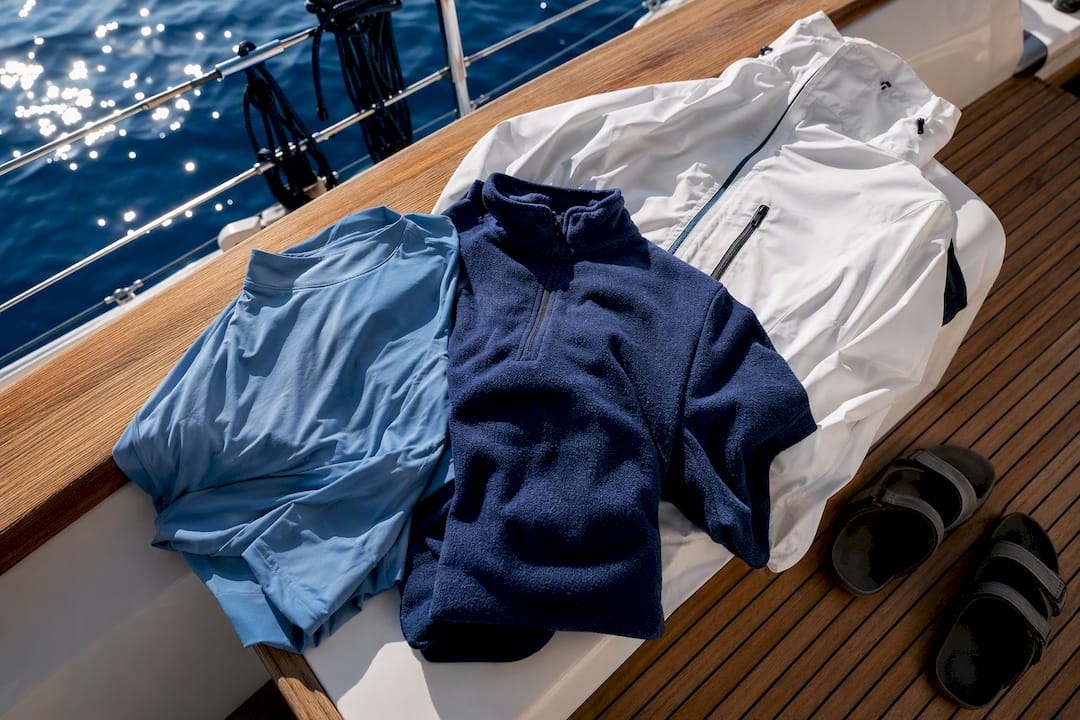
The layering formula that works: a UV-protective shirt for midday sun, a light sweater or fleece for the ride home once temperatures drop, and a packable waterproof or foul-weather jacket for wind and spray. Travel editors consistently favor this three-layer approach over trying to guess one “right” outfit for the whole day.
Footwear matters more than most people realize. Choose sandals or shoes with nonslip, light-colored soles, dark rubber can leave scuff marks on teak decks, and closed designs reduce the chance of a stubbed toe on a cleat. Deck shoes and water shoes both work well; flip-flops do not, since they slide off the moment you need to move quickly.
Sun protection
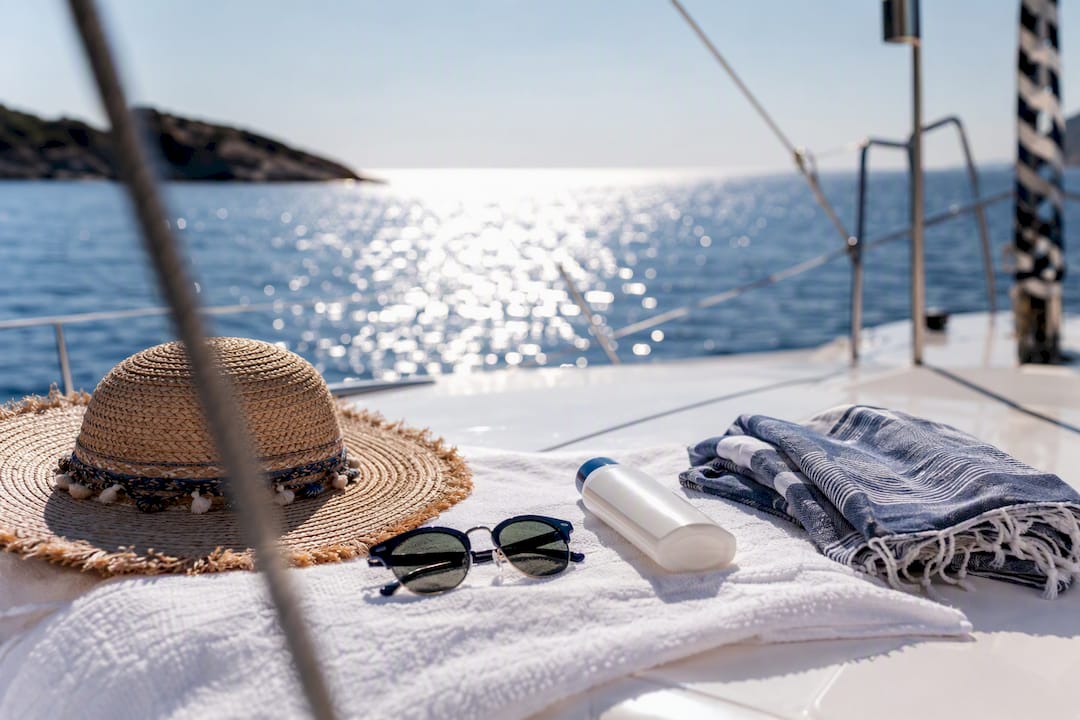
Reapply sunscreen every two hours, more often if you’re swimming, and choose reef-safe formulas that skip oxybenzone and octinoxate. Round out the kit with a wide-brim hat that won’t blow off (a chin strap helps), polarized sunglasses to cut glare off the water, and SPF lip balm, an easy item to forget until your lips are peeling on day two.
Water and beach gear
Bring a microfiber or Turkish towel, they pack smaller and dry faster than terry cloth. If you plan to snorkel, ask ahead whether the boat provides mask, snorkel, and fins; many charters do — and check these top tips for snorkelling in Sabah for safety and gear advice before your trip. Pack your own rash guard and swimwear regardless, since sizing and comfort are personal.
Safety essentials
Confirm the boat carries USCG-approved (or your country’s equivalent) life jackets sized for everyone aboard, plus a throwable flotation device on motorboats. A basic first-aid kit, whistle, and fire extinguisher should already be on board, but it’s worth asking rather than assuming.
Toiletries and medications
Pack travel-sized toiletries, any prescriptions in their original labeled containers, and seasickness medication if you’re prone to it. Basics for a personal first-aid pouch: adhesive bandages, antiseptic wipes, motion sickness tablets, and any allergy medication you rely on.
Electronics and power
A waterproof phone pouch and a charged power bank are non-negotiable. Bring spare charging cables, since boats rarely have the right adapter, and check the IP rating on any camera or speaker you bring; anything rated IPX7 or higher can survive brief submersion.
Food and beverages
Stick to finger foods, wraps, fruit, and nuts, and avoid anything with a strong smell in enclosed cabin spaces. Bring a small trash bag you control yourself. Most crewed day cruises include snacks and refreshments, so check before overpacking your own cooler.
How Should You Adjust Your Packing List by Trip Length?
Trip duration changes quantities more than it changes categories. Use this as your baseline:
- Day trips: One change of clothes, one to two towels, a compact first-aid kit, and an appropriate amount of water per person per hour on the water.
- Overnight trips: Add one to two spare clothing sets, a full-size sunscreen bottle instead of travel size, an extra towel, and enough medication to cover the extended window.
- Week-long sails: Roll clothing instead of folding to save space, pack a soft duffel rather than a hard suitcase, and bring a spare pair of shoes. Plan for either a much larger water and ice supply or a midweek resupply stop.
- Bareboat or self-skippered charters: You’re responsible for equipment the crew would normally handle, backup anchor lines, paper charts, a bigger provisioned cooler, and a clear plan for where to restock. Crewed charters remove most of this; bareboat charters put it back on you.
What’s the Best Way to Prevent and Treat Seasickness?
Simple habits go a long way before you ever reach for medication:
- Stay hydrated and avoid heavy or greasy meals before boarding.
- Focus on the horizon rather than reading or looking down at a phone.
- Sit mid-boat, where motion is least pronounced.
- Get fresh air rather than retreating below deck.
For medication, dimenhydrinate (commonly sold as Dramamine) is a widely used over-the-counter option that works best when taken before you feel symptoms, not after. It can cause drowsiness, so check the label and talk to a doctor if you’re considering a prescription patch instead. Ginger chews and acupressure wristbands are popular non-drug alternatives; many travelers find them helpful even though the evidence behind them is more anecdotal than clinical.
Pro Tip: Keep all medications in a small, clearly labeled, waterproof pouch and stow it somewhere you can reach without going below deck, seasickness rarely gives you much warning.
What Bags Work Best for Boat Storage?
Boats don’t have closets. Soft-sided duffels and collapsible bags stow into odd-shaped lockers that a hard suitcase never will.
- Use small dry bags for phones, wallets, and keys.
- Use medium dry bags for towels and a change of clothes.
- Use one large dry bag for spare gear you won’t need until evening.
- Pack all of the above inside your main duffel, and use packing cubes to keep wet and dry items physically separated.
For one person on a weekend trip, a good split is: one 5 to 10 liter dry bag for electronics and valuables, one 20 liter dry bag for clothing, packed inside a 40 to 50 liter soft duffel.
What Safety Items Should You Confirm Before Boarding?
Carry or confirm the following before you leave the dock:
- A properly fitted life jacket for every passenger aboard.
- A throwable flotation device, required on most motorboats.
- A working fire extinguisher and first-aid kit.
- Functioning navigation lights if you’re out near dusk.
- A VHF radio or portable marine radio.
- A working bilge pump and a clear anchor setup.
Before casting off, ask the skipper directly: where the PFDs are stored and how to fit them, how the horn or VHF works, where the fire extinguisher and first-aid kit live, and what the fuel level and nearest-marina plan looks like. Onboard basics like GPS, towels, and first-aid kits vary by vessel, so never assume; always confirm.
What Electronics and Documents Should You Pack?
Bring a waterproof phone pouch, a power bank with enough capacity for a full day of photos and navigation, spare charging cables, and an action camera with a wrist strap if you’re shooting video near the water.
For documents: carry your ID or passport for international routes, a printed copy of your reservation, and a mix of cash and cards, ATM access varies widely by island and marina. Store everything in a waterproof document pouch, screenshot your booking confirmation before you lose signal, and keep a backup copy with whoever else is traveling with you.
How Do You Pack Efficiently for Limited Boat Space?
Space-saving basics: roll rather than fold clothing, use packing cubes to compress bulk, and freeze a few water bottles the night before, they double as ice packs and become drinking water once thawed.
Keep a dedicated wet bag separate from your dry clothes, bring a small clothesline or a few pegs for damp towels, and pack quick-dry towels over cotton every time. On smaller boats, keep safety gear within easy reach, store electronics in the driest spot you can find, and put heavier items low and centered to keep the boat balanced.
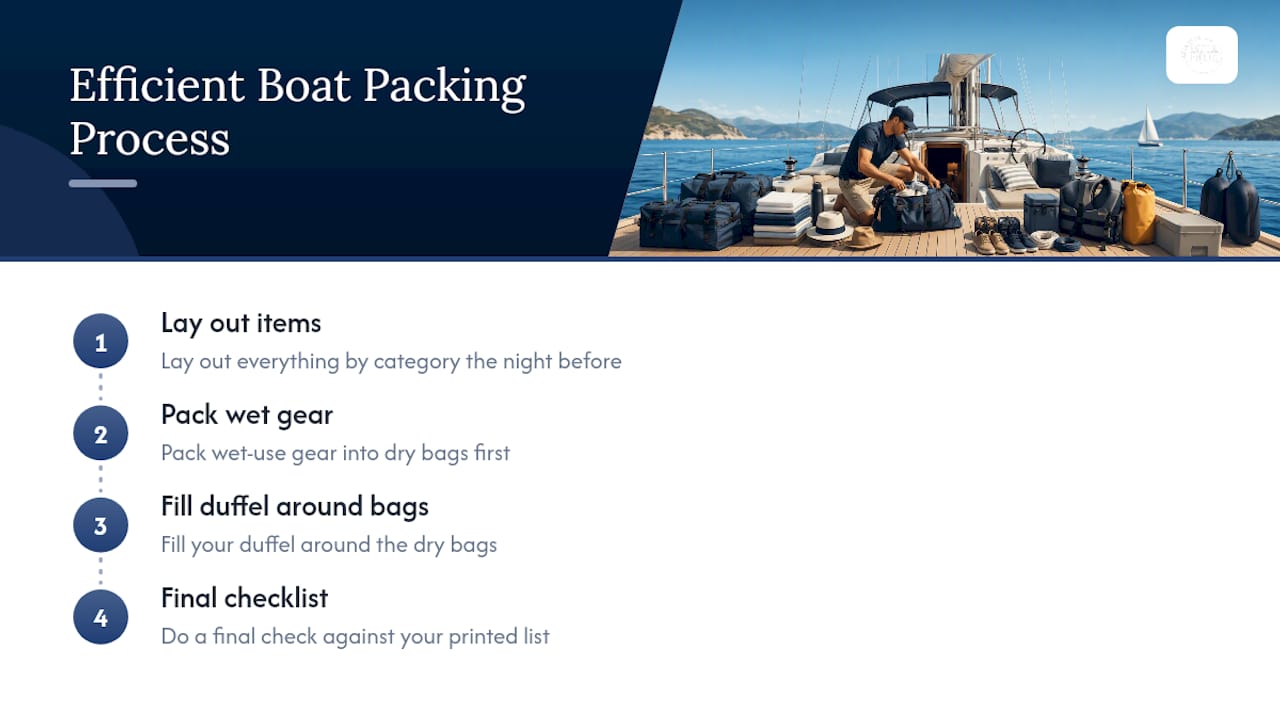
A quick pre-departure process: 1) lay out everything by category the night before, 2) pack wet-use gear into dry bags first, 3) fill your duffel around the dry bags, 4) do a final check against your printed list before you zip it shut.
What Do Local Skippers Recommend for Sailing in Halkidiki?
Around Neos Marmaras, Nikiti, Paliouri, and Kassandra, footwear matters more than tourists expect, many piers and cove landings are pebbly rather than sandy, so a secure water shoe beats a loose sandal. Evenings in Sithonia cool off faster than the daytime heat suggests, so pack that light layer even in August.
On tours aboard Off The Hook, snorkel gear, refreshments, and snacks are typically included, check the specific group tour details for what’s bundled on your booking. Guests should still bring their own reef-safe sunscreen, a hat, and a reusable water bottle to cut down on single-use plastic in these protected coastal waters.
Pro Tip: Our crew suggests timing your swim stops for early afternoon, when the water off Sithonia’s hidden coves is calmest, and stowing your dry bag in the shade below deck rather than leaving it in direct sun while you’re ashore.
What Should You Check in the 48 Hours Before Boarding?
- 24 to 48 hours before: Confirm provisioning, final passenger count, dietary needs, and check the weather and tide forecast.
- 6 to 12 hours before: Pack medications, charge every device and power bank fully, and pre-freeze water bottles for the cooler.
- One hour before boarding: Get a quick safety briefing from the skipper, stow loose items, apply sunscreen, and label your bags clearly.
If plans change, know who to notify for delays or cancellations, and keep your reservation confirmation and ID handy for check-in.
A Skipper’s Take on Common Packing Mistakes
The mistake I see most often isn’t forgetting something, it’s overpacking hard suitcases that never fit belowdeck storage. Guests who bring one soft duffel and a labeled dry bag are always the most relaxed by hour two.
Pro Tip: Label every dry bag with a name and freeze a water bottle before you leave the dock, it chills your cooler on the way out and becomes drinking water by the afternoon. You can see how we handle provisioning on our group charter page.
Prefer Not to Pack a Cooler at All?
If reading this list made you tired before your trip even started, that’s exactly the problem Halkidiki Boat Sailing solves. Every cruise aboard Off The Hook comes with a professional skipper, fuel, snorkel gear, refreshments, and snacks bundled in, so your packing list shrinks to sunscreen, a swimsuit, and a good hat.
Choose a full-day private cruise for a complete day exploring Sithonia’s coves, a sunset private cruise for a shorter, low-effort evening on the water, or a weekly private cruise if you want the whole logistics puzzle handled for a week at a time. Need special provisioning, dietary requests, or extra snorkel gear? Note it directly on the booking form when you reserve your date, and the crew will have it ready before you step aboard.
Sources
- MedlinePlus — Dimenhydrinate
- Boats
- What to Wear on a Boat: The Complete Activity-by-Activity Guide | BoatBooker Blog
- Best boat outfits — Condé Nast Traveler
FAQ
What Should You Bring on a Week-Long Boat Trip?
Pack rolled clothing in a soft duffel, extra medication and sunscreen beyond travel size, a spare pair of shoes, and plan for either a large water and ice supply or a midweek resupply stop.
What Do You Need to Bring When Going Boating for the Day?
Bring quick-dry clothing, nonslip footwear, reef-safe sunscreen, a hat, polarized sunglasses, a waterproof phone case, snacks, and roughly an appropriate amount of water per person per hour on the water.
What Should You Pack for a Bareboat Charter?
Beyond the standard boat trip packing list, bareboat charters require more self-sufficiency: paper charts or offline navigation tools, backup anchor lines, a larger provisioned cooler, and full confirmation of what safety equipment is already aboard.
Does Halkidiki Boat Sailing Provide Snorkel Gear and Snacks?
Yes, many tours aboard Off The Hook include snorkel gear, refreshments, and snacks as part of the booking, though it’s worth checking your specific tour details when you reserve.
How Much Water Should You Pack per Person?
Plan on roughly 16 to 20 ounces per person per hour in normal conditions, and scale up in hot weather or for longer trips where resupply isn’t guaranteed.