
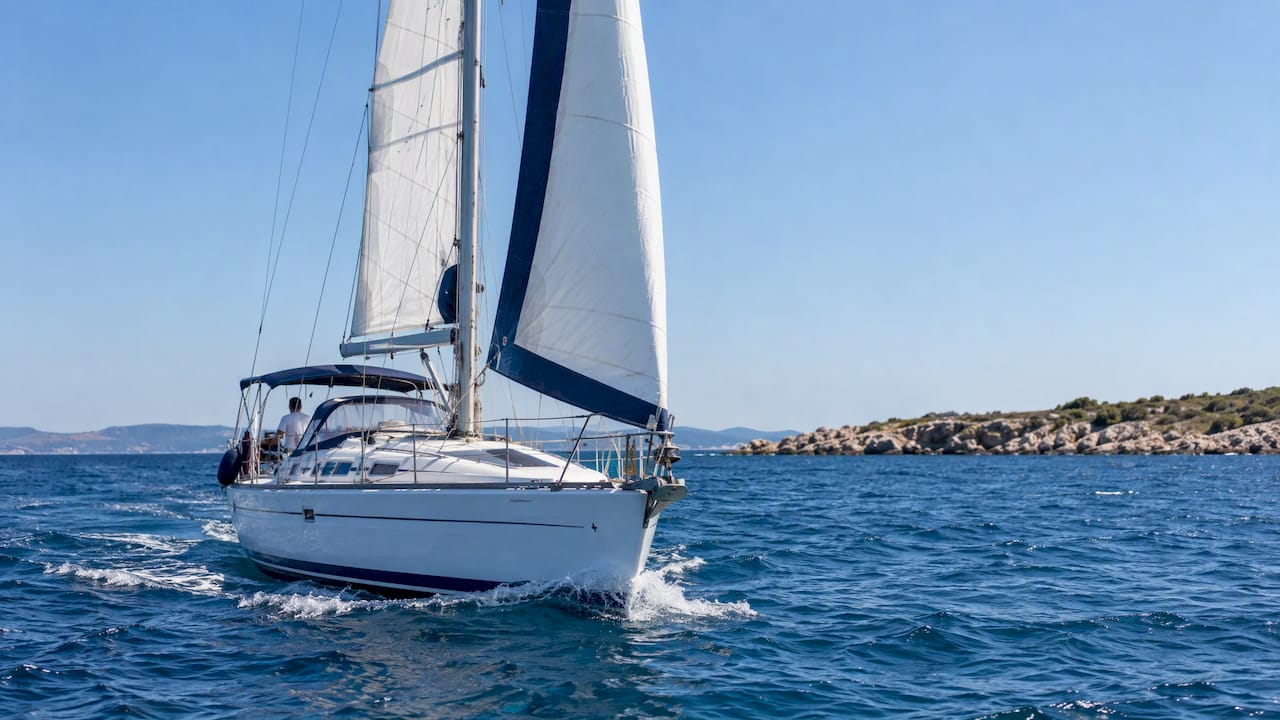
Toroneos Gulf ranks among the best snorkeling destinations in Greece, with three stops that stand out above the rest: Kelyfos (Turtle Island), the harbor ruins at Toroni, and the protected islet of Peristeronisi. Toroni offers shore access for casual swimmers, but Kelyfos and Peristeronisi reward a private sail, since their rocky, mostly land-inaccessible shorelines make lingering time and flexible routing the real difference-makers.
TL;DR:
- Kelyfos requires a boat to access and offers clear water with abundant schooling fish, making it ideal for offshore snorkeling enthusiasts.
- Toroni’s harbor offers calm, shallow waters perfect for relaxed swimming over ancient ruins but demands caution around fish resting near the rocks.
- Peristeronisi provides a protected, shallow environment with diverse fish species, where scuba diving is prohibited to preserve its habitat.
- Optimal snorkeling conditions occur from late spring to early autumn, especially in the morning or late afternoon, with visibility reaching up to 15 meters.
- Private sails allow flexible routing to maximize time at each site, with full-day trips covering multiple stops and including snorkeling gear and refreshments.
Table of Contents
- Best snorkeling spots in the Toroneos Gulf
- When to go for the calmest water and best visibility
- Shore snorkeling, shared cruises, or a private sail
- Safety rules and protected-area etiquette
- Gear checklist: what to bring and what to rent
- Sample snorkeling itineraries by trip length
- Why local routing knowledge changes the snorkel
- How Off The Hook fits your snorkeling plans
- FAQ
- Sources
Best snorkeling spots in the Toroneos Gulf
Each of these sites rewards a different kind of snorkeler, so it helps to know what lies beneath the surface before you pick your stop.
Kelyfos, often called Turtle Island for its shape, sits as an open-water swim stop with a rocky shoreline that most visitors reach only by boat, making it one of the offshore snorkel spots in Greece only reachable by boat. The water around it runs clear, and schooling fish gather near the rocks in numbers that make the short swim out worthwhile. Because Kelyfos has no practical land access, a sailing stop is the only realistic way to spend real time there rather than a rushed five-minute dip.
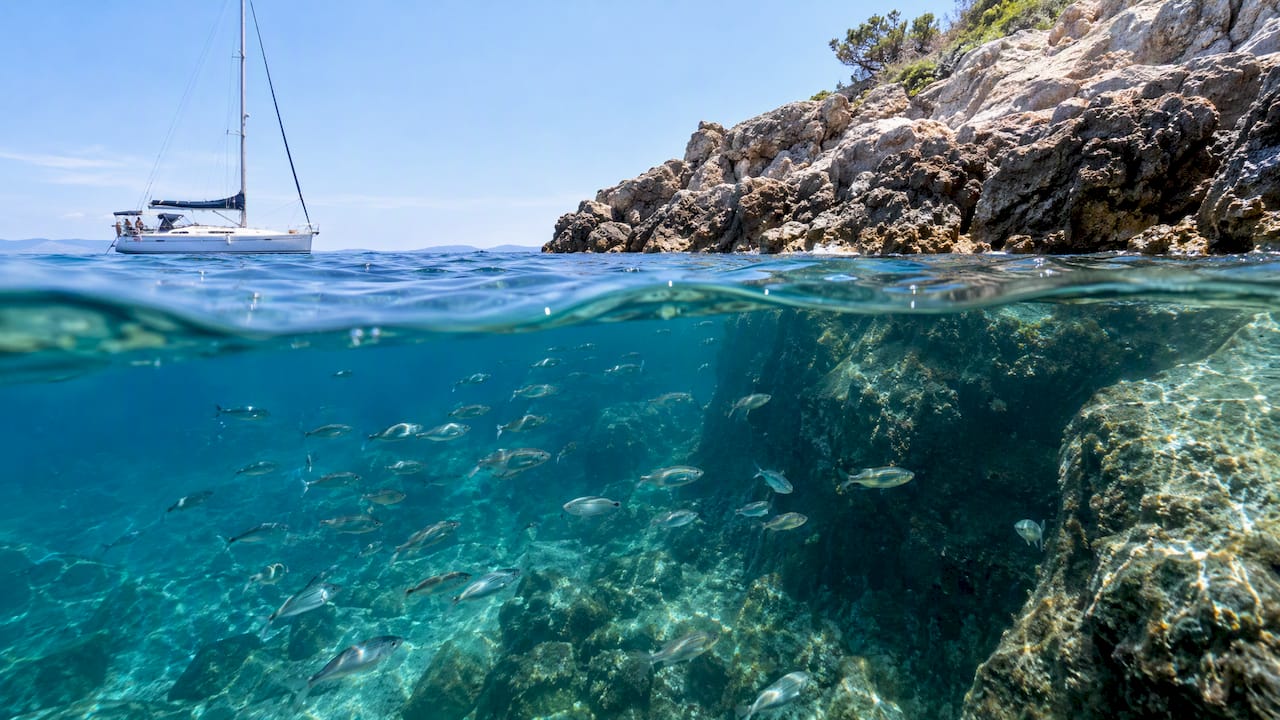
Toroni offers a different experience entirely: a sheltered harbor snorkel directly above the submerged foundation stones of Castle Toroni’s ancient ruins. The water stays shallow and calm, which makes it a comfortable choice for relaxed swimming while you take in centuries-old stonework beneath you. Scorpionfish occasionally rest near the rocks here, so watch where you put your hands, and stay alert for boat traffic moving through the harbor lanes.
Peristeronisi is a protected islet reserved for snorkeling rather than diving. Its shallow rocky terrain shelters garfish, painted combers, and moray eels, and the no-scuba policy keeps the area calm and uncrowded for surface swimmers. Beyond these three, cruise itineraries in Sithonia often tuck in a stop at a sheltered cove along the way, adding a quieter swim break between the headline sites.
- Kelyfos: open-water swim stop, land-inaccessible, clear water with schooling fish.
- Toroni: shallow harbor snorkel over ancient ruins, calm water, watch for scorpionfish.
- Peristeronisi: protected snorkel-only islet with varied Mediterranean fish species.
When to go for the calmest water and best visibility
Snorkeling conditions in the gulf shift with the seasons, and timing your visit well makes a noticeable difference in what you see underwater. The window from late spring through early autumn covers most of the comfortable swimming season, and September and October often bring calmer seas with less wind than the busier midsummer weeks.
Time of day matters just as much as the calendar. Morning and late afternoon tend to produce flatter water and clearer sightlines than midday, when wind picks up across the gulf. On a good morning, prime spots in the area can reach 8 to 15 meters of visibility, turning a routine swim into something closer to an aquarium tour.
- Aim for late spring through early autumn, with September and October often calmer.
- Snorkel in the morning or late afternoon for flatter water and better visibility.
- Check local sea-surface temperature and wind forecasts before heading out.
Shore snorkeling, shared cruises, or a private sail
How you get to a spot shapes the whole experience, so it is worth weighing the options before you book anything.
- Shore access works at Toroni, where you can walk into the water directly from the beach, though it limits you to that single site and whatever is within easy swimming range.
- Shared cruises typically run fixed schedules with short swim windows, often giving groups only ten or fifteen minutes at a stop like Kelyfos before moving on to the next.
- Private sailing removes that time pressure entirely, letting you linger at a spot, skip one you find unappealing, and add another based on conditions that day. Off The Hook is one example of an all-inclusive private sail built around this kind of flexible routing, with gear handling and pacing left to the skipper rather than a fixed itinerary.
Most private sails depart from pickup points in Halkidiki and run for a half day or a full seven hours, and include refreshments and snorkeling gear as part of the trip rather than as add-ons.
Safety rules and protected-area etiquette
Snorkeling around ancient ruins and protected marine habitats comes with real rules, not just suggestions.
Greek regulations for protected underwater archaeological sites require visitors to stay at least 1.5 meters from the seabed and 1 meter from any underwater find, and touching ruins or submerged infrastructure is prohibited under the official operating regulation. These distances exist to protect fragile stonework from erosion and accidental damage, so they apply directly to snorkelers exploring the Toroni ruins. Peristeronisi carries its own restriction: scuba diving is not permitted there, and the snorkel-only rule keeps the shallow habitat undisturbed for the fish that live among its rocks.
Basic sea safety still applies everywhere in the gulf. Stay clear of boat lanes, avoid areas with noticeable current, snorkel with a buddy, and use a surface marker if you are swimming any distance from your boat. If you spot a turtle or dolphin, observe from a respectful distance rather than chasing or feeding it.
- Keep 1.5 meters from the seabed and 1 meter from ruins at protected sites.
- Respect the scuba ban at Peristeronisi and snorkel slowly instead.
- Watch for boat traffic, use a buddy system, and give marine life space.
Gear checklist: what to bring and what to rent
A properly fitted mask makes or breaks a snorkeling trip, so test the seal by pressing it to your face without the strap and checking that it holds without air leaking in.
Pack a snorkel, fins, a rash guard or light wetsuit if you chill easily, reef-safe sunscreen, water shoes for rocky entry points, a towel, and a small dry bag for your phone and wallet. Many private sails supply snorkeling gear as part of the package. Kids and non-swimmers should wear a lifevest regardless of swimming ability, since currents around rocky islets can surprise even confident swimmers.
- Mask, snorkel, fins, rash guard or wetsuit, reef-safe sunscreen, water shoes, towel, dry bag.
- Test your mask seal before entering the water and practice clearing your snorkel on the surface.
- Use reef-safe sunscreen and avoid touching the seabed or any submerged ruins.
Pro Tip: Spit a little saliva inside your mask lens and rinse it before you put it on. It stops fogging better than most anti-fog sprays.
Sample snorkeling itineraries by trip length
The right itinerary depends on how much time you have and how many stops you want to pack in.
- Half-day: a morning departure with one or two nearby stops, ideal for families or anyone working around a tight schedule.
- Full day (seven hours): enough time to cover Kelyfos, Peristeronisi, and a secluded cove, giving you long swim windows at each without rushing between sites.
- Sunset option: fewer snorkeling stops but a calm, late-afternoon swim followed by a scenic return, well suited to a relaxed pace rather than a checklist day.
Book morning departures when visibility matters most, and look for pickup points like Neos Marmaras that put you close to the gulf’s best spots without a long transit.
Why local routing knowledge changes the snorkel
Good snorkeling in this gulf comes down to knowing which cove is calm that morning and which fish are active that week, something only a skipper who sails these waters regularly can judge. We route the Off The Hook around exactly those conditions rather than a fixed map. For safety rules and booking details, lean on your operator’s own guidance before you go.
— George
How Off The Hook fits your snorkeling plans
If the spots above sound appealing but the logistics feel like a lot to coordinate, our Off The Hook sails are built to handle that for you. We run a Full Day Private Cruise (7 hrs) from €600, a Sunset Private Cruise (4 hrs) from €400, and a Weekly Private Cruise at €500 per day, each fully crewed with a professional local skipper, fuel, refreshments, snacks, and snorkeling gear included.
- A full day gives enough time to reach Kelyfos, Peristeronisi, and a quiet cove without rushing.
- A sunset sail suits a shorter, calmer swim with a scenic return.
- A weekly cruise works for groups who want several snorkeling days spread across the gulf.
Check availability and book the Full Day Private Cruise to start planning your route around the gulf’s clearest water.
FAQ
Is Toroneos Gulf good for snorkeling?
Yes, the gulf offers several strong snorkeling sites, including Kelyfos, Toroni’s harbor ruins, and the protected islet of Peristeronisi. Water clarity and calm conditions make it a reliable choice through the warmer months, especially in the morning hours.
Can you snorkel at Kelyfos without a boat?
Kelyfos has a rocky, mostly land-inaccessible shoreline, so reaching it practically requires a boat or sailing trip rather than a shore walk. Private sails allow longer swim time there than a quick stop on a shared cruise.
What rules apply to snorkeling near Castle Toroni’s ruins?
Visitors must stay at least 1.5 meters from the seabed and 1 meter from any underwater find under the official protected-site regulation, and touching the ruins is not allowed. The rule protects the submerged stonework from damage while still letting snorkelers view it from the surface.
Is scuba diving allowed at Peristeronisi?
No, Peristeronisi is designated as a snorkeling-only protected islet, and scuba diving is not permitted there. The restriction keeps the shallow rocky habitat calm for the fish species that live among its rocks.
What does a private snorkeling sail with Off The Hook include?
A private sail aboard Off The Hook includes a professional skipper, fuel, refreshments, snacks, and snorkeling gear as part of the package. Options range from a Sunset Private Cruise (4 hrs) from €400 to a Full Day Private Cruise (7 hrs) from €600, both bookable through our sunset cruise page.
Sources
- Operating regulation for protected underwater archaeological sites (EUaculture)
- Castle Toroni, Greece – Dive Spot Details & Conditions | DiveJourney
- Toroneos Gulf | Afitos (Halkidiki Guide)