

For the best snorkeling in Halkidiki, head to Sithonia’s rocky coves. Kavourotrypes, Diaporos/Diaporti, and Karydi consistently deliver the clearest water and the richest marine life in the region, with visibility running 8 to 15 meters on a calm day and up to 10 to 12 meters around Diaporos itself. Go early, before the afternoon breeze stirs the shallows, and consider reaching the outer coves by private sailing rather than fighting for space on the shore.
TL;DR:
- Snorkeling in Sithonia offers the clearest water, with visibility up to 15 meters in calm conditions, especially around Diaporos and Kavourotrypes.
- The best spots are rocky coves like Kavourotrypes and Karydi Beach, which provide natural pools and gentle entry points suitable for beginners.
- Reaching prime snorkeling sites often requires early arrival and boat access, as many coves fill quickly and are difficult to reach by car.
- Wind conditions, particularly the Meltemi, heavily influence water clarity, making sheltered coves preferable on breezy afternoons.
- For optimal experience, consider private sailing charters to access remote spots and avoid crowded shorelines, especially during peak season.
Table of Contents
- Quick Ranked Shortlist: Where to Snorkel First
- Full Snorkeling Guide by Peninsula
- How to Match a Spot to Your Skill Level and the Day’s Conditions
- Why a Sailing Charter Changes What You Can Reach
- Gear, Safety, and Low-Impact Snorkeling Checklist
- Why the Sithonia-First Approach Beats a Generic Beach List
- Sources
- FAQ
Quick Ranked Shortlist: Where to Snorkel First
If you only have one morning in the water, this order gets you the best return for the least effort.
- Kavourotrypes (Best for dramatic rock and easy shore access): The granite boulders here create natural pools and drop-offs right off the beach. Shore access works fine, but arrive before 10 a.m. in July and August or the small coves fill up fast.
- Diaporos/Diaporti (Best for visibility and open-water clarity): This is the clearest water in Sithonia, and it’s genuinely boat-territory. There’s no straightforward road in, so a private sailing route beats a long, bumpy drive followed by a scramble down to the shore.
- Karydi (Karidi) Beach (Best for beginners and calm entry): Soft sand slopes gently into the water before the good rock structure appears, which makes it forgiving for first-timers. Wind from the north can cloud the shallows here faster than at the more sheltered coves.
- Azapiko (Best for a quiet, less-crowded cove): Smaller and less publicized than its neighbors, Azapiko rewards anyone willing to walk a little further. It’s shore-accessible, though the approach track is rough enough that low-clearance cars struggle.
- Kalamitsi (Best for combining a swim day with snorkeling): The bay here is calmer than the open coves further south, so it holds up better on breezy afternoons.
Every one of these sits exposed to the Meltemi wind pattern that builds most summer afternoons, so treat “morning” as a rule, not a suggestion.
Full Snorkeling Guide by Peninsula
Sithonia: the rock coves that define Halkidiki snorkeling
Kavourotrypes sits between Neos Marmaras and Nikiti, and it’s the spot most people mean when they talk about Halkidiki snorkeling spots. The seabed alternates between smooth granite slabs and sudden drop-offs, and small fish gather in the shaded pockets under the boulders. Enter from the sandy strip between the rocks; exit the same way rather than trying to climb out over the granite. Crowds build quickly on weekends, so a 7 or 8 a.m. swim is worth the early alarm.
Diaporos and Diaporti are the islands and channel just off Sithonia’s western coast, and they hold the best visibility in the area at roughly 10 to 12 meters on a calm day. The seabed here drops off into deeper channels between the islets, which is exactly why the water stays so clear. There’s essentially no practical shore route, so this is a spot where a boat trip to Diaporos does the work a car and a hiking trail can’t.
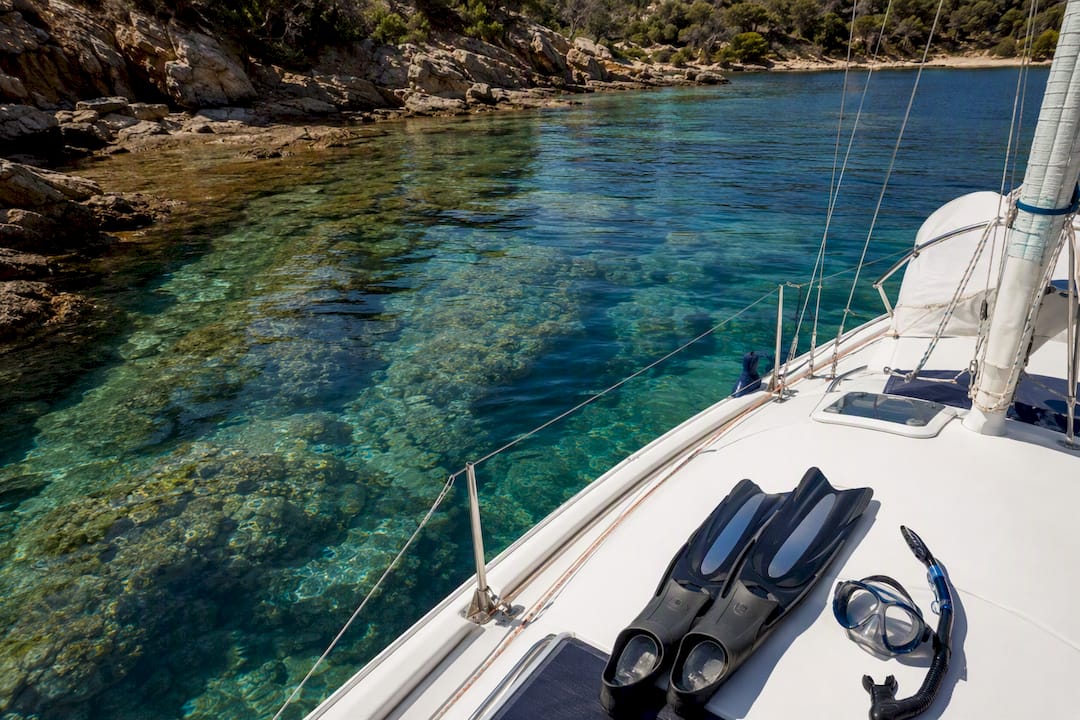
Karydi (Karidi) Beach, near Vourvourou, pairs a wide sandy shoreline with rockier snorkeling water toward its northern edge. It’s the friendliest entry point on this list for anyone still building confidence in a mask and fins. Parking fills early in high season, and the sand-only stretch in the center of the bay isn’t worth snorkeling; head to the rock margins instead.
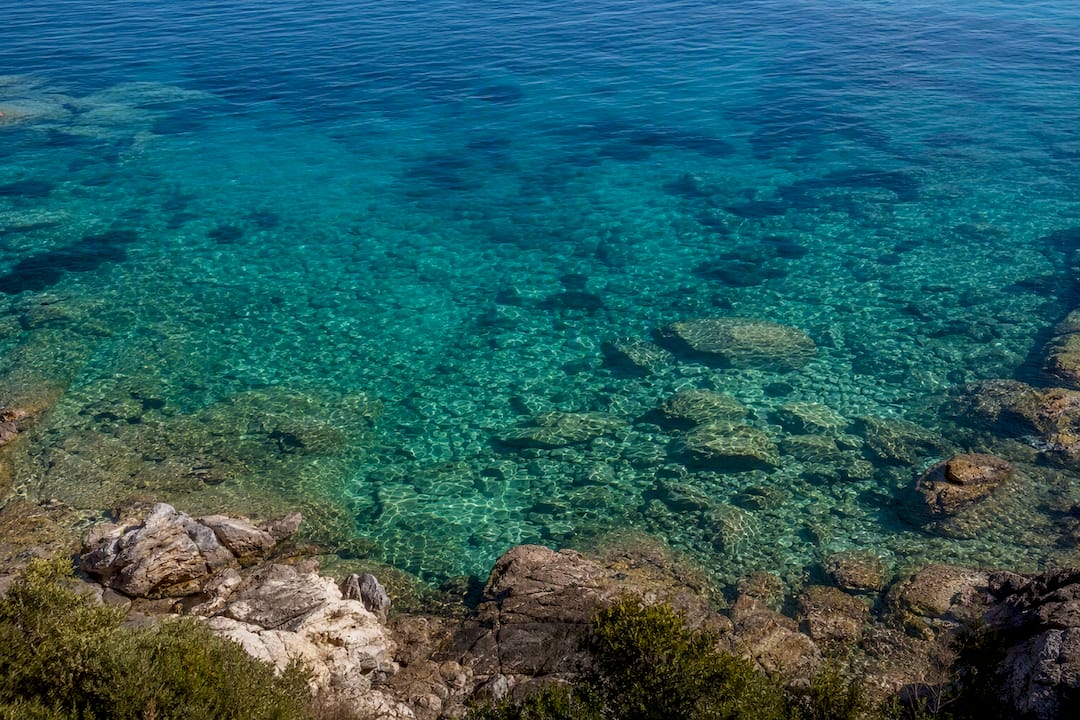
Azapiko Beach, tucked further down the peninsula, trades easy access for solitude. The rock structure close to shore holds small schools of bream and the occasional octopus den in the crevices. A dirt road leads down to it, and while a normal car manages the drive, it’s slow going, which keeps the numbers down even in August.
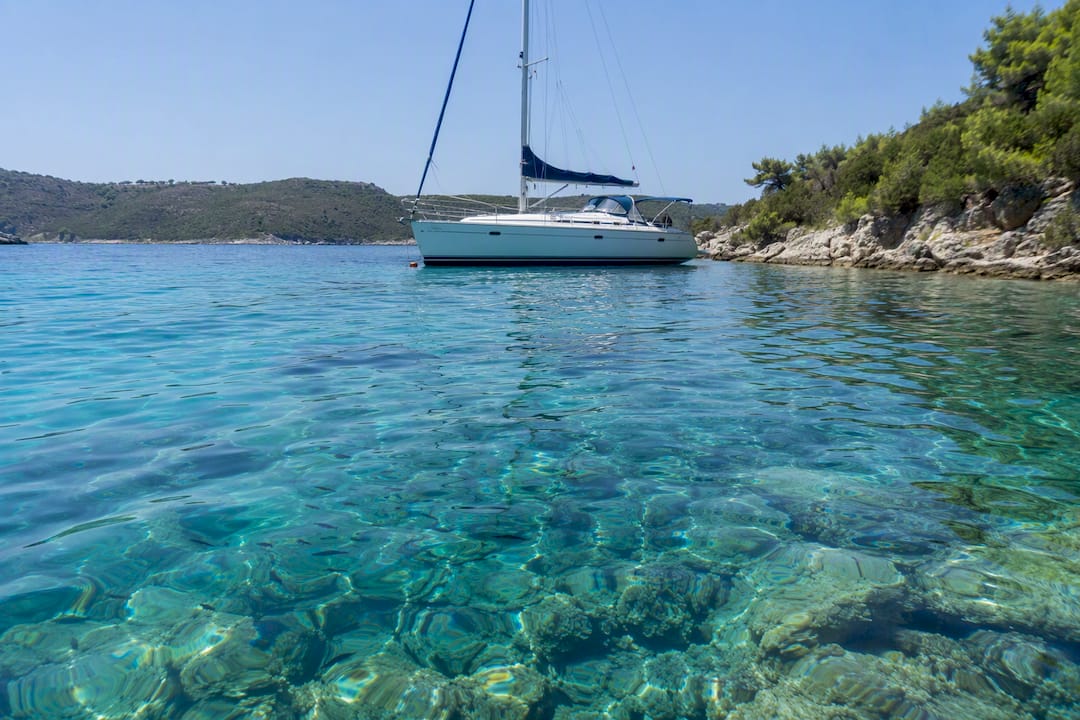
Aretes Beach offers a quieter, less-documented alternative with rocky outcrops flanking a smaller cove. Visibility tracks close to the regional average, and it rarely draws a crowd worth mentioning, which makes it a solid backup when Kavourotrypes is packed.
Kalamitsi, near the southern tip of Sithonia, splits into several small bays separated by rock headlands. The headlands themselves are where the snorkeling gets interesting, since that’s where the seabed structure changes and fish concentrate. The main sandy bay is pleasant for swimming but thin on marine life.
Sarti’s rocky areas, just north of the main beach, give snorkelers a working alternative when the central bay gets busy. The rock ledges close to shore here hold urchins, small wrasse, and occasional schools of sardines moving through, and early arrival matters as much here as anywhere else on this list.
Visibility snapshot: Sithonia’s rocky shoreline runs 8 to 15 meters of visibility under normal conditions, with Diaporos pushing toward the top of that range at 10 to 12 meters. That’s a meaningful gap over the flat sandy bays elsewhere in Halkidiki, where stirred-up sand can cut visibility to a few meters by midday.
Kassandra: where sand dominates, but a few spots still deliver
Kassandra’s beaches are famous for soft sand and shallow, warm water, which is fantastic for swimming and less reliable for snorkeling. Afitos has a rockier shoreline than most of the peninsula, with small cliffs and a scattering of underwater boulders that hold more life than the sandy stretches nearby. Paliouri, at the southern tip, offers pockets of rock among the dominant sand, worth checking if you’re already staying in the area, but not worth a special trip on their own. Agios Ioannis leans almost entirely sandy, and it’s better filed under beach day than snorkeling destination.
- Sithonia rewards travelers chasing clarity and rock structure.
- Kassandra rewards travelers who want an easy, sandy family beach with snorkeling as a bonus, not the main event.
How to Match a Spot to Your Skill Level and the Day’s Conditions
Choosing well comes down to three quick questions, answered in order.
- What’s the wind doing? If the Meltemi is up, sheltered coves like Kalamitsi or the inner side of Vourvourou hold their clarity far longer than exposed spots like open Kavourotrypes.
- What’s your comfort level? Beginners do best at Karydi’s sandy entry or a calm cove with a gentle slope. Confident swimmers get more out of Diaporos and the deeper channels around the islets.
- What time is it? Early morning wins almost every time. Wind builds through the afternoon and stirs sediment near shore, and the shallow bays cloud up first.
Before you get in the water with any operator or skipper, ask directly where the shallow ledges sit and where the seabed drops off, since that single question prevents the most common scare for inexperienced swimmers: sudden deep water appearing right next to a rock shelf. Also ask about the exit plan and whether any boat traffic passes through the anchorage.
Crowding is the other variable worth watching. Kavourotrypes and Karydi both fill by mid-morning in July and August, and a packed cove means stirred sand, more boat traffic near shore, and less room to actually see anything.
Pro Tip: If a cove looks perfect on a map but has no obvious walking path, that’s usually a sign it’s a boat-access spot in practice, not a hidden secret waiting for a hike.
Why a Sailing Charter Changes What You Can Reach
Sithonia’s best snorkeling water tends to sit exactly where the roads don’t reach, and that’s the practical case for getting there by sail instead of by car. Halkidiki Boat Sailing runs its private charters aboard Off The Hook, a sailing vessel built around exactly this kind of access, reaching Diaporos’s channels and quieter Sithonia coves without the long dirt-road approach that keeps most day-trippers away.
- Skip the parking scramble and rough tracks that guard spots like Azapiko.
- Arrive at anchorages before the beach crowd builds, which matters most for visibility.
- Get a proper pre-swim safety briefing from the skipper, covering depth changes and nearby boat traffic before anyone puts a mask on.
- Snorkeling gear comes included, along with fuel, refreshments, and a professional local crew, so there’s no separate rental stop to plan around.
A good skipper will point you toward the sheltered anchorage on a breezy day and steer past it on a calm one, which is exactly the kind of local judgment call a private boat tour is built to provide.
Gear, Safety, and Low-Impact Snorkeling Checklist
Run through this before you get in the water, every time, not just on the first day of the trip.
- Bring your own mask if you have one; fit matters more for visibility and comfort than any other piece of gear, and Halkidiki Boat Sailing’s snorkeling gear guide covers what to pack versus what to rent.
- Check wind direction before you leave, since a north Meltemi flow can turn a calm morning cove choppy by early afternoon.
- Never snorkel alone in open coves like Diaporos; pair up or stay within sight of a boat or another swimmer.
- Ask for a safety briefing wherever you’re snorkeling from a boat, covering depth changes, exit points, and any nearby traffic lanes.
- Keep a clear exit plan in mind before you enter, especially at rocky spots like Kavourotrypes where the easiest way out isn’t always where you got in.
- Avoid touching or standing on rock ledges and any visible coral-like growth. Halkidiki’s underwater structure recovers slowly from contact damage.
- If you’re still working on your technique, brushing up on basic breathing fundamentals before you go pays off within the first few minutes in the water.
Pro Tip: Pack a simple whistle or a brightly colored buoy if you’re swimming out toward Diaporos’s deeper channels. Boat traffic there is light, but visibility to other boats matters more than visibility underwater.
Why the Sithonia-First Approach Beats a Generic Beach List
Most guides to Halkidiki treat snorkeling as an afterthought to the beach day, listing whichever sandy bay happens to have a nice parking lot. That gets the priority backward. Rock structure, not sand, is what actually determines whether a spot is worth putting a mask on for, and Sithonia has far more of it than Kassandra. The conventional advice to “just go to whichever beach looks nicest” ignores that the nicest-looking sandy beach is often the weakest snorkeling water on the whole peninsula.
The bigger gap in most advice is access. Writers point at Diaporos and its islets as a top pick, then leave out that there’s no real road there. That’s not a minor footnote. It’s the difference between a spot you can actually reach and one that stays theoretical for most visitors. If Halkidiki Boat Sailing’s experience running charters into these coves says anything useful, it’s this: the water quality difference between an easily reached beach and a boat-only cove is real, and it’s large enough to plan a whole day around. Prioritize the rock, then figure out how you’re getting there.
— George
Sources
For maps and access notes on tour-reachable coves, halkidiki.info’s spot guide is useful. For seasonal timing advice, check Beaches for Kings, and for a region-wide list of common sites, Holidify’s overview fills in the gaps.
- Best Snorkelling Spots in Kassandra and Sithonia You Can Reach on a Tour – Halkidiki holidays guide
- Snorkeling in Sithonia – Halkidiki
- Snorkeling in Sithonia: A Guide to Halkidiki’s Best Spots
FAQ
Which Greek island or region is best for snorkeling?
Halkidiki isn’t technically an island, but within the region, Sithonia is consistently ranked as the strongest area for snorkeling thanks to its rocky shoreline and clearer water, with spots like Kavourotrypes and Diaporos leading the way.
What is the nicest beach in Halkidiki?
Kavourotrypes is widely cited as one of the most striking beaches in Halkidiki, combining dramatic granite rock formations with clear water suited to both swimming and snorkeling.
Which is the nicest part of Halkidiki for snorkeling?
Sithonia, particularly the stretch running through Neos Marmaras, Nikiti, and down to Sarti, holds the best combination of rocky seabed and consistent visibility, outperforming Kassandra’s sandier coastline for underwater exploring.
Is snorkeling in Greece worth it?
For anyone drawn to clear water and rocky underwater structure, yes. Sithonia in particular offers visibility ranging from 8 to 15 meters, which puts it well ahead of many flat, sandy swimming beaches where sediment clouds the shallows.