

Jellyfish in Halkidiki come and go with the wind, currents, and season, so there’s no fixed answer for “today.” Most summers, swimming stays safe if you scan the water before wading in, avoid touching anything drifting near shore, and respect posted warnings. If you do get stung, rinse with seawater right away and get medical help for severe symptoms like swelling or trouble breathing.
TL;DR:
- Jellyfish appearances in Halkidiki are highly localized, often changing within a single day due to wind and current patterns, so checking recent conditions is essential.
- Pelagia noctiluca causes most painful stings but is rarely dangerous unless allergic; recognizing safer species like Cotylorhiza tuberculata can prevent unnecessary panic.
- Avoid jellyfish in shallow waters by scanning the surface, avoiding visible tentacles, and wearing protective clothing such as rash vests and swim shoes.
- Rinse stings with seawater, remove tentacle fragments carefully, and seek urgent medical help if allergic symptoms or difficulty breathing occur.
- Using real-time reports from sources like Meduseo or local guides allows for better planning and moving to calmer, clearer coves, especially during peak jellyfish season in summer.
Table of Contents
- When Jellyfish Show Up in Halkidiki and Where They Cluster
- Common Jellyfish in Halkidiki and How Much They Actually Hurt
- How to Avoid Jellyfish Stings on Halkidiki Beaches
- What to Do Immediately After a Jellyfish Sting
- Where to Check Jellyfish Conditions Right Now
- Why Jellyfish Matter to Halkidiki’s Marine Ecosystem
- How Jellyfish Blooms Affect Tourism and Local Fishing
- Are Jellyfish Numbers in Halkidiki Changing Over Time?
- A Skipper’s View From the Deck of Off The Hook
- Skip the Guesswork: Sail to Clearer Water Instead
- Sources
- FAQ
When Jellyfish Show Up in Halkidiki and Where They Cluster
Jellyfish season in Halkidiki runs from late spring through early autumn, with the heaviest activity typically landing in the middle of summer, according to the local sea-animal guide for the region. That window lines up with warmer sea temperatures that make swimming most appealing, which is exactly when you want to know the risk.
Jellyfish presence shifts fast. Onshore wind and shifting currents can push a swarm into one bay within a day or two, while a cove just around the headland stays completely clear. Data from citizen-science observation maps confirms how localized these sightings tend to be; one beach reports jellies while its neighbor sees none for weeks.
A few patterns hold true across most seasons:
- Exposed peninsulas like Kassandra catch more drift and see more frequent sightings than sheltered inlets.
- Bays near Paliouri can fill up quickly after a few days of steady onshore wind.
- Coves around Nikiti and Neos Marmaras vary block by block. What’s clear at breakfast may not stay that way by afternoon.
- A single old sighting means little; a cluster of recent reports from the same morning means a lot.
The practical rule is simple. If the wind has been blowing onshore for a day or two, or if you’ve heard more than one report of jellyfish that morning, pick a different stretch of coast. Wind and weather patterns are the single best predictor of where jellies will land next, and checking them takes thirty seconds.
Common Jellyfish in Halkidiki and How Much They Actually Hurt
Not every jellyfish in Halkidiki deserves a scream and a sprint out of the water. Most sightings fall into a handful of species, and they don’t carry the same risk.
Pelagia noctiluca, the mauve stinger, is the one that causes most of the painful encounters. Its bell typically grows to about 12 centimeters across, and it trails long, nearly invisible tentacles that deliver a sharp, burning welt on contact. Stings from this species hurt, sometimes for hours, but they are rarely dangerous unless someone has a severe allergic reaction.
Cotylorhiza tuberculata, known as the fried-egg jelly for its yellow-domed center, looks far more alarming than it actually is. This large, brown-and-yellow species is usually harmless to touch, and recognizing it on sight saves a lot of unnecessary panic on a beach day.
Two other species round out the list. Moon jellies (Aurelia) are pale, saucer-shaped, and deliver only a mild sting if any. Blue jellyfish (Rhizostoma) are larger and more visible, with stings that range from a mild irritation to something more uncomfortable depending on skin sensitivity.
- Small, transparent, or purplish jellies: treat with caution, this is likely Pelagia noctiluca.
- Large, brown, fried-egg shaped jellies: generally safe to swim near.
- Pale, saucer-shaped jellies drifting slowly: usually mild, low-risk.
- Larger blue-tinted jellies: visible and easy to avoid, moderate sting risk.
Quick fact: Pelagia noctiluca’s bell rarely exceeds 12 centimeters, yet it accounts for the majority of stings reported along Greek coastlines during peak season, according to regional sea-life guidance.
How to Avoid Jellyfish Stings on Halkidiki Beaches
Prevention beats treatment every time, and most of it comes down to habits you can build in a single afternoon.
- Scan before you wade in. Look across the surface and along the shoreline for anything translucent or drifting. A ten-second look prevents most accidental brushes.
- Skip areas with visible tentacles, even if the main body of the jellyfish looks far away. Tentacles trail farther than they appear.
- Check recent wind history. If onshore winds have been steady for a day or two, or locals mention recent sightings, move to another beach.
- Wear a rash vest or long-sleeve swim layer. Covering exposed skin is one of the simplest, most effective steps swimmers can take, and it works for kids and adults alike, per clinical guidance on prevention.
- Use swim shoes on rocky entries, which also helps you avoid stepping on anything stranded near the waterline.
- Keep children within arm’s reach in shallow water, and teach them early that washed-up jellyfish, even dead ones, can still sting.
- On a charter boat, ask your skipper for a current scan before anchoring. Experienced crews read wind direction and pick sheltered coves accordingly.
Pro Tip: Pack a rash vest even on a calm-looking day. Pelagia noctiluca’s tentacles are nearly invisible in bright water, and a thin layer of fabric blocks most stings before they happen.
Families snorkeling for the first time benefit from a slower, more supervised approach in general, and this safety guide for less confident swimmers covers habits that pair well with jellyfish precautions.
What to Do Immediately After a Jellyfish Sting
Getting stung is unpleasant, not usually an emergency, and how you react in the first minute matters more than most people realize.
Get out of the water calmly rather than thrashing, which can trigger more nematocysts to fire. Do not rub the area, and never rinse with fresh water. Fresh water changes the salt concentration around any remaining stinging cells and can make them discharge more venom, worsening the pain, according to clinical management guidance on jellyfish stings.
- Rinse the sting with seawater only, not fresh water, not soda, not urine.
- Remove any visible tentacle fragments using a flat card or tweezers, never bare fingers.
- Apply a cold compress once the tentacles are gone to reduce swelling and pain.
- Use topical cortisone cream or an oral antihistamine if you have one on hand and symptoms are limited to local irritation.
Quick fact: Clinical guidance specifically flags fresh water as a mistake that can worsen a sting rather than soothe it, a detail most first-timers get backwards.
Seek urgent medical help if someone shows trouble breathing, facial swelling, fainting, severe dizziness, or a reaction spreading beyond the sting site. Those symptoms point to a systemic allergic response rather than a normal local sting, and they need attention fast, not a wait-and-see approach on the beach towel.
Where to Check Jellyfish Conditions Right Now
Before you commit to a beach day, a quick check beats guessing. Meduseo maintains a live map of location-stamped jellyfish reports across Greece, including density indicators that tell you whether a sighting was a lone jelly or a dense patch.
- Meduseo’s live reports show recent, geo-tagged sightings rather than seasonal averages.
- Local Facebook groups, lifeguards, and skippers near Nikiti, Neos Marmaras, Paliouri, and Kassandra often spot changes faster than any app.
- Favor reports from the same morning over anything older than a day. Conditions shift quickly.
- If two or three sources flag the same beach as dense with jellyfish, move to another cove instead of testing your luck.
Skippers who work these waters daily read wind shifts almost instinctively, and that ground-level knowledge often beats a forecast checked from a hotel room.
Why Jellyfish Matter to Halkidiki’s Marine Ecosystem
Jellyfish blooms look alarming from the shore, but marine biologists point out that currents and wind, not pollution, usually drive these arrivals. A cluster of jellyfish drifting into a bay is often a natural, healthy ecosystem event rather than a sign something has gone wrong with the water, based on regional marine guidance.
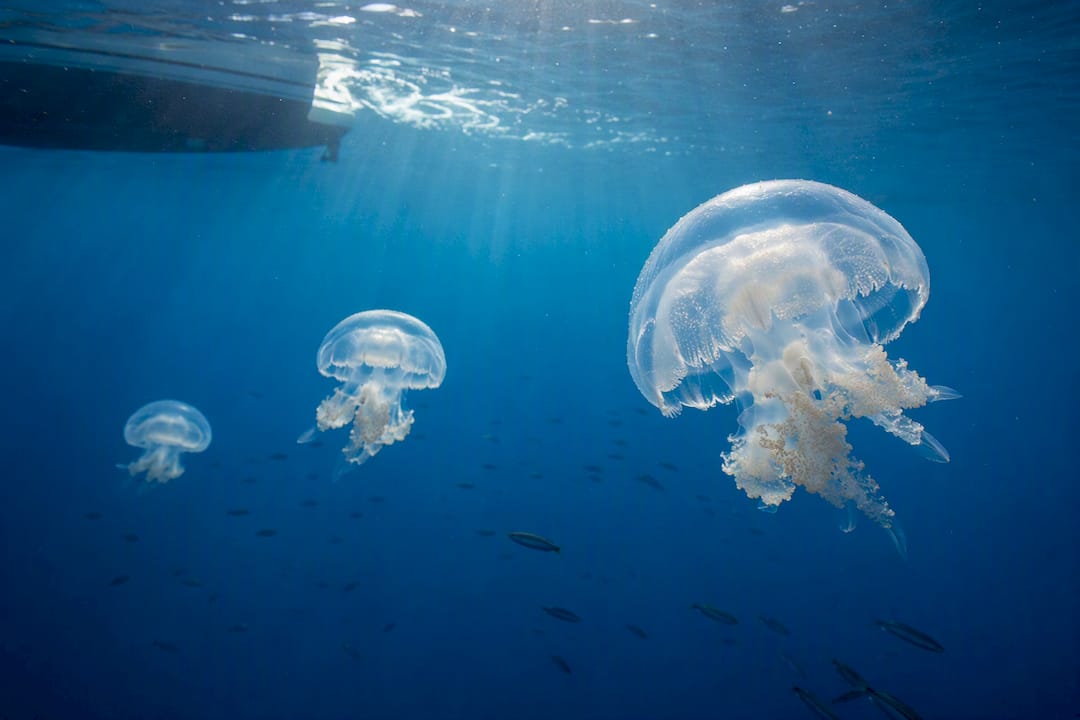
Jellyfish play a real role in the food web. They feed on plankton and small fish larvae, and in turn they become food for sea turtles and certain fish species that pass through the Aegean. Their presence, in modest numbers, reflects a functioning marine cycle rather than a broken one.
Where it gets more complicated is scale. A short-term surge tied to a specific wind pattern is different from a sustained increase in overall numbers, which can signal a shift in the broader ecosystem, including changes in predator populations or water temperature. Halkidiki’s clear, warm bays create favorable conditions for jellyfish reproduction during peak months, which is part of why sightings cluster so heavily around July and August rather than spreading evenly across the year.
Understanding this distinction matters for anyone trying to judge risk. A single bloom after a windy week is a weather event. A pattern of larger, more frequent blooms year after year is a different story, and one worth watching rather than dismissing.
How Jellyfish Blooms Affect Tourism and Local Fishing
A dense jellyfish bloom can change a beach day fast, and it changes more than just swimming plans. Tourism operators along the coast feel it when visitors cancel water activities or crowd into the handful of coves reported as clear, shifting pressure unevenly across the region’s beaches.
Fishing crews notice blooms too, sometimes more than swimmers do. Large jellyfish swarms can clog nets, damage catch quality, and in some documented cases along Kassandra and nearby coasts, disrupt fishing operations for days at a time, based on reporting on jellyfish activity in Chalkidiki. A bloom heavy enough to affect commercial nets is also heavy enough that swimmers should take it seriously.
The upside is that these blooms are usually short-lived and localized. A bay hit hard one week often clears within days once wind patterns shift, which is why day-of information matters so much more than seasonal generalizations. Businesses that build flexibility into their routes, choosing calmer coves when a bloom hits a popular stretch, absorb the disruption far better than fixed, single-beach operations. That flexibility is exactly why boat-based access to Halkidiki’s best beaches tends to hold up better during unpredictable weeks than a single stretch of sand ever can.
Are Jellyfish Numbers in Halkidiki Changing Over Time?
Media coverage from 2021 and again in 2025 documented larger-than-usual jellyfish blooms along Kassandra and the surrounding coastline, and researchers have debated the cause ever since, according to reporting on the 2021 blooms. Short-term spikes tend to trace back to current patterns and wind. Longer-term increases are harder to pin down, but warmer sea temperatures are a factor researchers keep coming back to.
Warmer water tends to favor jellyfish reproduction cycles more than it favors many fish species, which can shift the balance in a given bay over several seasons. That doesn’t mean every summer will bring bigger blooms than the last. Year-to-year variability, driven mostly by wind and currents, still outweighs any slow climate trend on a week-to-week basis.
What this means for a swimmer planning a trip is straightforward: don’t treat any single summer’s headlines as a permanent forecast. Check current conditions close to your travel dates rather than assuming last year’s news still applies. A quiet July doesn’t guarantee a quiet August, and a bad summer two years ago doesn’t mean this one will repeat it. The pattern is variability layered on top of a slow warming trend, not a straight line in either direction.
A Skipper’s View From the Deck of Off The Hook
Reading the water is half the job of sailing these coasts well. Skippers track wind and current patterns 24 to 48 hours ahead and scan visually before ever dropping anchor, which is the same habit any careful swimmer should build on a smaller scale.
Aboard Off The Hook, routes are adjusted away from bays that tend to collect jellyfish, favoring clearer coves around Sithonia instead. Guests get snorkeling gear, a short briefing for kids on what not to touch, and simple advice on rash vests before anyone goes in the water. It’s less about avoiding the sea and more about choosing the right patch of it.
— George
Skip the Guesswork: Sail to Clearer Water Instead
Checking wind reports and jellyfish maps from the beach only gets you so far. A private sail on Off The Hook puts a skipper’s real-time judgment to work for you, choosing calmer, clearer coves around Sithonia, including Neos Marmaras, Nikiti, Paliouri, and Kassandra. This avoids leaving you to guess which stretch of sand got hit by yesterday’s wind.
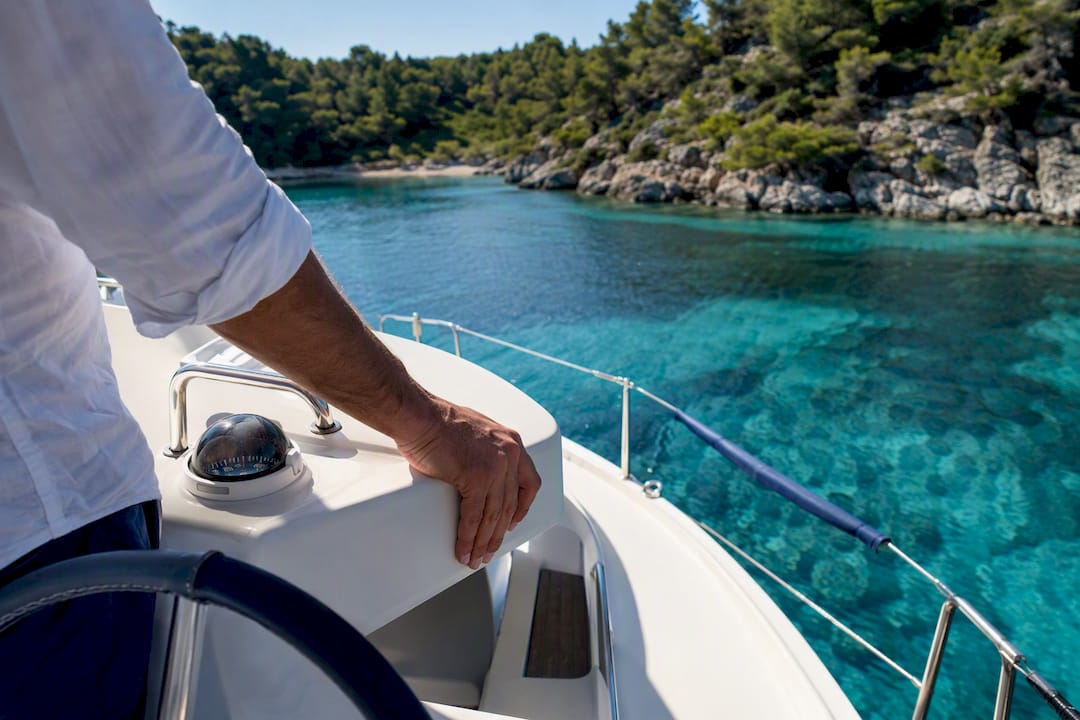
Charters typically include a professional skipper who reads conditions before anchoring, snorkeling gear for the group, and a short safety brief that covers exactly what to watch for in the water. Instead of relying on a single fixed beach, you get access to multiple coves in one trip, with the flexibility to move if one spot looks less than ideal.
If you’d rather spend the day swimming in water your skipper has already checked than scrolling sighting reports on your phone, browse private and group sailing charters around Halkidiki and pick a date that works for your trip.
This article is general information, not a substitute for advice from a qualified doctor. Consult a qualified healthcare professional about your own circumstances before acting on anything here.
Sources
- Guide to Sea Urchins Jellyfish and Other Sea Animals in Halkidiki
- Clinical management of jellyfish stings — PMC
- Jellyfish in Greece — Meduseo
FAQ
What month are jellyfish most active in Halkidiki?
Jellyfish activity in Halkidiki typically peaks during the middle of summer, although the broader season runs from late spring through early autumn.
Will there be jellyfish in Greece in 2026?
Jellyfish will almost certainly appear somewhere along the Greek coast in 2026, since sightings occur every year, but exact locations and timing depend on wind and currents closer to your travel dates rather than anything predictable months in advance.
Does the Aegean Sea have jellyfish?
Yes, the Aegean Sea, including the waters around Halkidiki, regularly sees jellyfish during warmer months, with species like Pelagia noctiluca and Cotylorhiza tuberculata among the most commonly reported.
Is it safe to swim in the sea with jellyfish present?
Swimming is usually safe if you scan the water first, avoid touching anything drifting near shore, and heed recent local reports; most Halkidiki species cause a painful sting at worst rather than a serious medical event.
Are jellyfish in Halkidiki dangerous?
Most jellyfish encountered in Halkidiki, including Pelagia noctiluca, cause painful but rarely dangerous stings, while species like Cotylorhiza tuberculata are typically harmless to touch.