
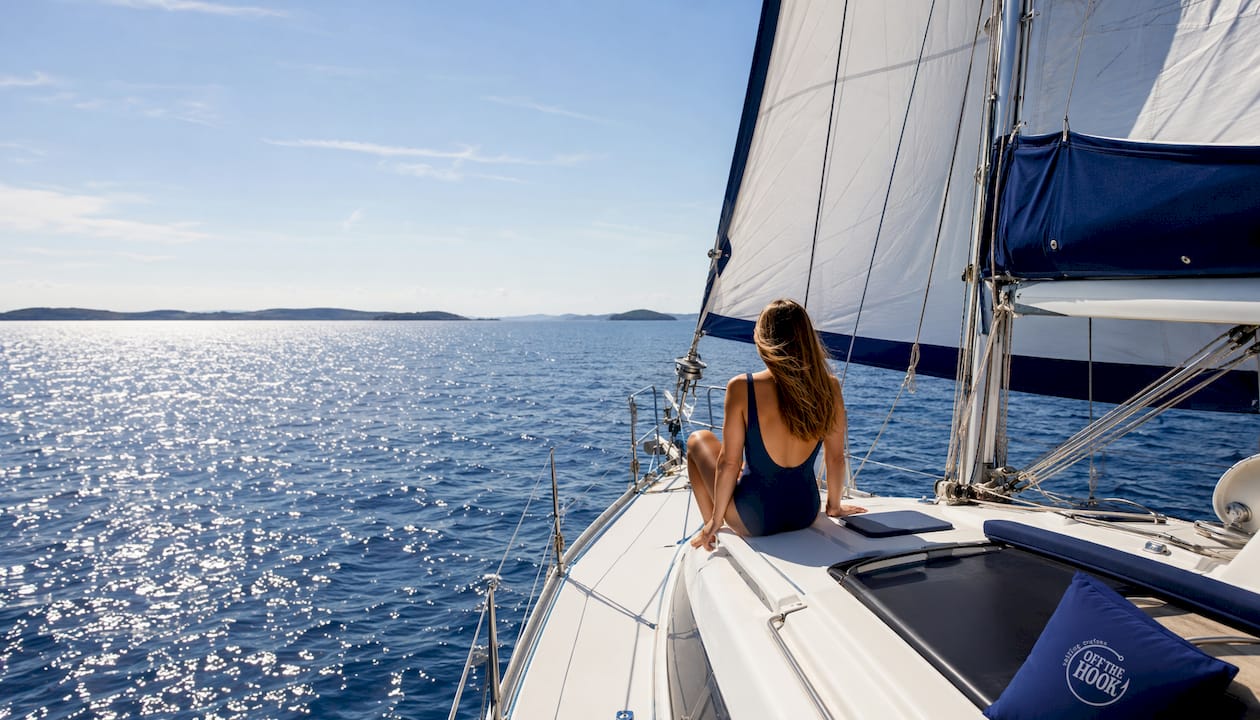
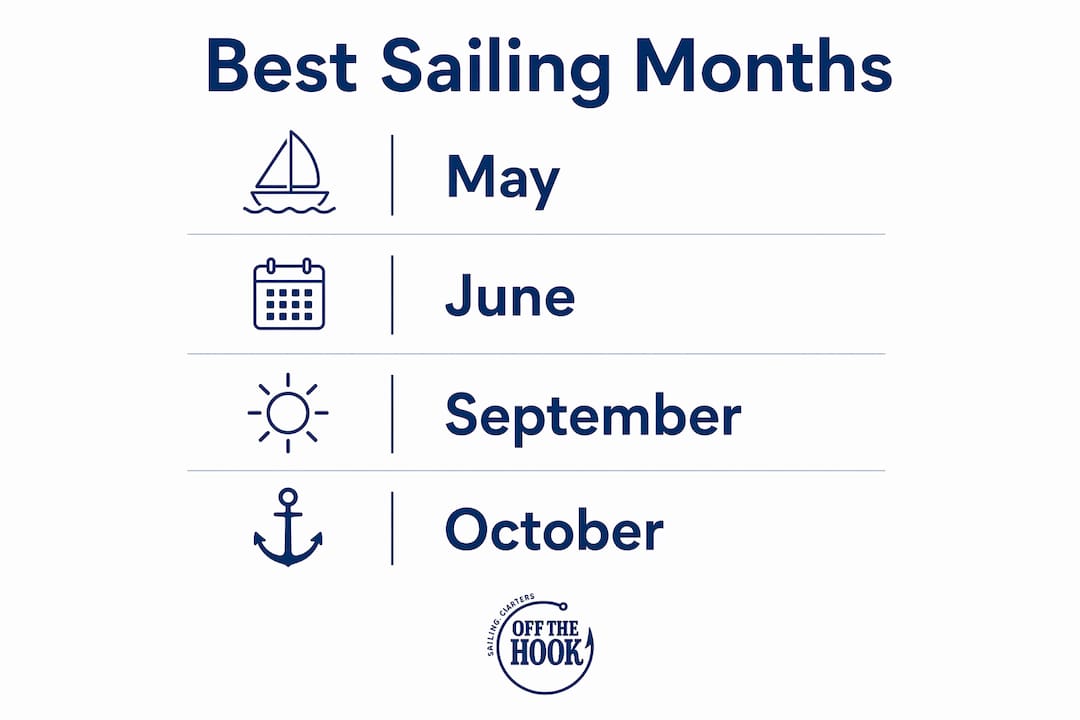
Halkidiki has a Mediterranean climate with reliably good sailing weather from May through October, and if you’re planning a private cruise, May, early June, and September are the sweet spot — warm water, calmer anchorages, and far fewer boats crowding the coves around Sithonia and Kassandra.
- ✅ Best months to sail: May, early June, and September for calm seas, warm swimming, and uncrowded stops near Neos Marmaras, Nikiti, and Kelyfos Island
- ☀️ Peak season (July–August): Sea temperatures peak, ideal for snorkeling, though popular coves near Paliouri and Kassandra fill quickly
- ⚠️ Months to avoid: November through March bring rain, cooler temperatures, and choppy conditions unsuitable for day sails
- ️ For private cruises: Halkidiki Boat Sailing’s sailboat Off The Hook runs full-day, sunset, and weekly private cruises across these routes from May through October
Halkidiki averages more than 300 sunshine days annually, which means the sailing season here is genuinely long and reliable.
Table of Contents
- What are the typical wind and sea conditions for day sails in Halkidiki?
- How often do storms or extreme weather affect sailing in Halkidiki?
- Sail Halkidiki with a Crew That Knows Every Wind Shift
- FAQ
- Key Takeaways
What are the typical wind and sea conditions for day sails in Halkidiki?
Summer winds in Halkidiki are generally light to moderate, making the region well-suited for small private sailboats. The dominant pattern from June through August is a gentle northerly or northeasterly sea breeze that builds through midday and softens by late afternoon — exactly the rhythm that shapes a well-timed full-day cruise.
Sea temperatures climb steadily from spring to peak in summer, then hold warm through September. That September warmth is what makes it such a compelling month: the crowds thin out, but the water stays inviting for long snorkeling stops near Kelyfos Island or sheltered inlets off Sithonia.
The occasional Vardaris, a northern wind that can push gusts stronger than expected even in summer, is the main variable to watch. When it builds, experienced skippers shift routes toward leeward bays and sheltered coves rather than open-water legs. You can check live Halkidiki wind forecasts before any cruise day for real-time wind speed and direction.
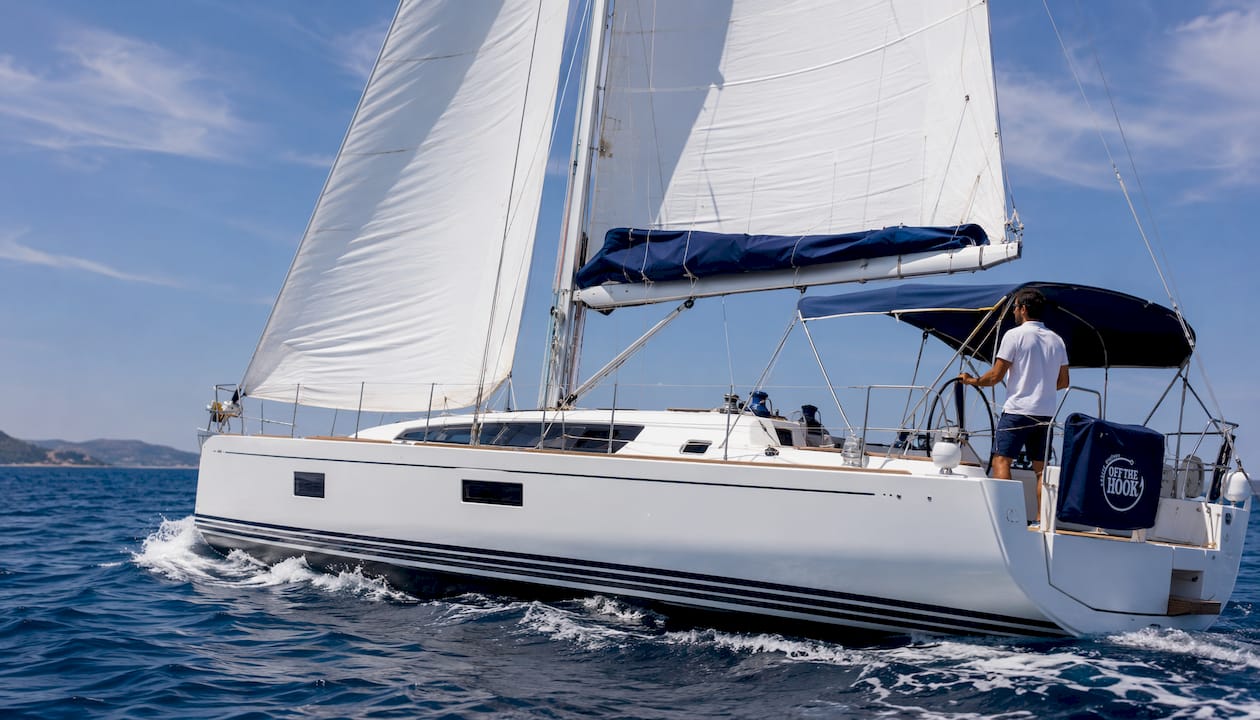
Pro Tip: Sequence your cruise day with an early-morning offshore leg while the sea is glassy, a midday anchor at a sheltered cove for swimming, and a coastal run back in the late afternoon for golden-hour light.
How often do storms or extreme weather affect sailing in Halkidiki?
Severe weather events are rare during the core sailing season. Halkidiki’s Mediterranean climate keeps summer storms infrequent, and most summer days deliver clear skies and predictable breezes. The Chalkidiki Hub climate guide confirms that rainfall is minimal from June through August, with the wettest months concentrated in winter.
That said, sudden afternoon squalls can develop in late August and early September, typically short-lived but worth monitoring. Neos Marmaras, with its harbor town microclimate, tends to run hotter and drier than inland areas, while Sithonia’s dense pine forests keep coastal temperatures a degree or two cooler — useful context when planning midday anchor stops near Nikiti or Paliouri.
A reputable 5-day forecast service updated daily is the most practical tool for final go/no-go decisions. Hourly wind data matters more than temperature for skipper planning.
Sail Halkidiki with a Crew That Knows Every Wind Shift
Knowing the weather is one thing. Having a skipper who has read these waters for years is another. Halkidiki Boat Sailing’s Off The Hook is a fully crewed, all-inclusive private sailboat with skipper George Dimitriadis at the helm — someone who adjusts routes around Vardaris gusts, times snorkeling stops at Kelyfos Island for the calmest water, and knows exactly which sheltered cove near Neos Marmaras or Kassandra to duck into when conditions shift.
Every cruise includes snorkeling gear, refreshments, fuel, and a safety briefing. No hidden costs, no logistics to manage. Whether you’re planning a sunset sail or a full-day private cruise, George and the Off The Hook handle everything so you can focus on the view.
FAQ
What is the best time to visit Halkidiki for sailing?
May, early June, and September offer the best combination of warm sea temperatures, lighter crowds, and calm anchorages. July and August are also excellent for swimming but busier.
What are sea temperatures like in Halkidiki during summer?
Sea temperatures peak at roughly 25–26°C in July and August, staying warm enough for comfortable snorkeling through September.
How do I check the current weather in Halkidiki before a cruise?
Use a live 5-day forecast or a real-time wind service to check hourly gusts and precipitation the day before your sail.
Can the Vardaris wind affect my sailing day?
Yes. The Vardaris is a northern wind that can produce unexpected gusts even in summer. Experienced skippers like George Dimitriadis reroute to sheltered bays near Sithonia or Kelyfos Island when it builds.
Does Halkidiki get storms in summer?
Severe storms are rare from June through August. Short afternoon squalls can occur in late August and September but are typically brief and manageable with proper planning.
Key Takeaways
May through October is Halkidiki’s reliable sailing window, with shoulder months offering the best balance of warm water, calm seas, and uncrowded anchorages for private cruises.
| Point | Details |
|---|---|
| Best sailing months | May, early June, and September combine warm seas, fewer crowds, and calmer conditions. |
| Peak sea temperatures | Sea temps reach 25–26°C in July–August, ideal for snorkeling near Kelyfos Island. |
| Wind awareness | The Vardaris northern wind can produce summer gusts; check hourly forecasts before sailing. |
| Sunshine reliability | Halkidiki averages more than 300 sunny days annually, supporting a long sailing season. |
| Halkidiki Boat Sailing | Off The Hook runs all-inclusive private cruises May–October with skipper George Dimitriadis adapting routes to daily conditions. |