
TL;DR:
- Lesser-known Greek islands like Folegandros, Alonissos, and Lipsi offer authentic culture and peaceful beaches. These islands prioritize local traditions, conservation, and eco-friendly policies, making them ideal for slow, meaningful travel. Visitors should plan ahead, respect local ways, and enjoy the quiet beauty away from mass tourism.
The most underrated Greek islands are not the ones you see on travel posters. They are places like Folegandros, Alonissos, and Lipsi, where fishing boats outnumber sunbeds, local tavernas serve the same recipes they have for generations, and the beaches feel like they belong to you alone. These lesser-known Greek islands offer something the famous ones rarely can: genuine quiet, authentic culture, and the rare pleasure of arriving somewhere that has not yet been polished for mass tourism.
1. What makes Folegandros one of the best underrated Greek islands?
Folegandros is the Cyclades island that rewards travelers willing to work a little harder to reach it. There is no airport, and ferry schedules are limited, which means the island filters out casual visitors almost by design. That friction is exactly what preserves its character.
The island’s population fluctuates between 300 in winter and 800 in summer. That scale keeps the main village, Chora, feeling like a real community rather than a stage set. Narrow whitewashed alleys, a clifftop church, and a central square where locals actually sit and talk are the main attractions here.
What makes Folegandros particularly special is its deliberate restraint. Many properties avoid Wi-Fi and pools to maintain an unspoiled atmosphere. Artists and writers have been drawn here for decades, creating a quiet creative community that adds texture to the island’s personality.
-
No airport means arrivals come only by ferry from Athens (Piraeus) or nearby Cyclades islands
-
Chora sits dramatically on a cliff edge with views over the Aegean
-
Beaches like Agali and Katergo require hiking or a boat to reach
-
Local festivals and religious celebrations remain untouched by tourist programming
Pro Tip: Book your ferry from Piraeus well in advance for july and august. Folegandros fills up fast despite its small size, and last-minute tickets can leave you stranded on the mainland.
2. How does Alonissos offer a unique natural experience?
Alonissos is the quiet achiever of the Sporades island group. It sits at the center of the largest marine protected area in the Mediterranean, a designation it has held since 1992. That protection has kept its waters extraordinary.
Underwater visibility regularly exceeds 30 meters, making it one of the clearest diving destinations in all of Greece. Snorkelers can see the seafloor in detail from the surface. The marine park also shelters the endangered Mediterranean monk seal, with fewer than 700 individuals surviving worldwide and roughly 300 living in Greek waters.
On land, Alonissos resists resort development with the same stubbornness it applies to the sea. Fishing boats still outnumber pleasure craft in the harbor. The village of Steni Vala serves fresh catch at waterfront tables where the menu changes based on what came in that morning.
-
Patitiri harbor is the main port, with a rebuilt Old Town above it that artists helped restore
-
Beaches like Agios Dimitrios and Leftos Gialos are accessible by boat or dirt road
-
The marine park offers guided snorkeling and diving tours from local operators
-
Hiking trails connect villages through pine and olive groves
Pro Tip: Visit Steni Vala on a weekday evening. The fishing boats return in the late afternoon, and the tavernas set their menus based on the catch. You will eat better and pay less than at any resort restaurant.
3. Why Lipsi is a model for sustainable tourism
Lipsi is a small Dodecanese island that most travelers skip on their way to Patmos or Leros. That oversight is Lipsi’s greatest advantage. The island has used its relative obscurity to build something genuinely forward-thinking.
In 2023, Lipsi banned new swimming pool construction to conserve water. That single policy decision signals a broader commitment. The island has invested in modern water management infrastructure and positioned itself as a model for other small Greek islands facing climate pressure.
“Sustainable tourism is not just a trend for Lipsi. It is a necessity driven by real challenges like heatwaves and water scarcity. The island’s mayor has made it official policy, calling sustainability essential for the island’s future.”
Travelers who choose Lipsi are voting with their presence. The island offers clean beaches, a genuinely welcoming local community, and the satisfaction of spending money in a place that uses tourism to protect rather than consume its environment.
-
The main village has a relaxed harbor with cafes and small family-run restaurants
-
Day trips to nearby uninhabited islets are easy to arrange locally
-
The island hosts a small annual wine festival celebrating its local Muscat grape
-
Accommodation stays small-scale, with family guesthouses rather than hotel blocks
4. Kastellorizo: The remote island gem with rich history
Kastellorizo sits closer to the Turkish coast than to any other Greek island. It is the most remote inhabited island in Greece, and getting there takes effort. Ferry connections are limited and unreliable in the off-season, which means most visitors arrive by small plane from Rhodes or by private boat.
That remoteness is the point. The island’s main harbor is lined with colorful neoclassical mansions, many restored after wartime damage, that reflect a prosperous Ottoman-era trading past. The community that remains is small and fiercely proud of its history.
The Blue Cave, known locally as Parasta, is the island’s most famous natural wonder. You enter by small boat through a low arch, and the interior glows with electric blue light reflected off the water. There is no beach to speak of, but the water is clear enough to swim and dive almost anywhere along the coastline.
Visiting Kastellorizo directly supports its economic resilience. The island’s survival depends on travelers who choose it deliberately, not accidentally.
-
Fly from Rhodes with a regional carrier for the most reliable access
-
The harbor square has a handful of excellent seafood restaurants open in season
-
Snorkeling off the rocky coastline reveals exceptional underwater scenery
-
The island featured in the Oscar-winning film Mediterraneo (1991), which still draws Italian visitors
Pro Tip: Check ferry schedules at least two weeks before your planned departure. Winter transport to Kastellorizo is genuinely unpredictable, and being stranded there, while beautiful, requires flexibility.
5. What makes Kythira a beloved hidden gem for beach lovers?
Kythira occupies a geographic oddity. It sits below the Peloponnese, administratively part of the Ionian Islands, but culturally closer to the Cyclades. That in-between identity gives it a personality unlike any other Greek island.
The beaches here range from family-friendly sandy coves to wild, wave-battered cliffs. Kaladi Beach requires a steep descent down stone steps and rewards you with turquoise water and dramatic rock formations. Firi Ammos is a red-sand beach accessible only on foot or by boat. The variety is genuinely impressive for an island this size.
Getting around Kythira requires a car. Renting on the mainland and bringing it via ferry is consistently cheaper than renting locally. That practical tip saves real money and gives you the freedom to reach the island’s more remote beaches and villages.
| Beach | Character | Access |
|---|---|---|
| Kaladi | Dramatic cliffs, turquoise water | Steep stone steps |
| Firi Ammos | Red sand, secluded | Foot path or boat |
| Agia Pelagia | Sandy, family-friendly | Road access |
| Melidoni | Cave beach, unique geology | Short hike |
The main town, Chora, sits on a ridge with a Venetian castle above it. The local market sells honey, olive oil, and thyme-infused products that reflect the island’s agricultural character. Kythira feels authentically Greek in a way that islands with international airports rarely do.
Pro Tip: Arrive via the Diakofti port in the south rather than Agia Pelagia in the north. The southern port is newer, easier to navigate, and closer to the best beaches.
Key takeaways
The most rewarding lesser-known Greek islands share three qualities: limited tourist infrastructure, strong local culture, and natural environments actively protected by their communities.
| Point | Details |
|---|---|
| Folegandros rewards patience | No airport and limited ferries keep crowds low and the atmosphere genuinely unspoiled. |
| Alonissos leads on marine conservation | Marine protected status since 1992 delivers 30-meter visibility and rare monk seal sightings. |
| Lipsi sets the sustainability standard | A 2023 pool construction ban makes Lipsi the most forward-thinking island for eco-conscious travelers. |
| Kastellorizo requires planning | Limited off-season ferries mean transport must be confirmed well in advance to avoid disruption. |
| Kythira rewards practical travelers | Renting a car on the mainland and taking it by ferry saves money and unlocks the island’s best beaches. |
George’s take on slow island travel
Why the quiet islands are worth the extra effort
I have spent time on islands that barely appear in travel guides, and the pattern is always the same. The harder an island is to reach, the more it feels like it belongs to the people who live there rather than the people passing through.
Folegandros taught me that amenities are not the point. Sitting in Chora’s main square without Wi-Fi, watching locals play backgammon while the sun drops into the Aegean, is a richer experience than any infinity pool. Alonissos reminded me that conservation and tourism can coexist when a community decides that is what they want.
The travelers who get the most from these islands are the ones who slow down. They eat where the fishing boats dock. They ask the guesthouse owner which beach is worth the hike. They stay an extra day because the place earned it. If you are based in Halkidiki Sithonia, around Neos Marmaras or Nikiti, you already understand this instinct. The secluded coves of Halkidiki operate on the same principle: the best spots reward those willing to look past the obvious.
My honest advice is this. Pick one island from this list, give it three nights minimum, and resist the urge to island-hop. Depth beats breadth every time.
— George
Sailing to Halkidiki’s own hidden corners
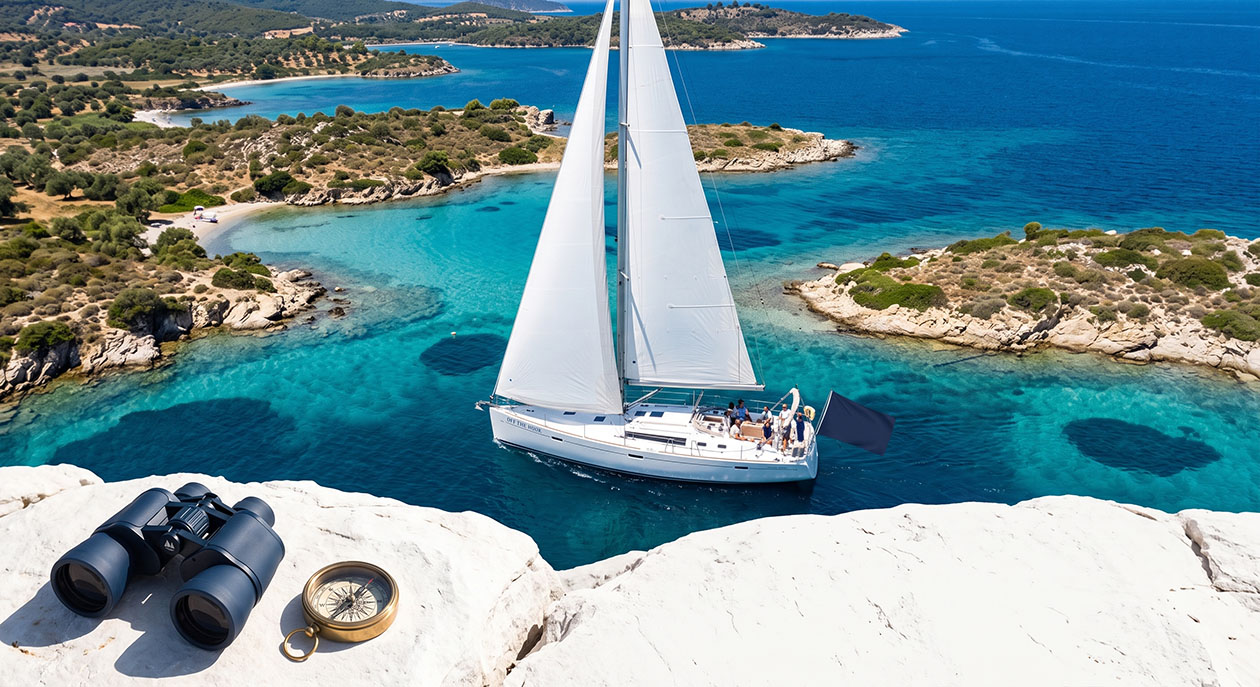
Halkidiki Sithonia holds its own collection of secret spots, and the best ones are only reachable by water. Halkidiki Boat Sailing operates the sailing boat“Off The Hook” out of the Sithonia peninsula, running private cruises to land-inaccessible lagoons, pristine coves near Paliouri, and quiet anchorages off Kassandra that no road will ever reach.
Every trip is fully crewed and all-inclusive, covering fuel, snorkeling gear, refreshments, and a local skipper who knows exactly where the crowds are not. Whether you want a sunset private cruise around Neos Marmaras or a full week-long private charter covering the peninsula’s most secluded waters, Halkidiki Boat Sailing puts you on the water without the logistics.
FAQ
What are the most underrated Greek islands to visit?
Folegandros, Alonissos, Lipsi, Kastellorizo, and Kythira consistently rank as the best lesser-known Greek islands for travelers seeking authentic culture and quiet beaches. Each offers a distinct character, from Alonissos’s marine park to Lipsi’s sustainability focus.
When is the best time to visit quiet Greek islands?
Late may, june, and september offer the best balance of warm weather, calm seas, and manageable visitor numbers. July and august bring more crowds even to off-the-beaten-path Greek islands, though they remain far quieter than Santorini or Mykonos.
How do you get to remote Greek islands like Kastellorizo?
Kastellorizo is best reached by small regional plane from Rhodes, as ferry connections are limited and unreliable outside of peak season. Always confirm transport schedules at least two weeks before travel.
Are lesser-known Greek islands good for families?
Yes. Islands like Kythira and Alonissos offer calm, shallow waters, fresh local food, and a relaxed pace that suits families well. The absence of nightlife-focused infrastructure makes them genuinely child-friendly destinations.
What does sustainable tourism look like on Greek islands?
Lipsi is the clearest example, having banned new swimming pool construction in 2023 to conserve water and investing in modern water management. Travelers who choose islands like Lipsi directly support communities building tourism around environmental preservation.