
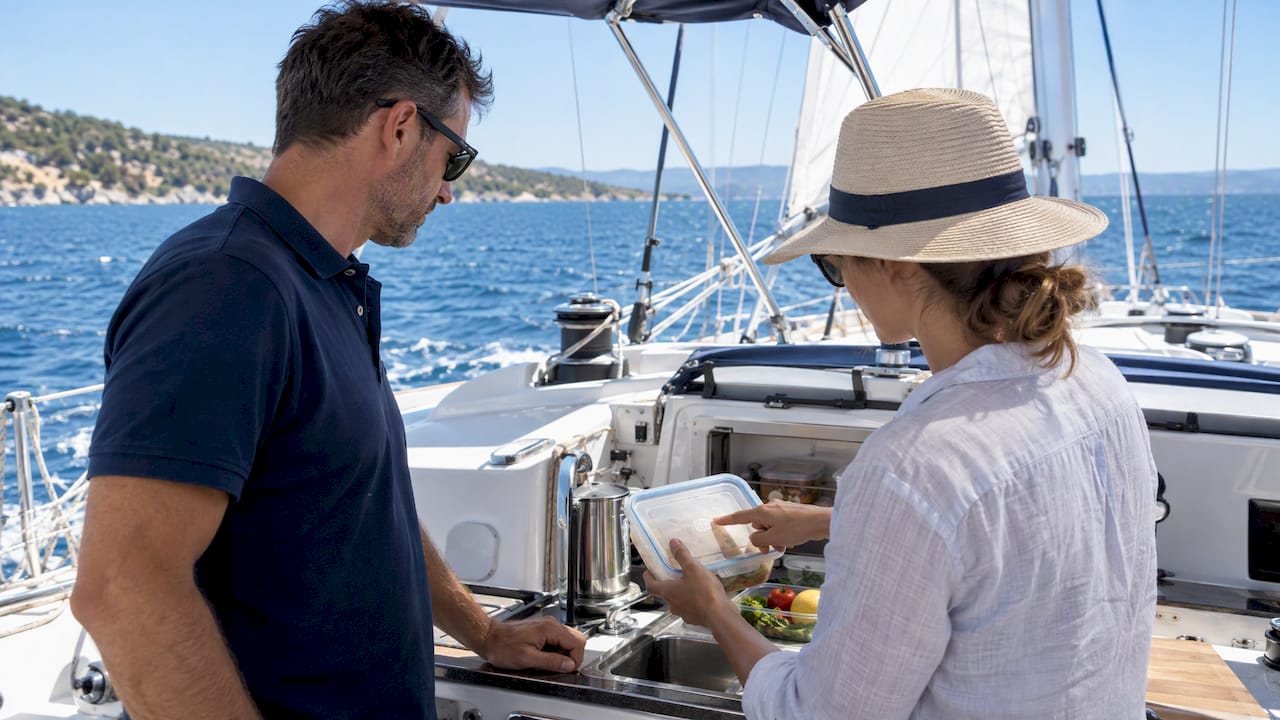
Most boat tours can accommodate standard dietary requests like vegetarian, vegan, or gluten-free meals when you give advance notice, and many crews happily work around common restrictions. Severe allergies or religious dietary needs usually call for much earlier notice and written confirmation from the operator. If you manage a food allergy, pack at least two epinephrine auto-injectors and a physician-signed Emergency Care Plan, and get your accommodation request confirmed in writing before you pay.
TL;DR:
- Severe food allergies require at least 45 to 90 days’ notice for provisioning and should always include a physician-signed Emergency Care Plan and multiple auto-injectors.
- Common dietary requests like vegetarian, vegan, and gluten-free can typically be accommodated with 48 hours’ notice, but cross-contact risk remains on small vessels.
- Confirm dietary needs early in the booking process with written documentation and do a final check with the crew on embarkation day to reduce risks further.
- Packing safe, nonperishable snacks and emergency medications is essential, especially when travelling with children or on remote routes where medical help may be delayed.
- Small boats rarely have dedicated allergy kitchens, so specific instructions and clear labeling of food and utensils significantly reduce the risk of allergen exposure during meals.
Table of Contents
- What can boat tour operators actually accommodate?
- How far ahead should you tell the operator about your diet?
- Medical preparation for severe allergies
- What to eat before and during a boat trip
- How crews handle cross-contact risk on small boats
- Questions to ask before you book a boat tour
- A packing checklist for guests with dietary restrictions
- How a boutique sailing operator coordinates dietary requests
- Considerations for children with dietary restrictions
- What this all really comes down to
- How we handle dietary needs aboard Off The Hook
- FAQ
- Sources
What can boat tour operators actually accommodate?
Boat crews are used to feeding a range of appetites, and most can swap in vegetarian, vegan, gluten-free, or dairy-free options with enough lead time. On a sailing vessel, the galley is small and often shared between every dish being prepared that day, which raises the odds of cross-contact for guests with severe allergies.
- Vegetarian and vegan swaps are usually the easiest since they just mean removing an ingredient rather than preparing a separate dish.
- Gluten-free and dairy-free requests take more planning because crews need to source different ingredients and sometimes separate cooking tools.
- Severe nut, shellfish, or sesame allergies may exceed what a tiny galley can safely guarantee, in which case the operator should say so honestly rather than promise more than the kitchen can deliver.
When an operator tells you they cannot safely meet a request, ask about packing your own safe meals aboard or choosing a shorter excursion where food service matters less.
How far ahead should you tell the operator about your diet?
Timing makes or breaks a dietary accommodation. Standard requests like a vegetarian or gluten-free meal are often fine with 48 hours of notice, but specialized medical or religious requests can require 45 to 90 days depending on provisioning schedules. Provisioning windows exist because boats source perishables locally and often order specialty items in advance, so a last-minute request may simply arrive too late for the supply chain to catch up.
- State your dietary needs when you first inquire about the trip, before you pay a deposit.
- Note the specifics again on your booking form so there is a written record.
- Send a follow-up email about two weeks before departure to reconfirm the arrangement.
- Do a short, in-person check with the chef or crew on embarkation day before your first meal.
Major cruise operators follow a similar pattern, publishing formal request windows and encouraging guests to confirm again once aboard.
Medical preparation for severe allergies
If you manage a serious food allergy, packing the right medical supplies matters more than any menu swap. Carry at least two epinephrine auto-injectors with you during the trip, never in checked luggage where they are out of reach during an emergency.
- Keep a physician-signed Emergency Care Plan with you and leave a copy with the crew or a travel companion.
- Store medications in their original, labeled packaging so crew or emergency responders can identify them quickly.
- Confirm what medical access exists for your itinerary, especially on remote routes where help may take longer to reach.
A documented plan matters: travelers with severe allergies should carry an Emergency Care Plan signed by a physician along with their epinephrine, since a written plan gives crew or medics clear, immediate instructions if a reaction starts. Our guide to travel insurance for boat trips covers what coverage typically looks like for allergy-related emergencies.
What to eat before and during a boat trip
Motion sickness and dietary restrictions often collide, since the foods that settle a queasy stomach are not always the ones on a restricted-diet-friendly menu. A small, low-fat, bland meal eaten 1.5 to 2 hours before departure tends to stabilize blood sugar and lower nausea risk.
- If you are boarding soon and cannot wait that long, stick to plain crackers, a banana, or a small portion of rice or pasta.
- Ginger, whether as tea or chews, can modestly ease nausea for some travelers.
- Sip water regularly rather than drinking a large amount at once.
- Skip high-fat, spicy, or acidic foods, along with alcohol, in the hours before you board.
Pro Tip: Pack your safe snacks the night before so a rushed morning never forces you into a food you have not checked for allergens.
How crews handle cross-contact risk on small boats
Small sailing vessels rarely have the luxury of a separate allergy-only kitchen, so cross-contact risk is managed rather than eliminated. The clearest results come from simple, specific requests rather than a general “allergy-aware” label, since plain instructions like using a separate cutting board or skipping a shared fryer are easier for crew to follow under pressure.
- Ask for a dedicated prep surface and utensils for your meal.
- Request that your plate be clearly labeled or set apart from shared dishes.
- Have a short conversation with the chef or crew before your first meal to walk through your specific allergens.
Even well-run operators acknowledge that an allergy-friendly menu rarely means a guaranteed allergen-free environment, so treat these steps as risk reduction, not a perfect guarantee — as explained in luxury event menus: turn allergen safety into a hospitality signal.
Questions to ask before you book a boat tour
A short round of questions before you pay can save you from a disappointing or risky day on the water.
- Can you see a sample menu or ingredient list for your travel dates?
- What is the latest date to submit a special dietary request, and how will the operator confirm it in writing?
- How does the crew handle cross-contact, and who is the onboard point of contact for your dietary needs?
- What happens if your needs cannot be fully met: can you bring your own food, or is a different trip length a better fit?
Our group boat tours planning guide walks through provisioning timelines in more detail for larger bookings.
A packing checklist for guests with dietary restrictions
Pack with the assumption that you may need to manage a meal or a reaction on your own for a stretch of time.
- Nonperishable safe snacks for the full day, plus a chef card describing your allergens in the local language.
- Two epinephrine auto-injectors and a physician-signed Emergency Care Plan, both easily accessible rather than buried in a bag.
- Labeled prescription medications and a copy of your travel insurance and local emergency contacts.
- A small cooler or insulated pouch if anything needs to stay cold.
Pro Tip: Leave a copy of your emergency plan and medication list with a travel companion, so someone else can act fast if you cannot speak for yourself. Our full boat trip packing list covers everything else worth bringing along.
How a boutique sailing operator coordinates dietary requests
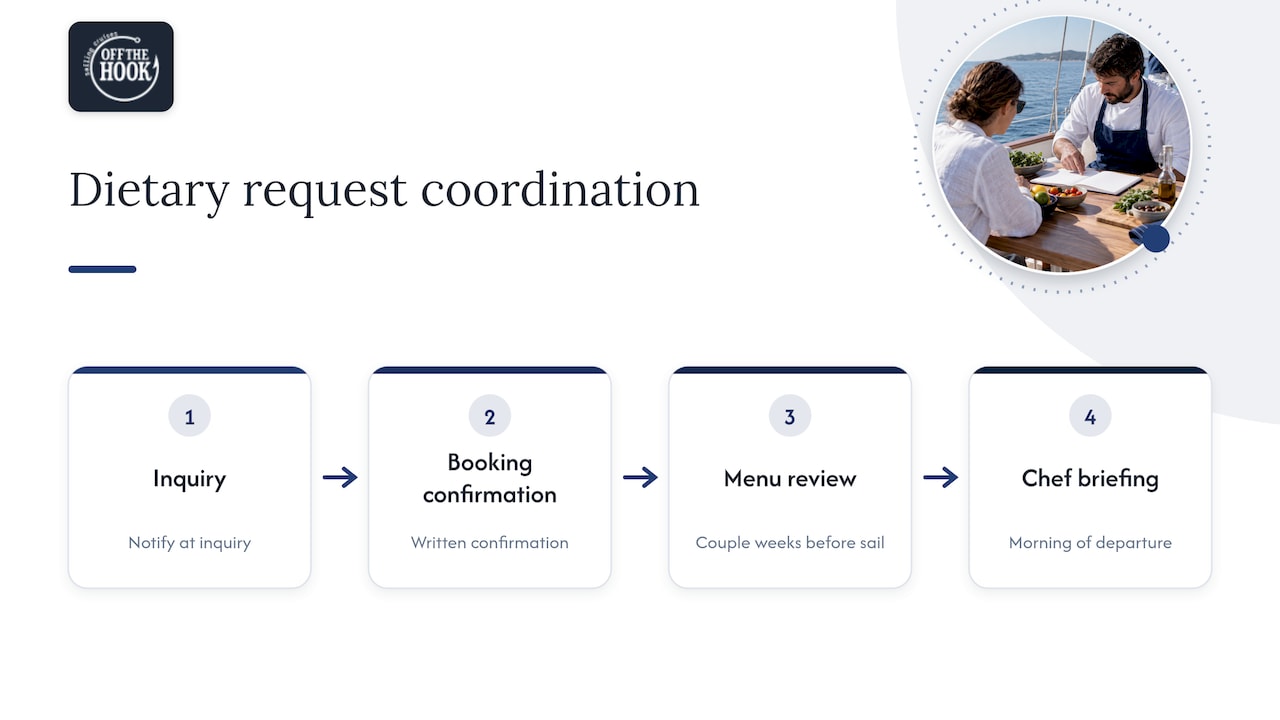
A single-vessel operation has an advantage here that a large fleet rarely matches: the same crew and the same galley handle every booking, so provisioning for one guest’s dietary needs does not get lost between departments. We built our own process around that consistency. A typical workflow looks like early notification at the time of inquiry, written confirmation once the booking is set, a menu review a couple of weeks out, and a short chef briefing the morning of the sail. That sequence mirrors what food-allergy resources recommend for any boat trip, and it is simpler to execute when one skipper and one boat handle every cruise.
Considerations for children with dietary restrictions
Traveling with a child who has food allergies or restrictions adds a layer of planning, since kids cannot always advocate for themselves in an unfamiliar setting. Pack a clearly labeled snack bag your child recognizes, and review with them in simple terms which foods to avoid and what to do if something feels wrong.
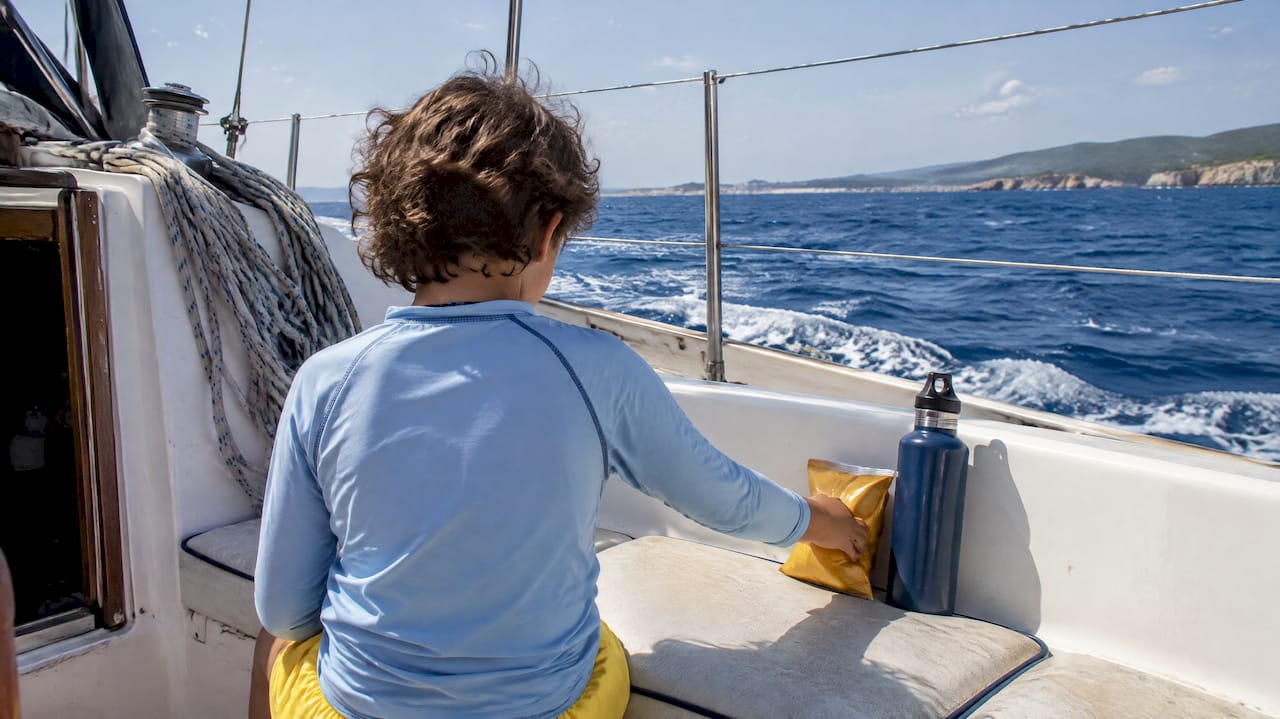
Share your child’s Emergency Care Plan with the crew the same way you would for an adult, and make sure any other accompanying adult knows where the epinephrine is stored and how to use it. Children can be more sensitive to motion sickness than adults, so the same guidance about small, bland meals before boarding and steady hydration applies, perhaps even more strictly. Avoid letting a child skip a meal entirely out of excitement, since an empty stomach tends to make nausea worse once the boat is moving.
If your child has a severe allergy, mention their age and size when discussing emergency care with the operator, since dosing and response plans can differ for children. A few extra minutes spent briefing the crew before departure tends to pay off far more than any amount of worry once you are already at sea.
What this all really comes down to
The advice that circulates most about dietary needs and boat tours focuses heavily on menus, and menus matter less than timing and documentation. An operator who hears about a severe allergy two days before departure is working against a provisioning calendar that was likely set weeks earlier, no matter how willing the crew is. The guests who have the smoothest experience are the ones who treat the booking process itself as part of their safety plan: stating needs early, getting it in writing, and having a real conversation with whoever cooks their food.
Where conventional advice falls short is in treating “the operator says yes” as the end of the job. A yes at booking means little without a follow-up check once you are standing on the deck. If you take one thing from all of this, let it be that a five-minute conversation with the crew before your first meal does more for your safety than any amount of pre-trip research.
— George
How we handle dietary needs aboard Off The Hook
Because we operate with the same boat and crew for each cruise, coordinating a dietary request is simpler than it would be across a mixed fleet. When you book a private or weekly cruise, you can include your dietary details in your inquiry, and we confirm the plan in writing before your trip.
- Tell us your dietary needs when you reach out, including specific allergens or religious requirements.
- Get written confirmation of what we can provide before you finalize payment.
- Meet the crew at embarkation for a quick check on how your meals will be handled that day.
You can review details and book a Full Day Private Cruise, a Sunset Private Cruise, or a Weekly Private Cruise for longer itineraries that need more detailed menu planning.
This article is general information, not a substitute for advice from a qualified doctor. Consult a qualified healthcare professional about your own circumstances before acting on anything here.
FAQ
What is the best food to bring on a boat trip?
Nonperishable, bland snacks like crackers, pretzels, or dried fruit travel well and are gentle on a queasy stomach. If you manage allergies, bring items you have already checked carefully, since reading labels mid-trip is harder than doing it at home.
What food is best to eat before going on a boat?
A small, low-fat, bland meal eaten 1.5 to 2 hours before departure tends to settle best and lower motion-sickness risk. If you are short on time, plain crackers, a banana, or a small portion of rice or pasta are safer choices than a heavy meal.
What is the best food to eat on a boat?
Light, simple foods work best once you are underway, since a busy stomach combined with a moving boat is a common recipe for nausea. Small sips of water and modest snacks throughout the day tend to work better than one large meal.
What not to eat before sailing?
Avoid high-fat, spicy, or acidic foods, along with alcohol, in the hours before boarding, since these can increase motion-sickness risk. A very large meal right before departure is also worth skipping in favor of something smaller and plainer.
Can boat tours accommodate severe food allergies?
Many operators can accommodate severe allergies with enough advance notice, sometimes 45 to 90 days depending on provisioning schedules. Even with accommodation, ask how the crew manages cross-contact, since small boats rarely offer a fully separate allergy kitchen.
Sources
- Accessibility: dietary requirements | Virgin Voyages
- Traveling with food allergies | Food Allergy Awareness
- What to eat before a boat trip | Motion Sick Lab
- Dining dietary restrictions | Royal Caribbean