
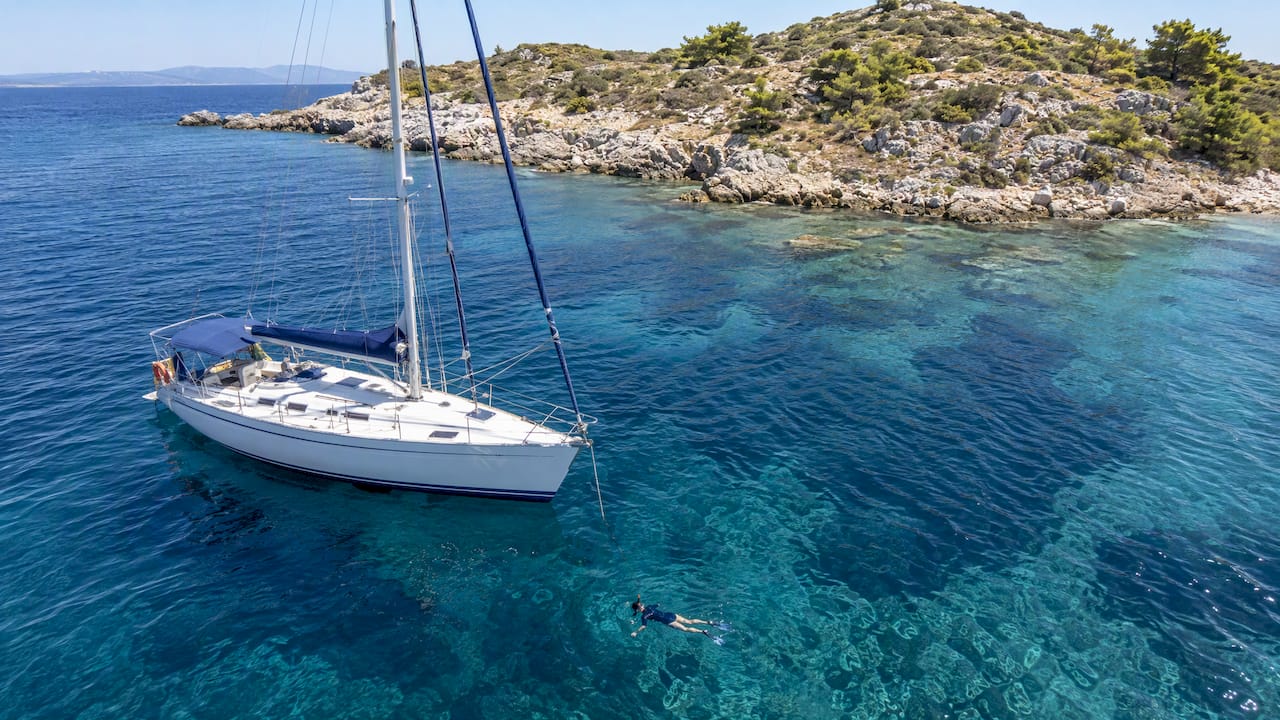
Kelyfos Island snorkeling delivers some of the clearest water in Halkidiki, but only for visitors who arrive by boat. The island has no facilities, no jetty, and no shade beyond what your vessel provides. The sheltered south and southeast sides offer the calmest conditions and the best visibility, sometimes reaching 15 to 20 meters on calm days.
TL;DR:
- Visibility at Kelyfos can reach 15 to 20 meters on calm days, with the sheltered south and southeast sides offering the clearest water.
- Access to Kelyfos is only possible by private boat or licensed charter, as there are no public ferries, with trips typically starting from Neos Marmaras.
- The island itself has no facilities, so visitors must bring everything they need, including snorkel gear, food, and water, and should plan according to weather conditions.
- Calm weather and wind forecasts are crucial, with June and September offering the best combination of calm seas and lighter boat traffic.
- Private sailing trips offer the flexibility to choose sheltered anchorages and adjust routes based on real-time wind and sea conditions, enhancing the snorkeling experience.
Table of Contents
- How do you reach Kelyfos from Neos Marmaras?
- What will you actually see underwater at Kelyfos?
- Which side of Kelyfos should you snorkel, and when?
- What should you pack, and what are the safety basics?
- How does a private sailing trip change the Kelyfos experience?
- What does a snorkeling day at Kelyfos actually look like?
- How do you snorkel around Kelyfos wildlife responsibly?
- What is the water like during snorkeling season?
- Can you book a guided tour or boat rental near Kelyfos?
- What if something goes wrong while snorkeling?
- Why Kelyfos keeps earning repeat visits
- Book a private sailing trip to Kelyfos with Off The Hook
- Where these facts come from
- Sources
- FAQ
How do you reach Kelyfos from Neos Marmaras?
Kelyfos, also known locally as Helona, sits roughly 3 miles (about 5 kilometers) from Neos Marmaras-island), and the only way to reach it is by sea. There is no ferry line and no scheduled water taxi, so the trip depends entirely on a private boat or a licensed charter operator working out of the Sithonia peninsula.
The island itself offers nothing once you arrive. No tavernas, no toilets, no shaded seating areas, just rock, pine scrub, and water. Whatever you need for the day, from lunch to sunscreen, comes with you on the boat.
Sailing time from Neos Marmaras typically runs short under normal conditions, though prevailing winds can stretch that window and change which side of the island you approach first. A skipper reading the forecast will often adjust the route on the fly rather than fight a headwind the whole way out.
Two realistic paths get you there:
- A private sailing charter that builds Kelyfos into a half-day or full-day route, with the vessel doubling as your rest stop and gear locker.
- A licensed boat operator offering group excursions that include Kelyfos among several island stops.
Private sailing tends to suit snorkelers best, since the boat can linger over a good spot, reposition if the wind shifts, and carry everything from masks to towels without you needing to plan separate logistics. For a closer look at the run from Neos Marmaras, our guide to visiting Kelyfos by boat walks through the practical side in more detail.
What will you actually see underwater at Kelyfos?
Visibility around Kelyfos often reaches 15 to 20 meters on calm days, a figure echoed by local guides describing the island as a favorite anchor point precisely because the water stays this clear when the wind cooperates. That kind of range means a snorkeler floating near the surface can often see the seabed in full, not just murky outlines.
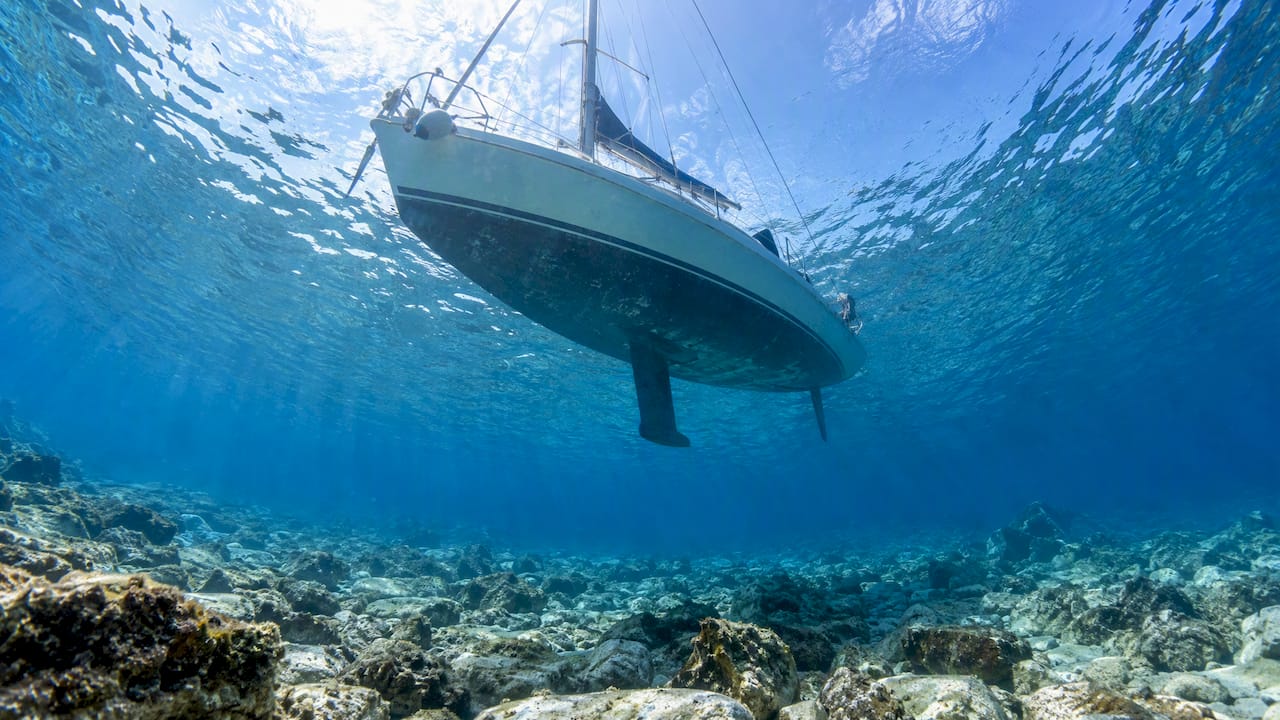
The underwater terrain does a lot of the work here. DiveJourney’s spot profile describes a mix of caves, wall sections, and shallower shelves, which is part of why Kelyfos works for mixed-skill groups: confident swimmers can explore the deeper wall drop-offs while weaker swimmers stay over the shallow shelves without missing much of the scenery. Visit Halkidiki’s portfolio page counts several distinct dive and snorkel points around the island, each with its own character, from tight caves to open rock faces.
Marine life varies by spot and season, but a few things show up consistently:
- Wrasse and bream moving in loose groups along the rocky walls.
- Sea urchins clustered on lower shelves and crevices, worth spotting before you put a hand down.
- Occasional octopus tucked into cave mouths or rock crevices.
- Small reef fish schooling near shallower ledges, especially in warmer months.
Shallow shelves near the leeward coastline suit snorkelers who want an easy, low-effort swim with good visibility close to the surface. The wall sections and cave entrances, better suited to stronger swimmers, sit deeper and reward a bit more confidence in open water. A skipper who knows the island will usually point out which is which before anyone gets in.
Which side of Kelyfos should you snorkel, and when?
Wind decides almost everything at Kelyfos. When northerly winds pick up, which happens often in the Aegean during summer, the northwest side of the island turns choppy and visibility drops as sediment stirs. The south and southeast sides stay sheltered in those conditions, and local skippers favor this leeward stretch for calmer water and better clarity, a pattern confirmed by operators familiar with the island.
The best window for a visit runs from late May through late September, with June and September often bringing the calmest seas and fewer boats sharing the anchorage. July and August are warmer but busier, so if a quiet swim matters more than peak heat, the shoulder months are worth targeting.
Before heading out, a quick check of a wind forecast service covering the Kelyfos area saves a wasted trip. A simple rule works well: if forecast wind exceeds a moderate threshold from the north, plan to anchor on the southeast side or shift the date. Experienced skippers rarely fight this. They read the forecast the night before, then confirm on the water, adjusting the approach rather than forcing a swim in rough chop.
- Sheltered south and southeast anchorages hold up best against typical summer northerlies.
- The northwest side is exposed and can turn rough with little warning.
- June and September tend to combine calm seas with lighter boat traffic.
Pro Tip: Check a live wind forecast the morning of your trip, not just the night before. Conditions around Kelyfos can shift within hours.
What should you pack, and what are the safety basics?
Because Kelyfos offers nothing on land, packing well matters more here than at a beach with a snack bar nearby. A short checklist covers most of it:
- Drinking water and sun protection, since there is no shade or shop on the island.
- A well-fitted snorkel mask, fins, and water shoes to handle rocky entry points.
- A towel and a dry bag for phones or cameras.
- A small waste bag so nothing gets left behind.
Safety comes down to a few habits. Always snorkel with a buddy, and if anyone in your group is a weaker swimmer, a flotation aid keeps them comfortable over deeper sections near the walls and caves. Sea urchins cluster on some of the lower shelves, so watch where you put your hands and feet. A short safety briefing from the boat crew before anyone enters the water, covering entry points, sheltered zones, and where the drop-offs begin, prevents most issues before they start.
Treat the marine life as something to observe, not touch. Leaving urchins, fish, and rock formations undisturbed keeps the site in the condition that makes it worth visiting.
Pro Tip: Assign one confident swimmer as a group leader for each snorkel session. It keeps everyone moving together and makes it easy to spot if someone drifts too close to a drop-off.
How does a private sailing trip change the Kelyfos experience?
Visiting Kelyfos aboard a private sailing boat solves most of the logistical gaps that come with an island offering zero infrastructure. A boat built around a single, well-equipped vessel carries everything a snorkeling stop requires: a skipper who knows the local wind patterns, snorkel gear already on board, refreshments, and enough shaded deck space for anyone sitting out a swim.
That matters most on the practical side. Private sailing gives access to the sheltered leeward stops on short notice, since the skipper can read the wind and reposition rather than committing to a fixed group schedule. Onboard storage means nobody juggles coolers and dry bags on a rocking tender. For mixed-ability groups, having a stable, shaded home base between swims makes a longer day far more comfortable than trying to manage everything from the shoreline of an island with no shoreline facilities.
Visibility around Kelyfos on private sailing trips has run in the range of 8 to 15 meters on many Sithonia stops, consistent with the clearer conditions reported elsewhere for calm days. A skipper who visits regularly will typically:
- Anchor on the leeward side first and check conditions before committing to a full stop.
- Send snorkelers out in shorter swims rather than one long session, to keep energy and attention fresh.
- Hold a second, calmer spot in reserve if the wind shifts mid-visit.
This kind of local judgment is hard to replicate without a skipper who has made the run to Kelyfos many times before.
What does a snorkeling day at Kelyfos actually look like?
A half-day trip, around four hours, usually follows a simple shape:
- Depart Neos Marmaras and sail toward Kelyfos, timing the approach around the day’s wind direction.
- Anchor on the sheltered south or southeast side and let everyone settle in.
- Spend 40 to 60 minutes snorkeling in shorter swim intervals, with breaks on deck between sessions.
- Head back, often with a short stop at a nearby cove if time and conditions allow.
A full-day version, closer to seven hours, has room for Kelyfos plus one or two additional coves along the Sithonia coastline, sequenced to follow the calmer water as the wind shifts through the day. Most of the time on board should go toward snorkeling itself, with meals and rest built around the swim windows rather than the other way around, since there is no restroom or food option on the island.
For underwater photography, keep it simple: a wide aperture setting captures the wall sections well, shooting close to your subject reduces backscatter in the clearer shallow areas, and shooting with the sun behind you brings out the color in the rock formations.
How do you snorkel around Kelyfos wildlife responsibly?
Kelyfos supports a reasonable variety of marine life for a small island, and keeping that intact takes very little effort. The basic rule is to observe without touching. Urchins, fish, and any octopus tucked into a crevice are easily disturbed, and once a spot gets repeatedly handled, the animals tend to move on or the habitat degrades.
Keep a comfortable distance from anything you spot rather than chasing it for a closer look or a better photo. Fish and octopus generally hold their position if snorkelers move calmly and stay a short distance away, but sudden movement or crowding tends to send them into hiding. If you are snorkeling with children or less experienced swimmers, a quick reminder before entering the water, hands to yourself, no standing on rock shelves where urchins cluster, goes a long way.
Trash management matters just as much as animal contact. With no bins on the island, everything brought out needs to go back on the boat, including anything that washes up nearby. Sunscreen choice also plays a role: reef-conscious formulas reduce the chemical load in a small, enclosed swimming area like this one.
None of this requires special training, just the same care you would want someone to take with a place before you got there.
What is the water like during snorkeling season?
Water around Kelyfos warms up gradually through the spring and stays swimmable well into fall, following the general pattern of the northern Aegean. Late May and June tend to run cooler, comfortable for most snorkelers in a light wetsuit or rash guard but still brisk on first entry. By July and August, the water reaches its warmest point of the year, making extended swims easier without extra layers.
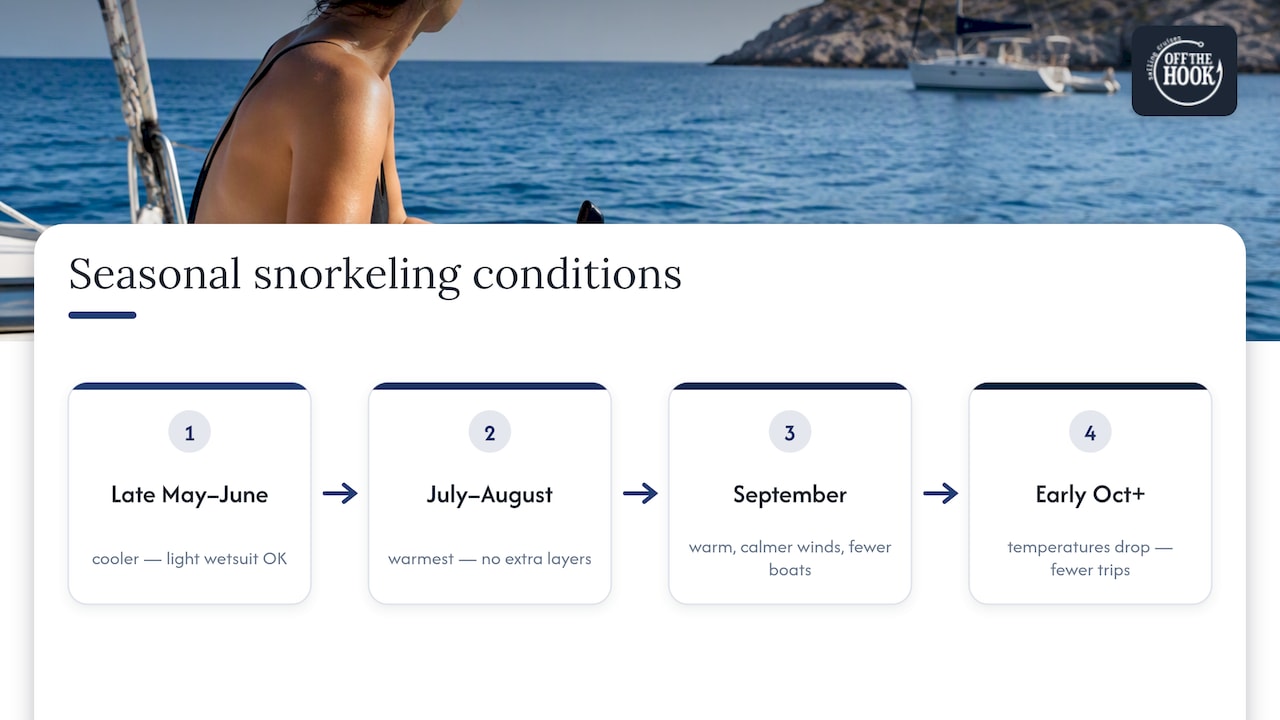
September holds much of that summer warmth while bringing calmer wind patterns and fewer boats sharing the anchorage, which is part of why it ranks alongside June as a preferred window for a visit. Past early October, water temperatures begin dropping again, and fewer operators run regular trips out to the island.
For snorkelers sensitive to cold water, the June and September shoulder months offer a reasonable middle ground: warm enough for comfort, cool enough to avoid the peak-season crowding around popular anchorages.
Can you book a guided tour or boat rental near Kelyfos?
Several options exist for reaching Kelyfos without owning a boat. Licensed group excursions operating out of Sithonia ports sometimes include the island as one stop among several, typically on a fixed schedule with limited flexibility on timing or anchorage choice. These work well for travelers on a tight budget who do not mind sharing the trip with other passengers.
Private sailing charters offer a different kind of flexibility. Because the boat is not locked into a shared itinerary, the skipper can adjust timing around the wind forecast, linger longer at a good snorkel spot, or swap in a sheltered cove if Kelyfos turns choppy on a given day. This matters more at a site like Kelyfos than almost anywhere else in the region, since the island’s exposed side can shift from calm to rough within a few hours.
Whichever route you choose, confirm ahead of time whether snorkel gear is included, since Kelyfos has no rental stand or shop of any kind on-site. A trip that bundles gear, crew, and flexible timing removes most of the planning friction that comes with visiting a facility-free island.
What if something goes wrong while snorkeling?
Kelyfos itself has no medical facilities, staff, or emergency equipment beyond what a boat carries, which is why a properly briefed crew matters more here than at a supervised beach. Any private charter or licensed operator working this route should carry basic first aid supplies and know the nearest port with medical services.
Neos Marmaras, the closest mainland departure point, has local medical facilities capable of handling minor injuries, with more comprehensive hospital care available in the wider Halkidiki region. For serious emergencies, the standard approach across Greek coastal waters is to contact the coast guard, who coordinate transport to the nearest appropriate facility. A skipper familiar with the area will know these contacts and the fastest route back to shore if conditions call for it.
Most snorkeling mishaps around Kelyfos are minor: a scrape against rock, an urchin spine, mild sunburn. A basic first aid kit on board, along with a crew briefing before anyone enters the water, covers the vast majority of situations without anything escalating further.
Why Kelyfos keeps earning repeat visits
Over repeated trips, Kelyfos rarely disappoints on the days when the wind cooperates. The water on the sheltered side holds its clarity, the wall sections stay interesting even after multiple visits, and there is always something moving along the rock, a wrasse, an octopus retreating into a crevice, a school of bream catching the light.
What keeps the island worth returning to is also what makes it fragile: no infrastructure, no enforced rules, just whoever visits choosing to leave it as they found it. A low-impact visit, respecting the wildlife and packing out everything you bring, keeps Kelyfos in the condition that made it worth the trip in the first place.
— George
Book a private sailing trip to Kelyfos with Off The Hook
Reaching Kelyfos without the usual planning headaches comes down to picking a trip that already accounts for the island’s quirks, no facilities, wind-dependent access, and a sheltered side that only a skipper watching conditions in real time can find reliably. Some local operators run cruises on a single well-equipped sailing boat, building each trip around that vessel rather than juggling a fleet, which keeps the experience consistent from one trip to the next.
The Full Day Private Cruise (7 hrs), priced from 600 EUR, works well for a Kelyfos stop paired with a nearby cove, with a skipper, fuel, refreshments, snacks, and snorkel gear all included. For a shorter outing timed around golden light, the Sunset Private Cruise (4 hrs), from 400 EUR, departs from Neos Marmaras and suits smaller groups or couples.
Both trips accommodate mixed-ability groups, and the crew adjusts the route around the day’s wind. Check availability and book directly through Halkidiki Boat Sailing to plan your Kelyfos visit.
Where these facts come from
Distance, access, and facility details for Kelyfos come from Visit Central Macedonia. Visibility and sailing-itinerary context draw on the Halkidiki islands guide, underwater topography from DiveJourney, and dive-point counts from Visit Halkidiki. For a wider look at boat-only snorkel sites across Greece, see this offshore snorkel spot guide. Always check a live wind forecast before departure.
Sources
- Kelifos Island, Greece – Dive Spot Details & Conditions | DiveJourney
- Kelifos island | Visit Halkidiki
FAQ
Is Kelyfos Island good for beginner snorkelers?
Yes, especially on the sheltered south and southeast side, where shallow shelves offer easy, low-effort swimming close to the surface. Stronger swimmers can explore the deeper wall sections and caves described by DiveJourney, while beginners stay comfortably in the shallower areas.
How do you get to Kelyfos Island?
Kelyfos sits about 3 miles from Neos Marmaras and is reachable only by boat, either a private sailing charter or a licensed group excursion. There is no ferry service or public transport option to the island.
What is the visibility like for snorkeling at Kelyfos?
Visibility often reaches 15 to 20 meters on calm days, making the water among the clearer options in Halkidiki. Conditions depend heavily on wind direction, with the sheltered leeward side offering the most consistent clarity.
Does Kelyfos have any facilities for visitors?
No, the island has no tavernas, restrooms, or shade structures, so everything needed for a visit must come from the boat. This is why most visits are planned around a private charter or guided boat trip rather than a self-arranged landing.
What is the best time of year to snorkel at Kelyfos?
Late May through late September offers the most reliable conditions, with June and September often bringing calmer seas and fewer boats at anchor. Checking a wind forecast the morning of your trip helps confirm whether the sheltered side will hold up for a good swim.