
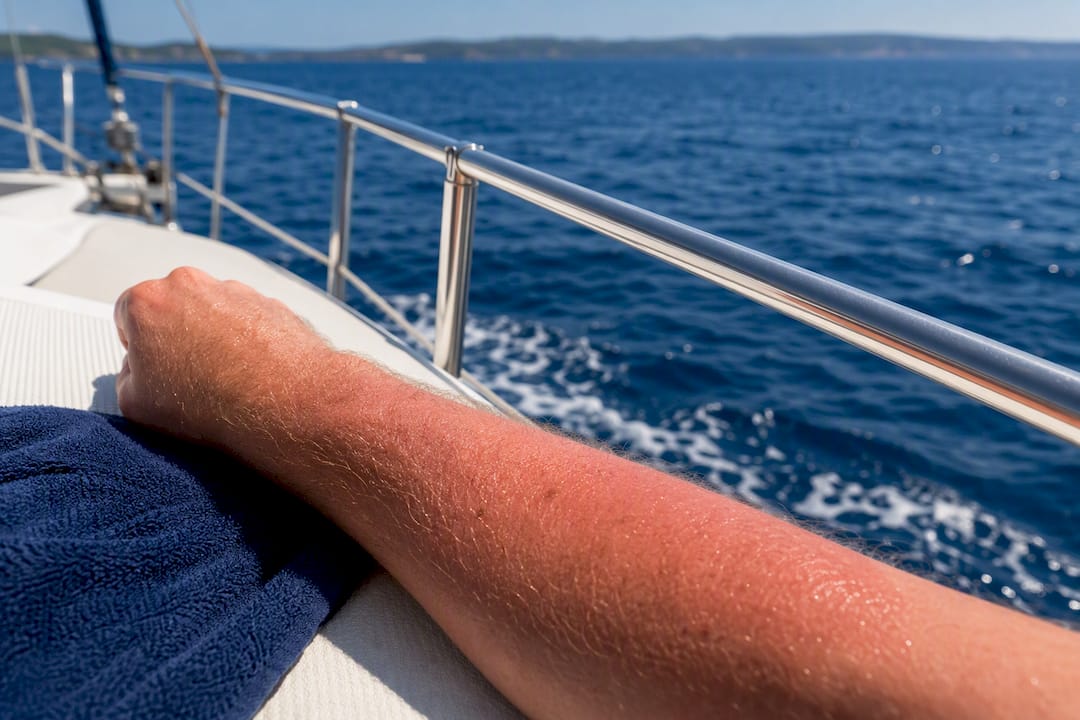
Get out of the sun, cool your skin with lukewarm water, and start drinking fluids right away. These three steps matter more than anything else in the first hour. A mild sunburn typically heals within about 7 days, but blistering, fever, or dizziness mean it is time to get proper medical attention.
TL;DR:
- Reapplying sunscreen every two hours and after swimming is crucial on the water due to reflection and water runoff, which increase UV exposure.
- Consistent shade breaks, wearing protective clothing, and scheduling activities outside peak UV hours significantly reduce the risk of severe sunburn.
- Proper initial treatment, including cooling the skin and applying moisturizer within the first hour, limits skin damage and shortens recovery time.
- If symptoms such as fever, blistering, dizziness, or confusion appear, immediate medical attention is necessary to prevent complications.
- Regular skin checks and recording unusual moles are vital for frequent sailors to detect early signs of skin cancer from cumulative sun exposure.
Table of Contents
- How a sunburn after sailing usually appears and progresses
- Step-by-step aftercare for the first 48 hours
- Clear red flags and what to do next
- A practical, layered sun-protection system sailors can use every trip
- Why follow-up matters for frequent sailors
- George’s onboard checklist for sun-safe sailing aboard Off The Hook
- The overlooked truth about sunburn on a sailboat
- Protect your skin and still enjoy the water
- Sources
- FAQ
How a sunburn after sailing usually appears and progresses
A day on the water has a way of hiding sun damage until it is too late to stop it. The breeze cools your skin, the glare tricks your eyes, and by the time you notice the sting, the damage is already underway. Symptoms typically begin 2 to 5 hours after exposure, reach their worst around the 24 hour mark, and a mild case usually settles down within a week.
Recognizing what you are dealing with helps you respond the right way.
- First-degree sunburn: red, warm, and tender skin without blisters, often the result of a few unprotected hours on deck.
- Second-degree sunburn: blistering, swelling, and more intense pain that signals deeper skin damage.
- The days after: tightness, peeling, and itching are common as the skin sheds and repairs itself.
Sailors often underestimate how fast this timeline moves because the worst pain arrives a full day after the exposure that caused it, not during the sail itself.
Step-by-step aftercare for the first 48 hours
The moment you notice sunburn, whether you are still anchored off a quiet cove or already back at the marina, the same routine applies. Acting quickly limits how deep the damage goes and how long recovery takes.
- Get out of direct sun immediately and move under shade or below deck.
- Cool the skin with a lukewarm or cool shower, or a damp compress, rather than ice, which can shock already inflamed skin.
- Pat the skin dry gently and apply an unperfumed moisturizer or an aloe-based after-sun lotion while the skin is still slightly damp, which helps lock in moisture.
- Leave blisters alone. They protect the healing skin underneath, and the NHS advises against popping them. If one breaks on its own, clean it gently and cover it with a thin layer of petroleum jelly and a light dressing.
- Take an over-the-counter anti-inflammatory such as ibuprofen for pain and swelling, following the label’s dosing, and skip alcohol until your skin has settled.
- Drink more water than usual, and add an electrolyte drink if you can, since sunburn draws fluid toward the skin’s surface and leaves the rest of your body short.
Watch for dry mouth, dizziness, or dark urine, all signs you need more fluids than you have been taking in.
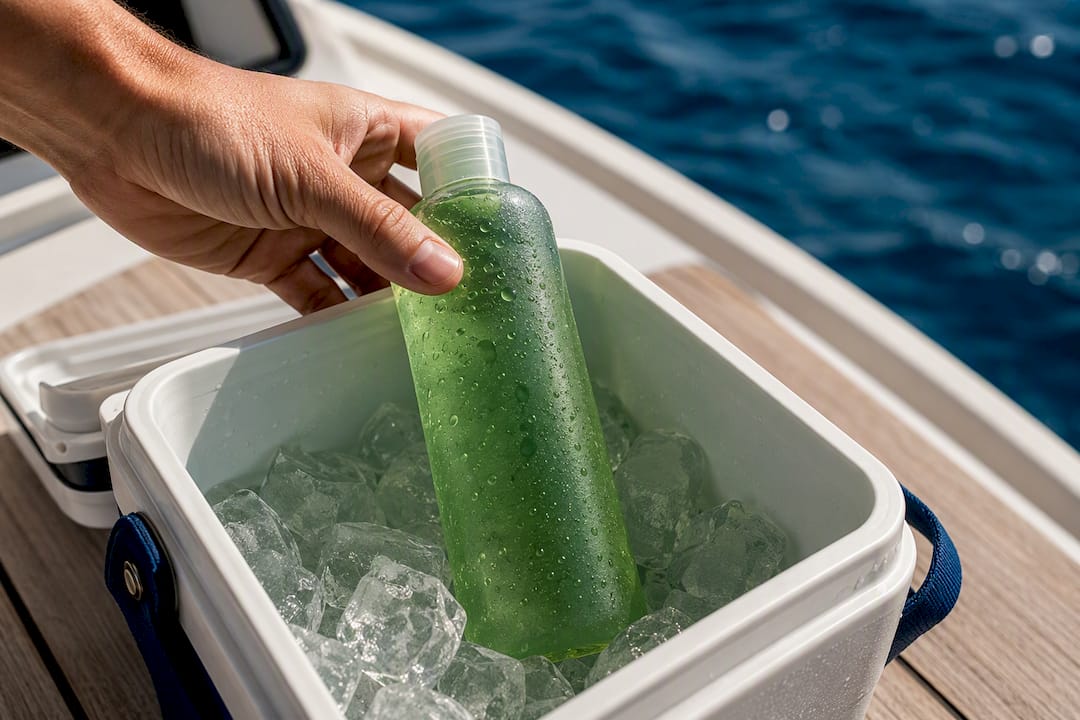
Pro Tip: Keep a small bottle of aloe gel in the boat’s cool box. Applying it chilled feels far better on hot, tender skin than at room temperature.
Clear red flags and what to do next
Most sunburn is uncomfortable but manageable at home. A smaller number of cases need urgent attention, and knowing the difference matters.
- Fever, chills, severe headache, confusion, or muscle cramps alongside sunburn are signs your body is struggling to cope and warrant urgent medical care.
- Widespread blistering, or blisters that show pus or spreading redness, can mean infection and need prompt assessment.
- Dizziness or fainting paired with hot, dry skin may point to heat illness rather than sunburn alone.
- Babies, older adults, and anyone with a weakened immune system should be seen by a doctor sooner rather than later, since these groups handle sun damage and fluid loss less easily.
When in doubt, a same-day call to a doctor or urgent care line costs you little and can catch a problem early.
A practical, layered sun-protection system sailors can use every trip
Open water punishes unprotected skin faster than most people expect, because sunlight reflecting off the surface adds to what falls directly from above. The CDC notes that reflection off water and sand increases UV exposure, which is exactly why a session sailing around Sithonia can burn skin faster than the same hours spent on land.
Sailing-specific guidance points to three layers working together: behavior, clothing, and sunscreen.
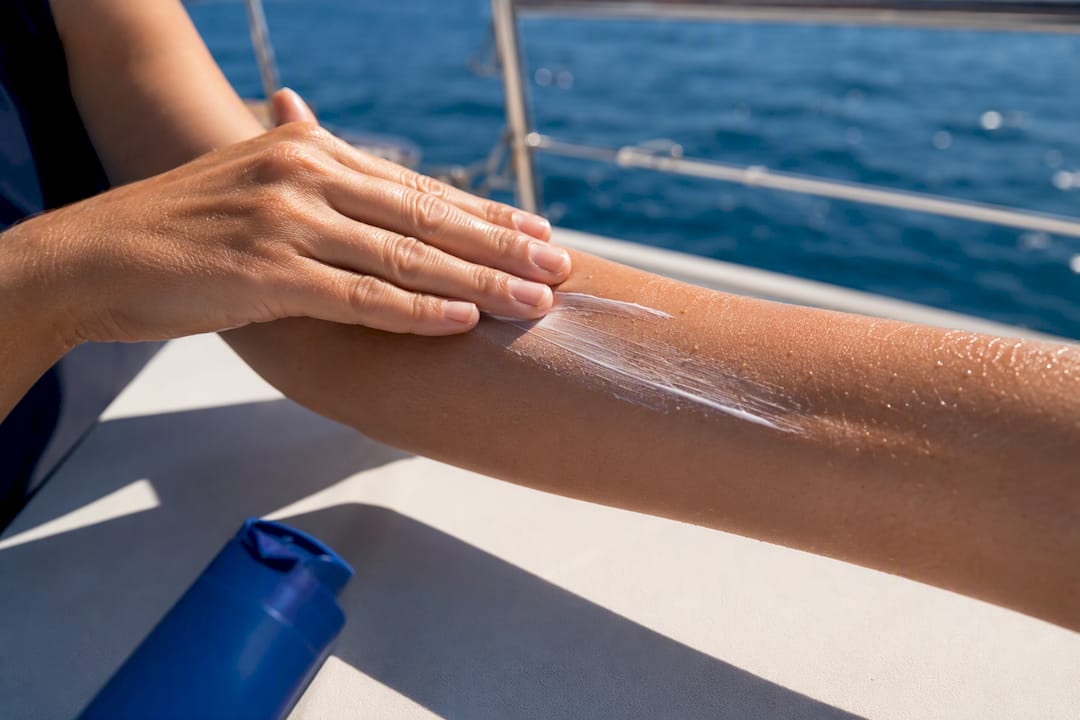
- Choose a broad-spectrum, water-resistant sunscreen rated SPF 30 to 50, applied 20 to 30 minutes before you step into the sun.
- Reapply every two hours, or sooner after swimming or heavy sweating.
- Add a wide-brim hat, a UV-rated long-sleeve shirt, and wraparound sunglasses, then throw on a light cover-up during stops.
- Keep the bimini up through the middle of the day, and pack a spare tarp or awning for extra shade when you anchor for lunch.
- Rotate deck duties so no one person stays in direct sun the entire trip, and where the schedule allows, save the most exposed activities for outside peak UV hours.
A simple sun-protection checklist before you leave the dock covers sunscreen, a hat, sunglasses, a cover-up, and a refillable water bottle, the same items worth building into any boat trip packing list.
Pro Tip: Apply sunscreen with light, even strokes rather than rubbing it in hard. Vigorous rubbing pushes product into creases and leaves flatter areas of skin thinly covered.
Why follow-up matters for frequent sailors
One bad burn heals in a week, but a pattern of them adds up in ways that are easy to ignore until years later. Research following sun exposure earlier in life has found that having five or more sunburns between ages 15 and 20 is tied to a sharp rise in melanoma risk. Repeated exposure over time also raises the risk of non-melanoma skin cancers.
If you spend regular time on the water, a few habits are worth adopting.
- Book a baseline skin check with a dermatologist if you sail often, have had several sunburns, or have a family history of skin cancer.
- Take a photo of any mole or mark that looks unusual and note the date, so you have a clear record to compare against later.
- Mention your sailing habits to your doctor at routine checkups, since sun exposure on the water is easy to underestimate.
George’s onboard checklist for sun-safe sailing aboard Off The Hook
Running trips along the Sithonia coastline for years has taught our crew that sun protection works best as a routine, not an afterthought. Before we leave the dock, everyone gets a short briefing on reapplying sunscreen and taking a shade break partway through the trip, because reminders beat good intentions once the views start distracting people.
Onboard kits for sailing trips typically include sunscreen, lip balm with SPF, after-sun lotion, extra drinking water, shade options for anchoring stops, and basic first-aid supplies for minor issues.
- Reapply sunscreen right after a swim stop near Kelyfos Island, before anyone dries off in the sun.
- For sunset sails, a light dusting of mineral sunscreen keeps skin protected for photos without the greasy shine that heavier lotions leave behind.
- For birthday or celebration sails, pack an extra hat or two, since guests often forget their own in the excitement of the day.
The overlooked truth about sunburn on a sailboat
Most sunburn advice treats prevention as a single decision made at the start of the day: put on sunscreen, done. That mindset fails on the water, where reflected light, wind that masks heat, and hours of continuous exposure make one application nowhere near enough. The real gap in conventional advice is not the sunscreen itself but the reapplication habit, and few people actually reset a timer for it.
If there is one thing worth prioritizing above the rest, it is scheduling. A wide-brim hat and a good SPF matter, but they only work if reapplication and shade breaks are built into the rhythm of the trip rather than left to memory. Sailors who treat sun protection as a recurring task, not a one-time step before boarding, are the ones who come home with a tan instead of a burn.
— George
Protect your skin and still enjoy the water
A day on the water should leave you with good memories, not a week of peeling skin. Our Full Day Private Cruise runs 7 hours and includes shaded areas under the bimini, plenty of breaks for reapplying sunscreen, and a crew who genuinely cares whether you burn or not, all from 600 EUR for the boat. If the intensity of a full day feels like too much sun, the Sunset Private Cruise runs 4 hours starting later in the day, when UV exposure is lower, from 400 EUR.
Every trip is fully crewed and all-inclusive, with snacks, drinks, and snorkeling gear provided to help guests stay comfortable and relaxed. For longer stays exploring the coves around Neos Marmaras, Nikiti, Paliouri, and Kassandra, a weekly private cruise option is available, with pricing at 500 EUR per day. Availability should be checked directly.
This article is general information, not a substitute for advice from a qualified doctor. Consult a qualified healthcare professional about your own circumstances before acting on anything here.
Sources
For symptoms and urgent warning signs, the NHS sunburn guidance and the American Academy of Dermatology’s sunburn treatment page are reliable starting points. For prevention, the CDC’s sun safety page covers the basics, while sailing-specific advice on layered protection comes from Yachting World.
- Sunburn – NHS
- Sun safety – CDC
- How to treat sunburn – American Academy of Dermatology (AAD)
- Sun protection for sailors — Yachting World (2022-09-09)
- Sun safety (Shropshire, Telford and Wrekin NHS)
FAQ
Do sunburns go away on their own?
Mild sunburn usually heals on its own within about 7 days with basic aftercare like cooling, moisturizing, and hydration. More severe burns with blistering or systemic symptoms need medical attention rather than time alone to resolve safely.
Can you get sunburned through an airplane window?
Airplane windows are treated to block most UVB rays, but UVA can pass through some cabin glass at altitude, especially on long flights near a window seat. The risk is lower than direct outdoor exposure, but sunscreen is still a reasonable precaution on long daytime flights.
Is it normal to get sunburned at the beach?
Yes, beach sunburn is common because sand reflects UV rays and adds to the exposure coming directly from the sun, similar to the reflection effect from water noted by the CDC. Wearing water-resistant, broad-spectrum sunscreen and reapplying it often reduces the risk significantly.
Is it normal to get sunburned after swimming?
Yes, swimming washes away sunscreen and the water’s surface reflects extra UV light onto your skin, both of which raise your burn risk. Reapplying water-resistant sunscreen right after you get out of the water is the most reliable way to stay protected.