

Boat tours get cancelled for hazardous conditions, not for a gray sky. Lightning, unsafe wind and sea combinations, dense fog, and official Small Craft Advisories are what stop a departure. Light rain and overcast skies typically don’t. Operators lean on National Weather Service wind and sea guidance alongside their own read of the water, and the final call almost always sits with the captain on duty.
Two things to do right now if you have a trip booked:
- Check your booking email or text messages for operator updates before assuming anything.
- Show up at the scheduled time unless you’ve been told otherwise. Most cancellations are confirmed hours before departure, not days.
Key Takeaways
Boat tour cancellations hinge on genuine hazards like lightning, high wind and wave combinations, dense fog, or official advisories, never on light rain alone.
| Point | Details |
|---|---|
| Rain rarely cancels a tour | Light rain, drizzle, and overcast skies usually fall under a rain-or-shine policy. |
| Lightning always stops operations | Any lightning nearby triggers an immediate cancellation or return to port, no exceptions. |
| Wind and seas matter more than forecasts | Sustained winds near 20 knots or gusts past 25 knots often push captains toward canceling. |
| Confirm before assuming | Most decisions come hours before departure; check messages rather than guessing. |
| Halkidiki Boat Sailing runs with local judgment | The crew combines official advisories with real-time reads of Halkidiki’s coastal waters near Neos Marmaras and Sithonia before making the call. |
Table of Contents
- What Actually Triggers a Boat Tour Cancellation for Weather?
- What Does a Small Craft Advisory Mean for Your Trip?
- Why Lightning Always Cancels a Boat Tour
- Does Rain Alone Cancel a Boat Tour?
- When Do Operators Decide, and How Will You Know?
- What Happens If Weather Turns Bad Mid-Trip?
- What Refund or Rescheduling Options Should You Expect?
- What Should You Ask Before You Book a Boat Tour?
- What Do Captains and Official Guidance Actually Show?
- What Rules Govern Weather Cancellations Legally?
- What Do People Get Wrong About Weather Cancellations?
- What the Data Actually Tells Us About Weather Cancellations
- Sail Halkidiki with an Operator Who Reads the Water, Not Just the App
- Sources
- FAQ
What Actually Triggers a Boat Tour Cancellation for Weather?
Operators cancel for a short list of genuine hazards, not general unpleasantness. The usual suspects:
- Lightning or active thunderstorms anywhere near the route
- Sustained high winds or building seas that make the vessel unsafe or genuinely unmanageable
- Dense fog or visibility low enough to make navigation risky
- An official Small Craft Advisory or harbor closure
- Fast-forming squall lines that outrun the morning forecast
Numeric thresholds vary by operator and boat, but sustained winds near 20 knots or gusts pushing past 25 knots are common trip wires many captains use as a decision point. A sturdier vessel on a sheltered bay route can often handle more than a smaller boat running open water. A sightseeing cruise with families onboard also gets a tighter margin than a fishing charter full of experienced anglers who expect some chop.
Pro Tip: A 6 a.m. forecast is a guess. What the captain sees on radar and feels on the water two hours before departure is the real decision. Don’t panic over a forecast icon the night before; wait for the operator’s actual call.
What Does a Small Craft Advisory Mean for Your Trip?
A Small Craft Advisory is an official warning issued through NWS wind and sea rules when winds, seas, or a combination of both reach levels that make smaller vessels genuinely hazardous to operate. It carries more weight than a general “windy day” forecast because it’s a formal, regularly updated alert.
When one is active, expect operators to do one of three things:
- Delay the trip until the advisory lifts or conditions ease
- Cancel outright if the advisory covers the entire scheduled window
- Adjust the route to stay within sheltered water if that’s an option for the vessel
Check the advisory yourself on official regional weather sites, and watch operator messages for the phrase “Small Craft Advisory” specifically. That’s a stronger signal than “choppy conditions expected.”
Why Lightning Always Cancels a Boat Tour
There’s no gray area with lightning. It endangers everyone on an open deck, threatens onboard electronics and rigging, and every reputable operator treats it as an automatic stop, not a judgment call.
Standard marine safety practice calls for shelter and a waiting period, often around 30 minutes, after the last visible strike or thunder before resuming activity on the water.
The captain has final authority here, full stop. If lightning is anywhere near your route, expect an immediate cancellation or a fast return to port. There’s no negotiating this one, and no operator worth booking would try.
Does Rain Alone Cancel a Boat Tour?
Usually not. Light rain, drizzle, and overcast skies fall under what most operators call a rain-or-shine policy, and representative policy language from Yaju Boat Tours confirms that scattered showers don’t automatically trigger cancellation. What matters more is wind and visibility, not the rain gauge.
- Heavy, sustained rain that cuts visibility sharply is a different story than a passing shower.
- Wind interacting with wave height matters more than wind speed alone; a modest 15-knot wind against an opposing current can build choppy, uncomfortable seas fast.
- A sightseeing cruise might push through mild swells that would sink a party cruise’s cocktail service, while a fishing charter crew often tolerates more roll than either.
Pro Tip: Ask at booking what maximum sea state your specific cruise type tolerates, and whether the vessel has covered seating. That answer tells you more than any forecast app.
When Do Operators Decide, and How Will You Know?
Most operators wait until they can see actual conditions rather than committing early to a forecast that might change. Chicago Yachting’s policy is a clear example: decisions get made the day of the rental based on what’s actually happening, not what a five-day outlook predicted.
A rough timeline looks like this:
- 24+ hours out: the operator is monitoring the forecast, nothing is decided yet.
- 6 to 12 hours out: conditions get reassessed against updated models.
- 1 to 3 hours before departure: the final call gets made.
- Day-of: sudden shifts can still change plans right up to boarding.
Watch your booking email, keep text notifications on, and confirm your phone number is current at booking. That’s how most cancellation notices actually arrive.
What Happens If Weather Turns Bad Mid-Trip?
Captains have several tools before “cancel” is the answer. They can reroute toward sheltered water, shorten the itinerary, head back early, or anchor somewhere safe and wait it out.
- Standard captain moves: altering course, cutting the trip short, returning to port, or seeking a protected anchorage.
- Financial handling for a shortened trip commonly includes a partial refund, a credit, or a reschedule offer, though the captain is typically paid for time already underway.
- Your job as a passenger: follow crew instructions without arguing, stay seated when told, put on a life jacket if asked, and hold onto any receipts or written communication in case you need to file a claim later.
What Refund or Rescheduling Options Should You Expect?
Policies vary by operator, but a few patterns repeat across the industry. Many companies offer an optional Weather Protection add-on at booking, and LowCountry Coastal Excursions’ policy illustrates the common structure well: buy the add-on and a weather cancellation gets you a cash refund; skip it, and you’re more likely looking at a credit or a free reschedule instead.
Look for this kind of language in the booking terms before you pay:
- Whether cancellations default to a refund or a credit
- Any time limit on using a rescheduling credit
- Fees that apply if you cancel late versus if the operator cancels on you
If a weather cancellation happens, move fast and be specific:
- Get the cancellation confirmed in writing, not just implied by silence.
- Ask which policy section applies to your case and request it by name.
- Request your preferred outcome, refund or reschedule, and ask for a timeline on when a credit or refund actually processes.
Severe weather sometimes triggers waivers across an entire region, not just one operator. Airlines did exactly this during a major storm-driven flight disruption in 2026, and the same logic often applies to marine operators during widespread bad weather. If a storm system is hitting the whole coastline, expect broader flexibility across bookings, not just yours.
What Should You Ask Before You Book a Boat Tour?
A few smart questions at booking save a lot of frustration later.
- What criteria does the captain use to make the final call, and how far in advance will you know?
- Is the default policy a refund or a credit, and is Weather Protection available to purchase?
- How will you be notified, by text, email, or phone call?
- Is there covered seating or shelter onboard if a shower rolls through mid-trip?
Pack for uncertainty rather than betting on a forecast:
- A light waterproof layer and a change of clothes
- Non-slip shoes, since wet decks are slippery regardless of rain forecasts
- Motion-sickness medication if you’re at all prone to it
- A screenshot or printed copy of your booking confirmation and any weather policy language
Arrive on time even if the sky looks questionable. Unless the operator has explicitly told you otherwise, the trip is still on.
What Do Captains and Official Guidance Actually Show?
Official sources set the outer boundary, but the real decision-making happens on the water. NWS wind and sea guidance defines when conditions cross into advisory territory, and captains combine that with live radar and their own sea-state read to decide whether today’s trip runs.
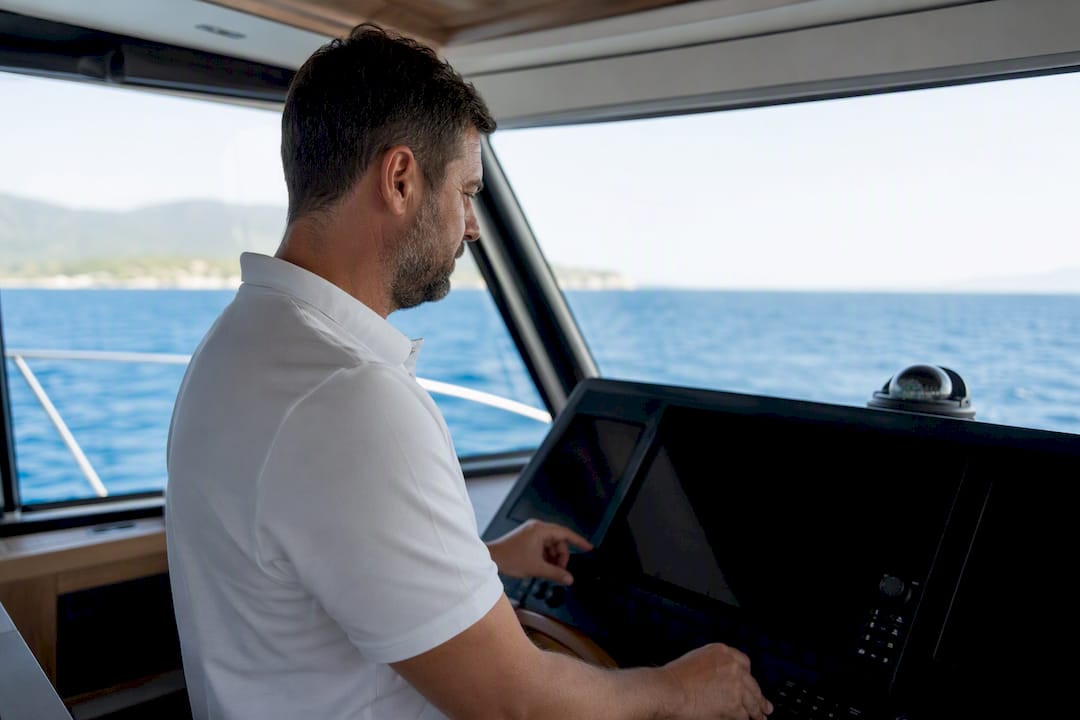
One useful data point: Staniel Cay Vacations’ cancellation policy describes how smaller, experienced operators frequently keep running in conditions that would sideline larger commercial fleets, while still holding a firm line once conditions turn genuinely unsafe.
Pro Tip: A smaller operator with local knowledge of your specific coastline often reads conditions more accurately than a generic regional forecast. Ask how long the crew has worked that exact stretch of water.
Experience buys flexibility, not exemption. Safety thresholds around lightning, advisories, and building seas apply regardless of how many years a captain has logged.
What Rules Govern Weather Cancellations Legally?
Marine safety regulation puts the cancellation decision squarely on the vessel’s master, not on passengers, booking platforms, or marketing copy. Coast Guard and equivalent maritime authorities in most countries require licensed operators to prioritize passenger safety over schedule, and that obligation doesn’t bend for a paid booking or a tight itinerary.
This is why “the captain has final say” isn’t a throwaway line in a policy document. It’s the legal backbone of how commercial passenger vessels are allowed to operate. A captain who runs a trip into conditions that violate safety standards risks their license, their insurance coverage, and potential liability if something goes wrong. That structure protects you as a passenger even when it means an inconvenient cancellation.
Licensing requirements also typically mandate life jackets sized for every passenger aboard, a working communication system, and adherence to posted advisories like Small Craft Advisories once issued. Reputable operators build their weather policies around these baseline requirements rather than around what feels convenient for the day’s schedule.
None of this means every operator handles weather identically. Refund structures, notification methods, and rescheduling windows are business decisions layered on top of the safety obligation, and they vary company to company. But the underlying safety threshold, the line between “uncomfortable” and “unsafe,” is shaped by maritime regulation rather than customer preference. That’s worth knowing before you argue with a crew member about running a trip they’ve decided not to run.
What Do People Get Wrong About Weather Cancellations?
The biggest myth is that any rain in the forecast means an automatic cancellation. It doesn’t. Most operators run rain-or-shine for anything short of genuinely hazardous conditions, and a client who cancels their own plans over a 20% chance of drizzle often misses a perfectly good, slightly damp day on the water.
A second myth: that a cancellation the day before locks in. Many operators explicitly wait until the day of departure, sometimes hours before, because forecasts shift. Assuming your trip is off based on yesterday’s weather app is a common way to miss a trip that actually ran.
A third misconception treats “windy” as automatically dangerous. Wind speed alone tells you less than wind combined with wave height, current direction, and route exposure. A breezy day in a sheltered bay can be entirely manageable while the same wind speed offshore builds seas that genuinely threaten a smaller vessel.
Finally, some guests assume a refund is automatic whenever a trip is cancelled. It frequently isn’t, unless Weather Protection was purchased or the operator’s specific policy defaults to cash refunds. Credits and free reschedules are more common defaults across the industry. Reading the actual policy at booking, rather than assuming standard consumer protections apply the same way they do to a hotel or a flight, saves a lot of frustrated phone calls later.
What the Data Actually Tells Us About Weather Cancellations
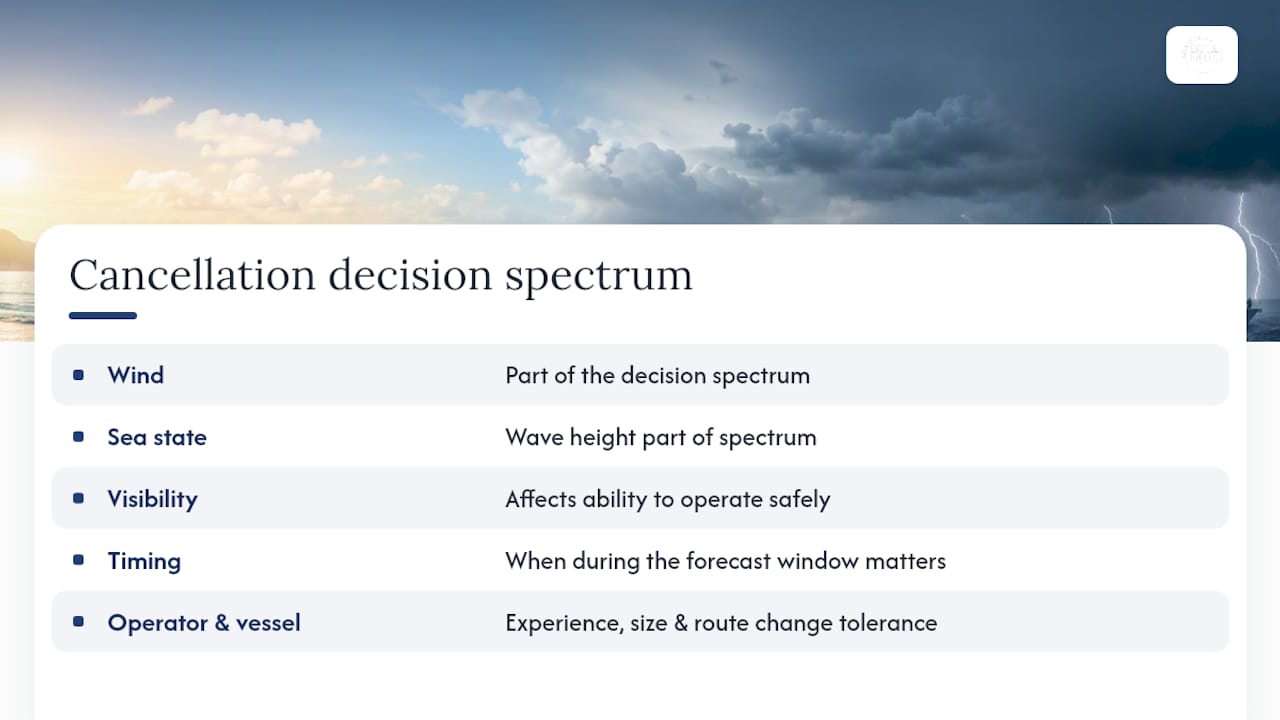
The conventional wisdom treats weather cancellation as a binary: it’s either raining or it isn’t, so the trip is either on or off. That framing misses the entire point of how experienced captains actually operate. The real decision runs on a spectrum built from wind, sea state, visibility, and timing, not a single weather icon on a phone screen.
What’s underrated here is how much operator experience shapes the tolerance for marginal conditions. Two boats facing the identical forecast can make opposite calls, and both can be right, because vessel size, route exposure, and crew familiarity with local water all change the safety math. A guest fixated on the forecast app is often more anxious than the person actually qualified to make the call.
If there’s one piece of advice worth prioritizing over everything else in this article, it’s this: stop trying to predict the operator’s decision yourself. Ask the right questions at booking, then trust the process and wait for confirmation. The system exists precisely because live conditions beat five-day forecasts, and secondguessing a captain’s judgment from your couch rarely improves the outcome.
Sail Halkidiki with an Operator Who Reads the Water, Not Just the App
Halkidiki Boat Sailing runs “Off The Hook” with a single-vessel focus that most larger fleet operators can’t match: one boat, one crew, and a captain who knows the coastline around Neos Marmaras, Nikiti, Paliouri, and Kassandra intimately, rather than managing conditions across a dozen routes at once. That local familiarity is exactly what separates a cautious cancellation from a confident, safe departure on a marginal-looking day.
Every private cruise comes fully crewed, with fuel, refreshments, and snorkeling gear bundled in, so there’s no separate logistics to untangle if plans shift. If you’re weighing dates around Halkidiki’s shifting coastal weather, check availability and lock in a sunset or full-day sail directly through the booking page and ask the crew your weather questions before you pay.
Sources
- Weather
- Weather & Cancellation Policy | Yaju Boat Tours
- Weather & Cancellation Policy | LowCountry Coastal Excursions
- Weather & Scheduling Policy | Chicago Yachting
- What Happens if the Weather Changes? | Staniel Cay Vacations (3Ns)
FAQ
Do Boat Tours Get Cancelled for Rain?
Rarely for light rain alone. Most operators run rain-or-shine and reserve cancellations for hazardous conditions like lightning, high wind, or poor visibility, as Yaju Boat Tours’ policy illustrates.
Is It Safe to Go Boating During a Thunderstorm?
No. Lightning is treated as a non-negotiable safety trigger across the industry, and reputable operators cancel or return to shore immediately when thunderstorms are nearby.
Can I Cancel My Own Booking Due to Weather Concerns?
Usually yes, but terms vary by operator; check whether your booking includes Weather Protection, since that typically determines whether you get a cash refund or a credit, per policies like LowCountry Coastal Excursions’.
How Will I Know if My Boat Tour Is Cancelled for Weather?
Operators typically confirm the decision hours before departure through text, email, or a phone call rather than days in advance, since conditions can change quickly, as Chicago Yachting’s policy describes.
Does Halkidiki Boat Sailing Cancel Trips for Bad Weather?
Halkidiki Boat Sailing’s crew makes safety-first decisions based on real-time conditions around Halkidiki Sithonia, combining official advisories with local knowledge of the coastline near Neos Marmaras and Sithonia.