
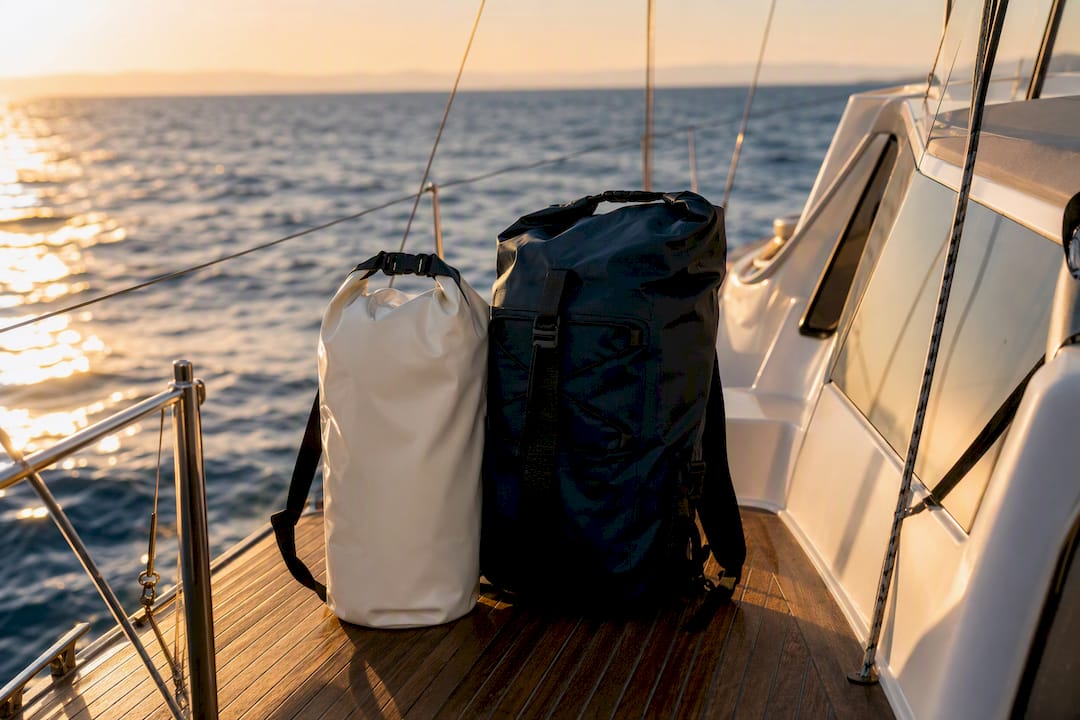
For a short paddle, grab a roll-top dry bag. For a long hike or a mixed trip that combines land and water, a waterproof backpack earns its weight. That’s the whole decision in one sentence, and the reasoning behind it comes down to two things: how the closure seals and how the load rides on your body.
A roll-top’s fabric can carry a hydrostatic-head rating up to 10,000 mm, which sounds bulletproof until you remember the closure itself, not the fabric, is where most dry bags actually fail. Halkidiki Boat Sailing sees this play out firsthand on every cove excursion around Sithonia, where guests arrive with gear packed for hiking and then need it dry for the boat.
- Best for paddling: a roll-top dry bag, sized to the trip, sealed properly
- Best for long hikes: a waterproof backpack with a real harness and hip belt
- Best mixed solution: a waterproof backpack as the main carry, with smaller dry bags inside for electronics
Key Takeaways
Choosing between a dry bag and a waterproof backpack comes down to matching the closure’s real-world limits to your actual water exposure, not the fabric rating alone.
| Point | Details |
|---|---|
| Roll-top is the weak link | Fabric can rate up to 10,000 mm hydrostatic head, but the seal, not the fabric, is where leaks start. |
| Match gear to exposure | Roll-top dry bags suit splashes and rain; welded packs suit submersion risk. |
| Comfort matters over distance | Waterproof backpacks with a hip belt and harness reduce strain on multi-day trips. |
| Seal it right every time | Squeeze out air and roll the top at least three times before clipping the buckle. |
| Halkidiki Boat Sailing simplifies the day | All-inclusive private cruises around Sithonia bundle gear and logistics so packing worry stays minimal. |
Table of Contents
- Dry Bag vs Backpack Comparison at a Glance
- How Are Dry Bags and Waterproof Backpacks Built?
- What Are the Real Pros and Cons of Each?
- Which One Fits Your Trip: Paddling, Hiking, or Both?
- What Should You Check Before Buying?
- Is a Dry Bag Really Waterproof Underwater?
- How Do You Seal and Maintain a Dry Bag Correctly?
- Which Brands Actually Deliver on Their Waterproof Claims?
- Editorial Take: The Verdict for Hikers and Paddlers
- Halkidiki Boat Sailing: A Different Way to Skip the Gear Question Entirely
- Sources
- FAQ
Dry Bag vs Backpack Comparison at a Glance
| Feature | Dry Bags | Waterproof Backpacks |
|---|---|---|
| Waterproof level | Splash to fully watertight above the roll | Watertight to submersible, depending on model |
| Materials & seams | PU/TPU nylon, DCF, taped seams | Laminated nylon, welded seams and zippers |
| Closure style | Roll-top (buckle) | Welded zipper or roll-top hybrid |
| Carry comfort | Minimal, often a shoulder strap only | Padded harness, hip belt, load lifters |
| Organization | Single compartment, no pockets | Multiple pockets, dedicated slots |
| Weight & packability | Very light, packs flat when empty | Heavier, retains shape even empty |
| Durability | Good if kept away from abrasion | High, built for repeated field use |
Paddling favors a dry bag for its simplicity. A rainy day hike works fine with dry bags stashed inside a normal pack. Multi-day backpacking rewards the comfort of a true waterproof backpack. Mixed trips do best when you combine both.
How Are Dry Bags and Waterproof Backpacks Built?
The difference between “water resistant” and genuinely waterproof lives in three places: the fabric, the seams, and the closure.
Most dry bags use PU or TPU coated nylon, a coating bonded to the fabric that blocks water from soaking through. Heavier-duty bags step up to vinyl or PVC, which resists abrasion better but adds weight. On the ultralight end, Zpacks builds its dry sacks from Dyneema Composite Fabric, a laminate that’s remarkably tear resistant for how little it weighs, with seams that are fully taped rather than sewn.
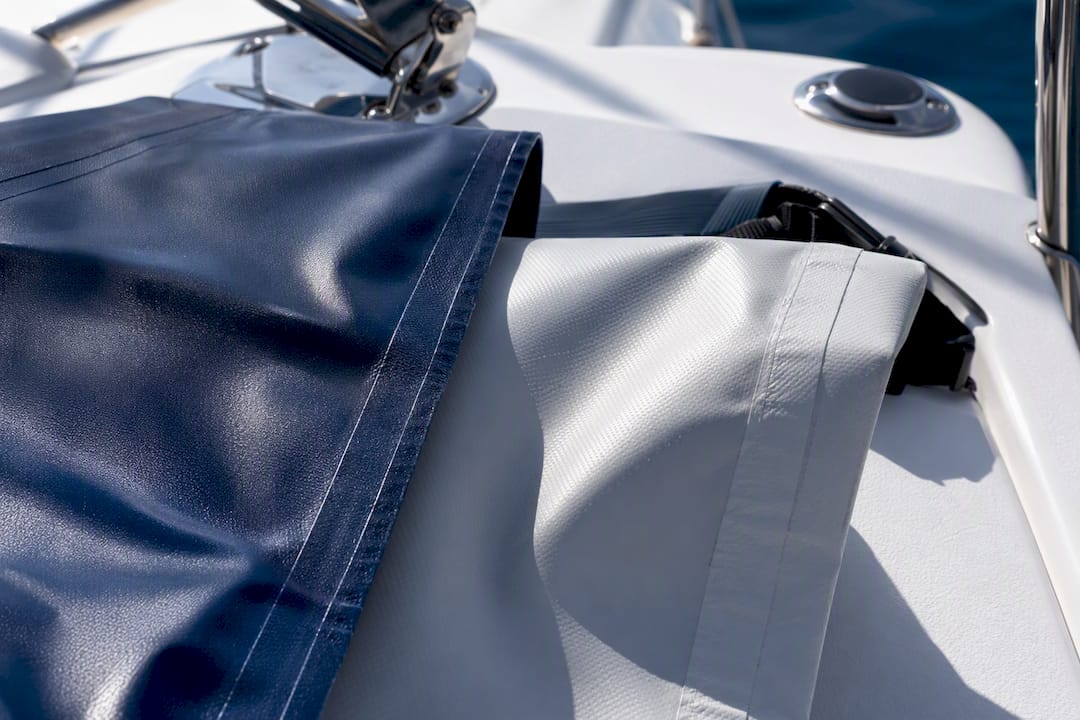
Seams matter as much as the fabric itself. A stitched seam always leaves needle holes, so quality dry bags and backpacks rely on taped seams or RF-welded seams, where heat fuses two layers together with no thread involved. Welded zippers take this further, sealing the zipper track itself rather than just the panel edges.
Closures split into three camps:
- Roll-top: simple, cheap, effective if sealed right, but the weak point under real pressure
- Welded zipper: more consistent seal, found on premium waterproof backpacks
- Zip-plus-flap: a compromise that adds a storm flap over a standard zipper for extra splash protection
Pro Tip: If your trip includes any chance of submersion, a river swim, a capsized kayak, prioritize a welded-zipper pack or a hard waterproof case for your phone and camera. Roll-tops are excellent at keeping rain and splashes out, but they were never designed to survive being dunked and held underwater.
What Are the Real Pros and Cons of Each?
Dry bags win on simplicity. They pack down to almost nothing when empty, cost far less than a technical backpack, and keep the contents above the roll line genuinely dry in rain, spray, or a quick dunk.
Their weaknesses show up on long carries. There’s no padding, no hip belt, and usually just a single compartment, so finding your headlamp means dumping everything out. Roll it fewer than three times, or let it get fully submerged, and water finds a way in.
Waterproof backpacks flip that equation:
- Pros: ergonomic harness for miles of comfortable carrying, multiple pockets for real organization, and some models are IP-tested for submersion
- Cons: heavier, pricier, and packed with more parts (zippers, foam padding, buckles) that can eventually wear out
OutdoorGearLab’s testing of the YETI Panga found it shrugged off an overnight soaking without leaking, but that protection comes at a real cost in ounces and dollars compared to a basic roll-top. Neither design is objectively better. They’re built for different jobs, and the mismatch usually only shows up after the fact, when someone’s paddling with an unpadded dry bag digging into their back for three hours.
Which One Fits Your Trip: Paddling, Hiking, or Both?
Match the gear to the water exposure, not just the activity label.
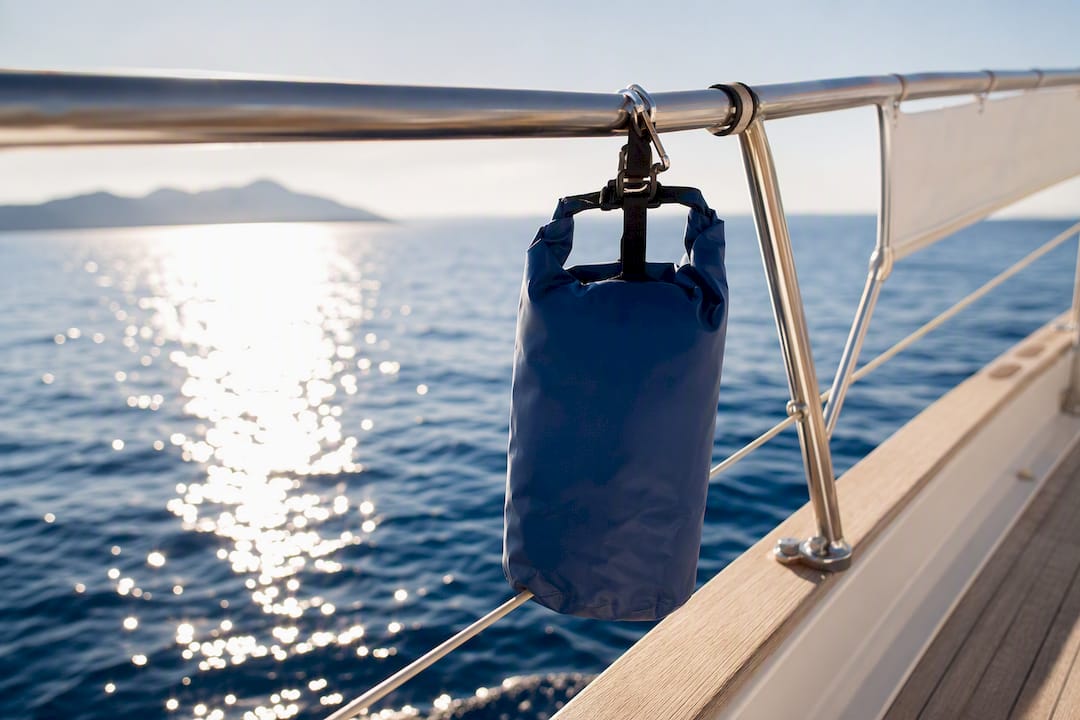
Paddling and boat day trips: a roll-top dry bag handles electronics, a spare layer, and snacks with no fuss. If you’re worried about a capsize or heavy spray, step up to a welded dry backpack or a Panga-style pack for anything you can’t afford to lose.
Rainy day hikes: dry bags nested inside a standard hiking pack give you organization without the extra weight of a fully waterproof shell. Only go with a dedicated waterproof backpack if you need hands-free access in a downpour.
Multi-day backpacking: a waterproof backpack, or a standard pack with a dry bag lining the sleeping bag compartment, protects the one item that ruins a trip if it gets soaked.
Mixed hike-and-paddle trips: carry a waterproof backpack for the haul, then drop smaller dry bags inside for your phone, wallet, and dry clothes.
Pro Tip: Guests joining a day cruise from Neos Marmaras or Nikiti often overpack for the water portion. A single medium dry bag for phones and towels, packed inside your regular bag, covers 90 percent of what you’ll actually need on board.
What Should You Check Before Buying?
Run through this before you commit:
- Capacity: 10 to 20 liters for day paddling, 25L+ for day hikes, 40L+ for multi-day waterproof backpacks
- Fit: padded shoulder straps, a hip belt, and load-lifter straps matter once you’re carrying more than a few pounds for more than an hour
- Materials: laminated nylon or PVC for boat-heavy use; DCF if weight is your top priority and you can pay more for it
- Closure and repairability: check how easy the seal is to use one-handed, whether there are external lash points, and whether the manufacturer sells patch kits
- Budget vs longevity: a welded-seam or welded-zip model costs more upfront but tends to outlast a cheap roll-top under repeated hard use
Buy the cheaper roll-top for occasional weekend trips. Spend more on welded construction if you’re out on the water weekly or carrying gear you genuinely can’t replace.
Is a Dry Bag Really Waterproof Underwater?
Mostly, no, not for long. Fabric ratings tell only half the story. Sea to Summit’s own guidance notes that even a dry bag body rated near 10,000 mm hydrostatic head still depends entirely on the roll-top seal, and the company advises against submersion despite the fabric’s strength. A separate Sea to Summit product line puts the Ultra-Sil’s body rating closer to 2,000+ mm for some styles, reserving the higher numbers for dedicated water-sport fabrics.
Statistic Callout: A dry bag rated at 10,000 mm hydrostatic head can theoretically resist a 10-meter column of standing water pressing on the fabric itself, but that number says nothing about the roll-top closure, which is where nearly every real-world leak actually starts.
Pro Tip: Treat splashes and steady rain as fully covered territory for a well-sealed roll-top. Treat prolonged submersion, like a capsized canoe, as a different problem entirely, one that calls for a welded pack or a hard waterproof case for anything electronic.
How Do You Seal and Maintain a Dry Bag Correctly?
- Push the excess air out of the bag before closing it. Trapped air makes the seal bulkier and less reliable.
- Fold the top down flat, then roll it at least three times before clipping the buckle, which is the minimum most manufacturers recommend for a dependable seal.
- Clip the buckle fully and give the bag a light squeeze to check for air escaping, a sign the roll wasn’t tight enough.
- Rinse off salt water after every trip, let the bag dry completely inside and out, and check taped seams and welds for peeling before your next outing.
Pro Tip: Overfilling the neck is the single most common mistake. Leave enough empty fabric above your gear to get three full rolls, or the seal simply won’t hold.
Which Brands Actually Deliver on Their Waterproof Claims?
Sea to Summit makes ultralight roll-top dry sacks that balance packability with dependable weather resistance, a solid all-around pick for backpacking and day paddling. SealLine builds tougher roll-tops and welded-zipper packs aimed squarely at multi-day river trips. YETI Panga goes all-in on heavy-duty welded construction, trading weight and price for near-total waterproofing. REI Co-op covers the budget end with roll-top bags that perform well as a layer inside a bigger system. Zpacks uses Dyneema Composite Fabric with fully taped seams to shave weight for fastpacking and bikepacking. Watershed targets commercial guides and boat-based users who need long-term durability over years of hard use. NRS builds specifically for whitewater and paddling, with attachment points tuned for kayaks and rafts.
Before trusting any vendor’s claims, look for a published hydrostatic-head number, confirm whether seams are taped or welded, and check for independent field reviews rather than marketing copy alone.
Editorial Take: The Verdict for Hikers and Paddlers
The conventional advice, “just buy a dry bag, they’re cheaper,” undersells how much comfort matters once you’re carrying gear for more than an hour. A dry bag that keeps your sleeping bag perfectly dry does you no good if the strap has cut into your shoulder for six miles.
What gets overlooked most is the roll-top closure itself. Buyers fixate on hydrostatic-head numbers on the fabric, when the real vulnerability sits at the seal. A 10,000 mm rating means nothing if you rolled the top twice instead of three times.
My take: buy for the water exposure you’ll actually face, not the one you’re afraid of. Most hikers and paddlers overbuy submersion protection they’ll never need and underbuy the carry comfort they’ll feel every single mile. Start with how you’ll carry the load, then work backward to how waterproof you truly need it to be.
Halkidiki Boat Sailing: A Different Way to Skip the Gear Question Entirely
There’s another route worth naming plainly: some travelers spend real money on premium dry bags and waterproof packs just to protect gear for a single day on the water. Halkidiki Boat Sailing offers a way around that entirely. Every excursion aboard the signature yacht “Off The Hook” comes fully crewed and all-inclusive, with snorkeling gear, refreshments, and fuel already bundled in, so you’re not packing for worst-case water exposure on your own.
Guests sailing from Neos Marmaras, Nikiti, Paliouri, or Kassandra still bring a small dry bag for phones and towels, but they’re not solving the dry bag vs backpack question alone before a trip to hidden coves like Kelyfos Island. Check available dates for a full-day private cruise and let the crew handle the logistics.
Sources
- Sea to Summit blog: Just how waterproof is ‘waterproof’?
- SealLine support: How do I properly seal a roll-top?
FAQ
Why Would You Need a Dry Bag?
A dry bag keeps gear like electronics, clothing, and documents dry during paddling, rain, or boat travel, using a sealed roll-top or welded closure instead of a standard zipper.
Can I Put Wet Stuff in a Dry Bag?
Yes. A dry bag works both ways, keeping water out and holding wet gear like swimsuits or damp towels separate from dry items in your pack.
How Many Times Do You Fold a Dry Bag?
Manufacturers generally recommend rolling the top at least three times before clipping the buckle to form a reliable seal.
Are Dry Bags Actually Waterproof?
The fabric usually is, sometimes rated up to 10,000 mm hydrostatic head, but the roll-top closure is the common failure point, so most dry bags aren’t built to survive prolonged submersion.
Do I Need a Dry Bag If I’m Booking a Boat Trip Instead of Paddling Myself?
A small dry bag for your phone and valuables still helps, but on a fully crewed excursion with Halkidiki Boat Sailing, you’re not packing gear against serious submersion risk the way independent paddlers do.